Your residential gate won't open, makes grinding noises, or the automatic opener stopped working. Gate problems are frustrating. They block vehicle access, compromise security, and look unprofessional in front of neighbors and guests.
Texas homes are harder on gates than most people realize. The combination of triple-digit summer heat, dramatic swings between drought and heavy rain, and persistent wind (especially west of I-35) creates conditions that age hardware fast. Metal expands in July, posts shift when the clay soil dries out, and lubricants bake off hinges that would stay slick for a year in a milder climate. This guide covers the most common residential gate problems, DIY repair solutions, and when to call a professional gate technician in Texas.
Most Common Residential Gate Problems in Texas
Based on the calls we handle across Austin, San Antonio, McAllen, and the surrounding areas, gate failures follow a predictable pattern. Automatic opener problems lead the way, followed by sagging hardware and latch failures. Problems that are often connected, since a sagging gate almost always produces a latch that won't catch.
The six most frequent issues we see, ranked by call volume:
-
Automatic gate won't open/close. Remote control not working, gate opener motor failure, power supply issues, or limit switch misalignment.
-
Gate dragging or sagging. Worn or broken hinges, post settling in ground, gate too heavy for hinges, or wood warping from heat and moisture.
-
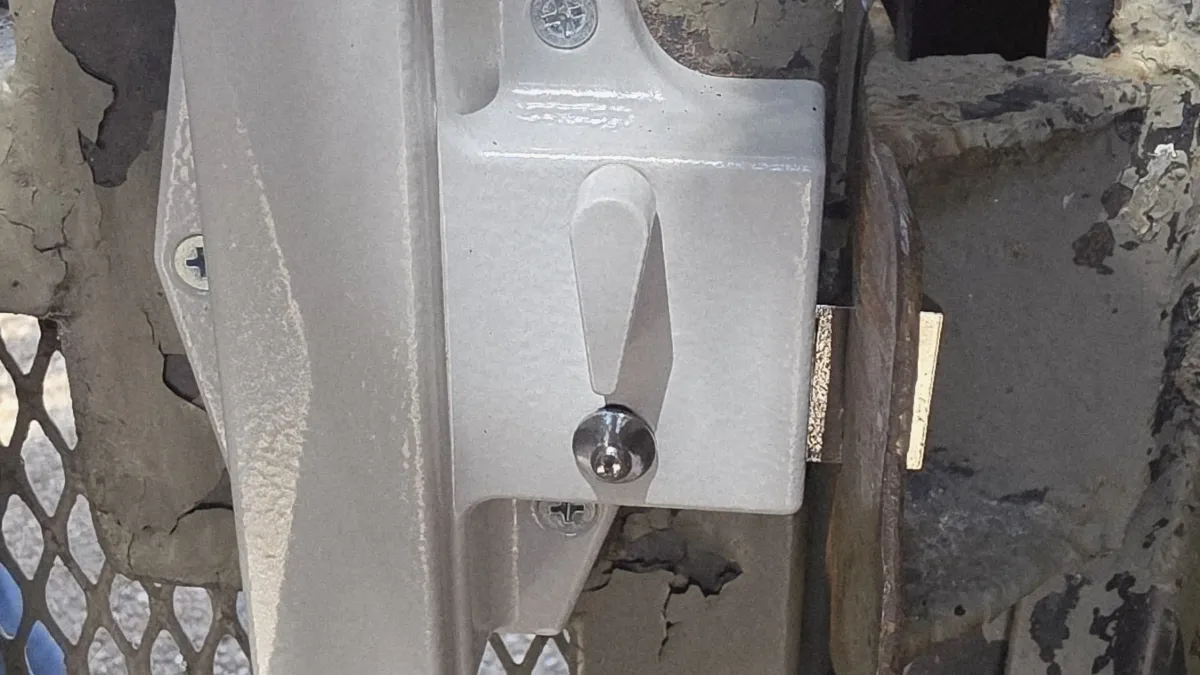
Gate latch won't engage. Latch misaligned with strike, gate sagging causes misalignment, rust or corrosion on latch, or post movement.
-
Noisy gate operation. Dry or squeaky hinges, worn bearings in gate opener, chain drive needs lubrication, or metal-on-metal grinding.
-
Gate won't stay closed/latched. Spring tension failure, latch worn out, gate warped from heat, or ground clearance issues.
-
Gate off track (sliding gates). Rollers broken or worn, track debris or damage, motor pushing gate off track, or misaligned track.
Metal expands in July, posts shift when the clay soil dries out, and lubricants bake off hinges that would stay slick for a year in a milder climate.
Troubleshooting Automatic Gate Openers
Problem 1: Remote Control Not Working
Before you assume the opener is broken, the remote itself is the most common culprit and the cheapest fix on the list. Start there and work outward toward the receiver and control board only if the basics don't solve it. Most Texas homeowners discover the problem is a dead battery that cooked in a hot car, or a remote that lost its programming after a power surge.
Work through these four checks in order:
- Replace the remote battery (usually a CR2032 coin cell) and test. Batteries die faster in hot cars, so don't leave the remote in the vehicle.
- If you have multiple remotes, try each one. Re-program using the manufacturer's instructions: press the "program" button on the control board, then press the remote button.
- Move away from power lines, WiFi routers, and LED lights, then test the remote from different distances (10 feet, 25 feet, 50 feet). Reduced range usually points to the receiver antenna.
- Test the wired control button if one is installed. If the wired button works but the remote doesn't, the receiver is faulty. If neither works, investigate the control board or power supply.
A new remote runs $25-$80. A new receiver board is $80-$150. Professional diagnosis is $75-$150. Call a pro when multiple remotes fail simultaneously, when the wired button also stops working, or when the gate operates erratically with no clear pattern.
THE SIX MOST FREQUENT GATE ISSUES
Automatic gate won't open/close
Remote control not working, gate opener motor failure, power supply issues, or limit switch misalignment.
Gate dragging or sagging
Worn or broken hinges, post settling in ground, gate too heavy for hinges, or wood warping from heat and moisture.
Gate latch won't engage
Latch misaligned with strike, gate sagging causes misalignment, rust or corrosion on latch, or post movement.
Noisy gate operation
Dry or squeaky hinges, worn bearings in gate opener, chain drive needs lubrication, or metal-on-metal grinding.
Gate won't stay closed/latched
Spring tension failure, latch worn out, gate warped from heat, or ground clearance issues.
Gate off track (sliding gates)
Rollers broken or worn, track debris or damage, motor pushing gate off track, or misaligned track.
Problem 2: Gate Opener Motor Not Running
A motor that hums but doesn't move the gate is either mechanically blocked or has a failed capacitor or burned winding. The fastest way to tell them apart is to disengage the drive and push the gate by hand. If it moves freely, the problem is in the motor or drive system. If the gate is hard to push, mechanical binding is the real issue.
Work through these five checks in sequence:
- Verify outlet has power, check that the circuit breaker hasn't tripped, test the GFCI outlet (reset button if tripped), and inspect the power cord for damage.
- Remove debris from the gate track or hinge area. Wind can blow branches and debris into the gate path in Texas, and it doesn't take much to stall a motor.
- Disengage the motor by pulling the emergency release cord and move the gate manually to check for binding. If the gate is hard to move, the problem is mechanical. Re-engage and test.
- Check chain tension (it should have 1/4" slack), look for broken chain links, verify the belt isn't slipping on pulleys, and lubricate the chain with white lithium grease.
- Limit switches tell the motor when to stop. If they're misaligned, the motor may think the gate is already in position. Adjust them per the manufacturer's instructions and test gate operation.
Lubrication and adjustment costs $0-$20 DIY. A new chain runs $40-$100. Motor replacement parts cost $200-$600 depending on brand, with professional replacement (parts plus labor) at $400-$1,200. Call a pro when the motor smells like burning electrical, when it hums but won't run (likely a failed capacitor), or when the control board needs replacement.
Problem 3: Gate Opens But Won't Close (or Vice Versa)
When a gate moves one direction but refuses the other, the safety sensor system is almost always the first thing to check. Texas dust, spider webs, and direct sunlight can all interfere with the photo-eye sensors required by code, and a sensor with a dirty lens or sun-washed receiver looks exactly like an obstruction to the control board. The fix often takes under two minutes.
Work through these four checks:
- Check the photo-eye sensors on both gate posts (required by law). The LED indicator should be solid, not blinking. Clean the sensor lenses. Texas dust and spider webs are common culprits. Test by blocking the sensor: the gate should stop and reverse.
- The open limit switch stops the gate when fully open; the close limit switch stops it when fully closed. If the gate stops short, adjust the limit switches per the owner's manual.
- Check whether the gate is hitting a fence post, the ground, or nearby landscaping. Ground clearance should be 1-2 inches. Note that the ground swells in rain and shrinks in drought, so clearance changes seasonally in Texas.
- Gate openers have adjustable force limits. If the force is set too low, the gate stops when it meets slight resistance. Increase the force setting carefully. Too high creates a safety risk.
Sensor alignment is free to DIY. New safety sensors cost $60-$150 per pair. Professional adjustment runs $75-$200. Call a pro when sensors won't align despite cleaning and adjustment, when control board error codes appear, or when the gate operates erratically.
The fastest way to tell them apart is to disengage the drive and push the gate by hand.
Manual Gate Repairs
Problem 4: Gate Sagging or Dragging
A sagging gate is the single most common manual gate complaint we hear, and it almost always starts with hardware that was undersized for the gate's actual weight. Residential-grade hinges are often rated for 50-75 lbs. Well short of a heavy cedar privacy gate that can hit 150 lbs or more. Texas heat and moisture accelerate wood movement, which adds load the hinges weren't designed to handle. Once the gate starts pulling, hinge screws begin stripping their holes, and the latch gets pulled out of alignment as a side effect.
There are three repair paths depending on what's causing the sag.
The first option is an anti-sag cable kit ($30-$60), which is the fastest fix for a wood gate that hasn't lost structural integrity. Measure the gate diagonally from the hinge-side top corner to the latch-side bottom corner. Cut the turnbuckle cable to length, install eye bolts in both corners, thread the cable through the turnbuckle and attach it to the eye bolts, then tighten to lift the gate back to level. Use galvanized or stainless steel hardware for Texas humidity.
DIAGNOSING A GATE THAT WON'T CLOSE
Check the photo-eye sensors
The LED indicator should be solid, not blinking. Clean the sensor lenses. Test by blocking the sensor: the gate should stop and reverse.
Check the limit switches
The open limit switch stops the gate when fully open; the close limit switch stops it when fully closed.
Check ground clearance
Ground clearance should be 1-2 inches. The ground swells in rain and shrinks in drought, so clearance changes seasonally in Texas.
Check the force limits
If the force is set too low, the gate stops when it meets slight resistance. Too high creates a safety risk.
The second option is upgrading the hinges. Use this when hinges are bent, rusted, or undersized for a heavy wood gate. Heavy-duty strap hinges or T-hinges run $40-$100 for a set of 2-3. Support the gate weight with a jack stand or sawhorses, remove the old hinges one at a time, and install replacements with 3" screws driven into solid wood. Repeat for all hinges and test operation.
The third option is re-setting the gate post. Do this when the post is leaning, has settled in the ground, or wiggles when you push it. Dig out the existing concrete around the post, straighten it with a level, brace it in place with 2x4s and stakes, fill the first 6 inches of the hole with gravel for drainage, pour quick-setting concrete, re-check level before it sets, and let it cure 24-48 hours before re-hanging the gate.
Anti-sag kit plus DIY runs $30-$80. Heavy-duty hinges plus DIY runs $40-$120. Re-setting a post plus DIY is $30-$60. Professional gate repair runs $200-$500. Call a pro when the post is severely rotted and needs full replacement, when the gate frame itself is damaged, or when multiple problems are combining.
Problem 5: Gate Latch Won't Engage
A latch that misses its strike plate is almost always downstream of a different problem. Before you spend time adjusting the latch hardware, close the gate and watch exactly where the latch contacts the strike. That tells you whether you're dealing with a simple alignment issue or whether the gate has dropped enough that no amount of latch adjustment will close the gap.
The repair takes about 30 minutes and costs $10-$40 in materials. Close the gate and observe where the latch contacts the strike. It should slide smoothly into the strike hole. If the latch is off-center, loosen the strike plate screws, move it to align with the latch, mark the correct position, drill new pilot holes if needed, and re-attach with 2.5" exterior screws. If the strike can't move far enough, reposition the latch on the gate itself, filling the old screw holes with wood filler first. If the gap is over 1 inch, the gate is sagging too much for latch adjustment alone. Follow the Problem 4 solutions above, because the latch misalignment is a symptom, not the root cause.
Call a pro when the gate needs to be rebuilt due to frame damage, when the post needs replacement, or when the system uses a multi-point latch that requires specialized hardware.
THREE REPAIR PATHS FOR A SAGGING GATE
Anti-sag cable kit
The fastest fix for a wood gate that hasn't lost structural integrity. Measure the gate diagonally from the hinge-side top corner to the latch-side bottom corner.
Upgrading the hinges
Use this when hinges are bent, rusted, or undersized for a heavy wood gate. Heavy-duty strap hinges or T-hinges run $40-$100 for a set of 2-3.
Re-setting the gate post
Do this when the post is leaning, has settled in the ground, or wiggles when you push it.
Problem 6: Squeaky or Stiff Hinges
Squeaky hinges are the easiest gate problem to fix and the most commonly ignored, which turns a five-dollar tube of grease into a $200 hinge replacement job if metal-on-metal grinding is left long enough to score the pin. The mistake most homeowners make is reaching for WD-40, which displaces water but evaporates quickly and leaves hinges dirtier than before. The right lubricant for Texas conditions is white lithium grease or a dry PTFE spray, applied to clean metal.
The repair takes about 15 minutes and costs $5-$15. Wipe away dirt, rust, and old dried lubricant with a rag and a wire brush for heavy rust. Apply white lithium grease or silicone spray to the hinge pins and all moving parts, then work the gate back and forth to distribute the lubricant. Tighten any loose hinge screws.
White lithium grease is the best all-around choice: it's thick, lasts 6-12 months, and resists heat. Silicone spray is useful in tight spaces and repels water. Dry PTFE spray doesn't attract dust, which matters in the western part of the state. Plan to lubricate every 3 months in hot or dry climates (most of Texas) and after any rainstorm or dust storm.
Sliding Gate Specific Problems
Problem 7: Sliding Gate Off Track or Won't Roll
Sliding gates carry their weight on rollers that run inside a ground-level track. Anything that disrupts the track, whether debris, a bent section, or a broken roller, can stop a hundred-pound gate cold. Most roller and track problems are visible on inspection, but the gate needs to come off the track to replace rollers, and heavy steel sliding gates require two people to lift safely.
Expect 1-2 hours for this repair, with $50-$150 in materials. Work through these five steps:
- Inspect all rollers for damage (usually 4-8 per gate). Broken or missing rollers cause binding. Remove the gate from the track to inspect. This requires two people for heavy gates.
- Purchase replacement rollers by bringing an old one to the hardware store for matching (typically $10-$30 each). Install new rollers using the existing mounting brackets and ensure they spin freely before reinstalling the gate.
- Remove debris from the track (leaves, dirt, gravel). Straighten bent track sections with a rubber mallet. If a section is severely damaged, replace it. Lubricate the track with silicone spray.
- The gate should have 1/2" clearance above the ground. Too high is unstable; too low causes dragging. Adjust by turning the height adjustment bolts on the roller brackets.
- Lift the gate and place the rollers in the track. Check that it rolls smoothly by hand, adjust as needed, then reconnect the gate opener if the gate is automatic.
Materials: replacement rollers $40-$120 (set of 4), track sections (if needed) $50-$150, lubricant $10. Call a pro when the gate is too heavy to lift safely, when the track foundation is failing (concrete cracking beneath the track), when multiple rollers and track sections need simultaneous replacement, or when the gate frame is bent or damaged.
Squeaky hinges are the easiest gate problem to fix and the most commonly ignored, which turns a five-dollar tube of grease into a $200 hinge replacement job if metal-on-metal grinding is left long enough to score the pin.
Texas-Specific Gate Maintenance
Heat and UV Protection (100F+ Summers)
Texas summers push gate materials to limits that most manufacturers don't test for. Wood checks and warps as moisture cycles in and out. Metal components expand enough to bind in frames that measured perfectly in March. Electronic enclosures on gate openers reach internal temperatures that shorten component life, particularly when the control box sits in full afternoon sun. Getting ahead of this with annual sealing, quarterly lubrication, and shade over the opener box costs almost nothing compared to the repairs it prevents.
- Seal wood gates annually with exterior stain or paint that includes UV protection
- Lubricate hinges quarterly (more frequently than cooler climates require)
- Install shade over the gate opener control box to prevent electronics from overheating
- Use heat-resistant lubricants (white lithium grease rather than petroleum-based products) and paint metal gates with high-heat resistant paint
SLIDING GATE OFF-TRACK: FIVE REPAIR STEPS
Inspect the rollers
Inspect all rollers for damage (usually 4-8 per gate). Broken or missing rollers cause binding.
Replace damaged rollers
Purchase replacement rollers by bringing an old one to the hardware store for matching (typically $10-$30 each).
Clear and straighten the track
Remove debris from the track (leaves, dirt, gravel). Straighten bent track sections with a rubber mallet.
Adjust ground clearance
The gate should have 1/2" clearance above the ground. Adjust by turning the height adjustment bolts on the roller brackets.
Reinstall and test
Lift the gate and place the rollers in the track. Check that it rolls smoothly by hand, adjust as needed, then reconnect the gate opener if the gate is automatic.
Wind Protection (West Texas, Panhandle, Coastal)
Wind is a structural problem disguised as a nuisance. A gate that slams repeatedly transfers shock through the hinges into the post, and a post that flexes under constant wind load will eventually shift in its footing. Automatic openers work harder against wind resistance, which means the motor runs hotter and wears faster. A $50 wind latch or closer can extend the life of a gate installation by years.
- Install a gate closer with adjustable tension ($30-$80)
- Add wind bracing to fence posts with diagonal supports
- Use heavy-duty hinges rated for gate weight plus wind load
- Install a wind latch to hold the gate open in high wind and prevent slamming
Ground Movement (Drought/Rain Cycles)
Texas soil, especially the heavy clay soils common around Austin and San Antonio, expands dramatically when it absorbs water and shrinks when it dries out. A post set without adequate depth or drainage can move an inch or more vertically over a bad drought year, pulling the gate frame with it. Seasonal alignment checks after major weather events catch post movement early, before it translates into latch problems and motor strain.
- Set posts in concrete 30-36 inches deep (below frost line)
- Use a gravel base for drainage to prevent post rot and settling
- Install adjustable hinges that can compensate for minor post movement
- Check gate alignment seasonally, after heavy rains and during drought
Long rural drives bring their own gate questions, from fire department access to solar operators, which we cover in our Hill Country home locks and gate guide.
When to Call a Professional Gate Technician
Most gate maintenance is genuinely DIY-friendly. Lubrication, battery swaps, minor latch tweaks, and anti-sag kits are all within reach of a homeowner with basic tools and an afternoon. The line is usually drawn by safety systems and structural components. Anything involving automatic opener safety sensors is required by code and should be handled by a licensed technician. Welding, post replacement, or motor and board replacement carries real consequences for the people and vehicles that use the gate.
These tasks are safe and appropriate for DIY work:
- Simple lubrication and cleaning
- Tightening loose screws and bolts
- Replacing batteries in remote controls
- Minor latch adjustments
- Adding anti-sag kit to sagging gate
These tasks are better left to a professional:
- Automatic gate opener installation
- Motor or control board replacement
- Safety sensor issues (required by code)
- Welding or major frame repairs
- Post replacement or major concrete work
- Gate won't operate and you can't diagnose the problem
- Multiple problems (sagging plus motor plus electrical)
GROUND MOVEMENT PROTECTION
Set posts in concrete
30-36 inches deep (below frost line).
Use a gravel base
For drainage to prevent post rot and settling.
Install adjustable hinges
That can compensate for minor post movement.
Check alignment seasonally
After heavy rains and during drought.
What professional gate repair costs in Texas:
- Diagnostic fee: $75-$150 (often waived if you proceed with repair)
- Minor repairs: $150-$300 (hinge replacement, latch adjustment, lubrication)
- Motor replacement: $400-$1,200 (depending on opener brand and gate size)
- Full gate replacement: $800-$3,000 (depending on size, material, automation)
Residential Gate Maintenance Checklist
Staying on a regular maintenance schedule is the cheapest gate insurance available. Most of these tasks take under 10 minutes. The after-storm checklist is worth doing within a day or two of any significant weather event, since storm damage that sits unaddressed often gets worse.
Check these items every month:
- Test automatic opener (if applicable)
- Check gate latches and locks properly
- Inspect for rust or damage
- Clean debris from tracks (sliding gates)
Every quarter (every 3 months), run through these:
- Lubricate all hinges and moving parts
- Test safety sensors (automatic gates)
- Tighten loose screws and bolts
- Check gate clearance and alignment
The annual inspection covers items that don't need frequent attention but matter if skipped:
- Inspect and tighten all hinge screws
- Check gate posts for rot or leaning
- Re-seal or repaint wood gates
- Touch up paint on metal gates
- Test emergency release on automatic opener
- Replace batteries in wireless keypads/remotes
- Inspect chain or belt drive for wear
- Professional inspection (for automatic gates)
After any storm, check these before resuming normal use:
- Check for wind damage (loose boards, bent frame)
- Remove debris from gate and track
- Test automatic opener
- Verify posts are still level
WIND PROTECTION CHECKLIST
Gate closer
Install a gate closer with adjustable tension ($30-$80).
Wind bracing
Add wind bracing to fence posts with diagonal supports.
Heavy-duty hinges
Use heavy-duty hinges rated for gate weight plus wind load.
Wind latch
Install a wind latch to hold the gate open in high wind and prevent slamming.
DIY Gate Repair Tools and Materials
A basic gate repair kit doesn't require much investment. The tools you'll use for gate work overlap heavily with general home maintenance, so most of what's listed below is probably already in your garage.
A basic tool kit runs $100-$200 and should include: drill and bit set, screwdriver set, adjustable wrench set, level, tape measure, wire brush, rubber mallet, and socket set.
Consumables worth keeping on hand ($50-$100): white lithium grease, silicone spray lubricant, 2.5" and 3" exterior screws (galvanized or stainless), gate hinge repair kit, anti-sag cable kit, spare remote batteries (CR2032), wood filler, and touch-up paint.
Common Gate Types in Texas Homes
Texas homes use a mix of gate materials, each with different trade-offs for durability, maintenance, and cost.
| Gate Type | Pros | Cons | Lifespan |
|---|---|---|---|
| Wood Gates | Traditional look, customizable, affordable | Warps in heat, requires annual maintenance, can rot | 10-20 years with proper maintenance |
| Metal Gates (Wrought Iron, Aluminum, Steel) | Durable, low maintenance, strong, long-lasting | Can rust (especially wrought iron), more expensive | 20-50 years |
| Vinyl Gates | No painting, won't rot, low maintenance | Can become brittle in extreme heat, limited styles | 20-30 years |
| Chain Link Gates | Affordable, functional, low maintenance | Not decorative, limited privacy | 15-25 years |
Wood gives you design flexibility and a traditional look but demands annual maintenance and won't survive neglect the way metal will. Metal gates (wrought iron, aluminum, and steel) last decades and hold up against wind and UV without much attention, though wrought iron needs periodic rust treatment. Aluminum doesn't rust and is lighter, which reduces hinge stress. Vinyl is the lowest-maintenance option but can become brittle over time in extreme heat, which limits its appeal in the western half of the state. Chain link is the practical choice for utility areas: inexpensive, functional, and nearly maintenance-free.
Professional Gate Services in Texas
We provide residential gate repair and installation services across Texas, serving Austin, San Antonio, McAllen, and surrounding communities. If your gate is beyond what a weekend DIY repair can address, or if you're dealing with an automatic opener problem that's outside your comfort zone, our licensed technicians can diagnose and fix it the same day in most cases.
Services include automatic gate opener repair and replacement, manual gate repair (hinges, latches, frames), gate installation in wood, metal, and vinyl, sliding gate track repair and replacement, safety sensor installation and alignment, emergency gate repair for lockouts, and annual maintenance contracts.
We service all major gate opener brands: LiftMaster, GTO/Mighty Mule, Apollo, Elite, FAAC, and BFT.
Service areas: Austin, San Antonio, Houston, Dallas, Fort Worth, El Paso, Arlington, Corpus Christi, Plano, and all major Texas metro areas.
Call (888) 601-6005 for residential gate repair service in Texas. Licensed locksmith and gate technician. License #B19847.
Last updated: August 2026 | Based on 15+ years of residential gate repair experience in Texas. Includes manufacturer specifications for major gate opener brands and Texas Building Code requirements.