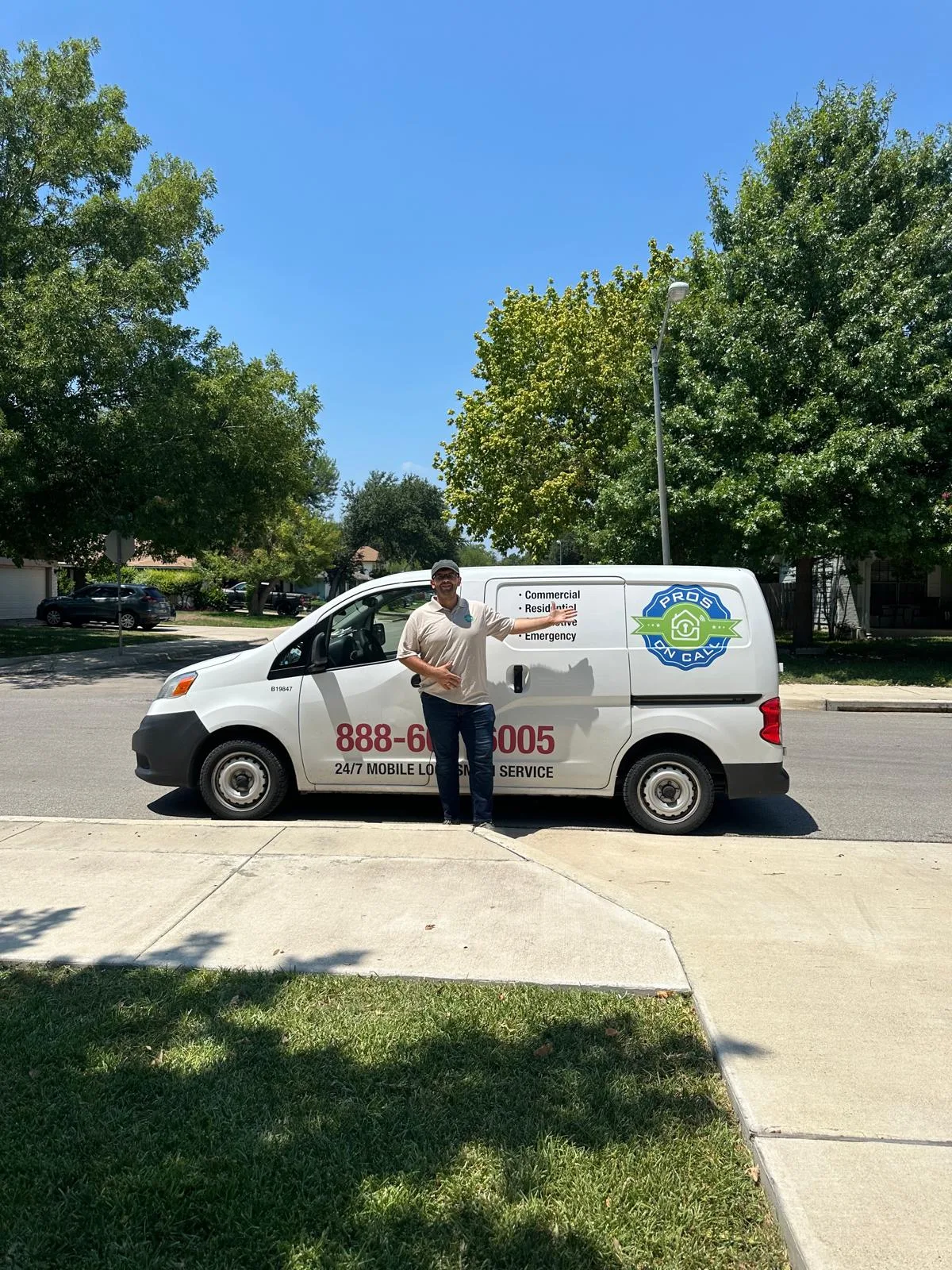
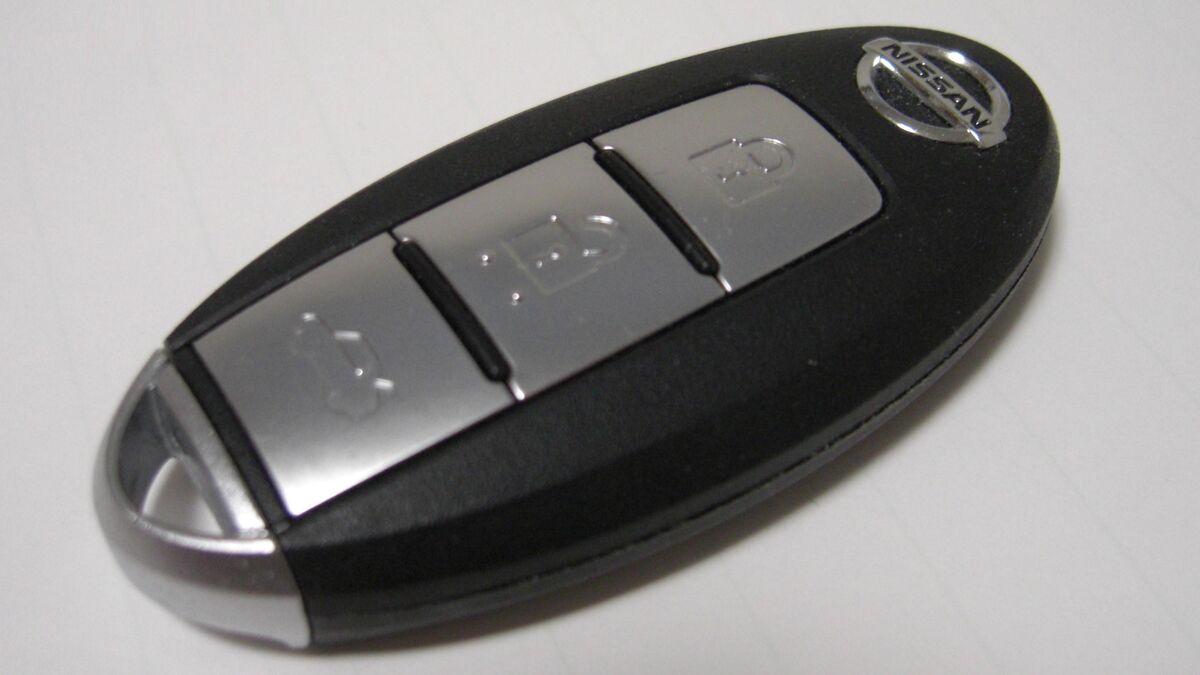
A hardware store or kiosk copy of a house or car key can stop working within months, and the reason is mechanical, not bad luck: bargain cutting equipment holds looser tolerances than locksmith-grade machines, and every generation of copying a copy compounds the last copy's small errors. Not every key can legally or mechanically be copied either. Postal keys, some restricted keyway profiles, and modern encrypted transponder chips each block a simple copy for a completely different reason. I run the programming bench at Pros On Call, and this guide covers where to get each kind of key copied, why the bargain version wears out first, which keys cannot be duplicated at all, and what a copy that actually holds up costs in Texas.
Copying vs. Replacing: The Line This Guide Draws
Duplication means cutting or programming a new key from a working original you already have. Replacement means creating a working key when the original is lost, broken, or stolen and no working copy exists to start from. The distinction matters because the tools, the price, and the paperwork are different for each job, and mixing them up is the fastest way to call the wrong service.
This guide covers duplication only: copying a key, fob, or chip that still works, from an original that still works. If your key fob is lost, cracked, or dead and you have no working copy to start from, that is a replacement job with different pricing and different programming steps, and our key fob replacement guide covers the full cost breakdown and DIY programming options for that scenario. The same split applies to cars. If you already have one working car key, cutting a duplicate is a much cheaper job than replacing a lost key from scratch, and our car key replacement cost guide prices the all-keys-lost scenario separately.
Keep that line in mind through the rest of this guide. Every price, every legal note, and every mechanical explanation below assumes you are starting from a key that already works.
Where to Get Each Kind of Key Copied
Where you should get a key copied depends entirely on what kind of key it is. A basic house key works fine at a hardware store counter, but a transponder chip, a proximity fob, or a restricted keyway profile needs equipment and authorization that a retail counter simply does not have.
| Key Type | Hardware Store | Kiosk | Locksmith | Dealer |
|---|---|---|---|---|
| House key | Yes | Yes | Yes, tightest tolerance | Not applicable |
| Car key, pre-transponder | Sometimes | Sometimes | Yes | Yes, but pricier than needed |
| Transponder (chip) key | No | Rarely | Yes, if fixed-code | Yes, any chip type |
| Proximity or smart fob | No | No | Yes, by programming | Yes, by programming |
| Building or gate fob | No | Sometimes, 125 kHz only | Yes, 125 kHz only | Not applicable |
A locksmith is the one channel on that table that shows up for nearly every key type, and that is not a coincidence. Locksmith equipment covers both mechanical cutting and, for the transponder families that allow it, chip cloning, so a single stop handles a house key, a plain car key, and a fixed-code transponder in one visit. A dealer can always help with anything car-related, but a dealer visit prices the job as a replacement service, not a duplication, so expect to pay more for the same working spare.
Why That Hardware-Store Copy Might Not Work
A hardware-store or kiosk key copy can fail to turn smoothly, or wear out within months, for three specific mechanical reasons rather than one general quality gap: looser cut-depth tolerances on retail-grade machines, an incorrectly gauged reference point on the key blade, and blank or machine quality that a busy retail counter does not maintain the way a locksmith shop does.
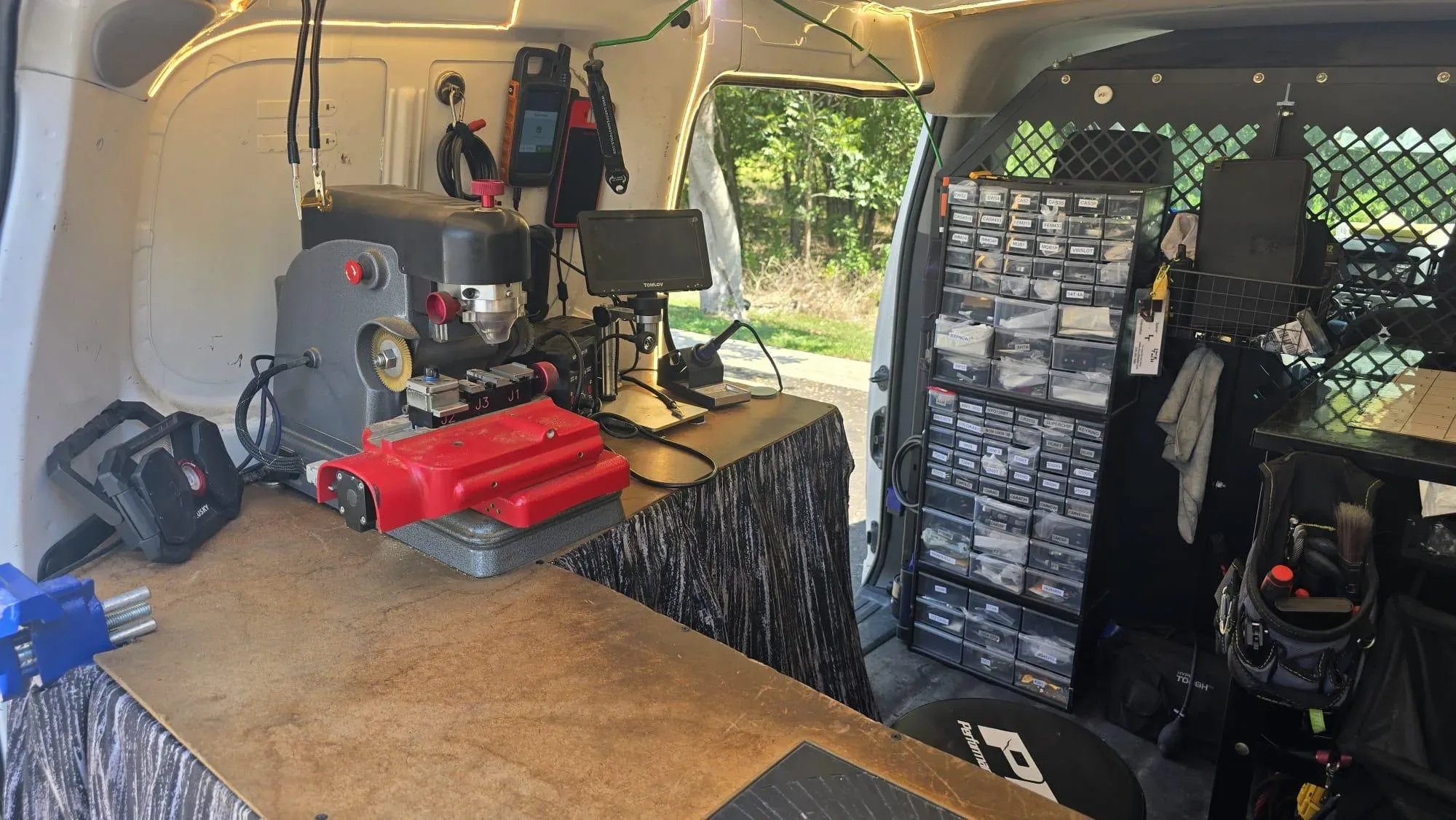
Cut-depth tolerance. Locksmith-grade key machines are built to hold tolerances as tight as roughly 0.001 inch and get calibrated frequently, sometimes daily on a busy shop's cutting bench. Basic retail-counter machines and older kiosk units are more often manually operated, calibrated less often, and simply more prone to an imprecise cut. A key that is off by even a hair can still slide into the lock, but it will bind, stick, or wear the pins unevenly over time.
Wrong reference point. Every key blank has a shoulder or blade edge that the machine uses to set the depth and spacing of each cut. Trade sources point to this specific error as especially common on Kwikset-style keys when an untrained staffer runs the machine: use the wrong edge as the reference point, and every cut on the new key is off by the same consistent amount, in a way that will not show up until the key has been in the lock a few weeks.
CLONING VS. PROGRAMMING
What Cloning Actually Does
Cloning reads a value that already exists on a working key and writes that exact value onto a new blank.
What Programming Actually Does
Programming adds a brand-new identity to the vehicle's or system's own memory.
Blank and machine condition. A worn cutting wheel, a low-quality blank, or a machine that has not been serviced in a while all affect how cleanly the final cut fits the lock. None of these is a defect you can see by looking at the key. All three show up later, as a key that gets harder to turn or that eventually stops working altogether.
Copy of a Copy: How Tolerance Stacks Up Over Generations
A duplicate cut from an already-duplicated key inherits every small inaccuracy the first copy had, then adds its own on top. Trade sources describe the resulting wear and fit problems becoming noticeable after roughly five generations of copying a copy, which is the mechanical reason a spare of a spare of a spare eventually stops turning smoothly, even when each individual copy looked fine at the counter.
The copy works fine on day one. It's the fifth copy of that copy that stops turning, and by then nobody remembers where the trail started.
This is the whole thesis of this article, and it is easy to miss because nothing about a bad copy looks wrong at pickup. The key slides into the lock. It turns. It works in the store, in the parking lot, and probably for the first few weeks at home. The problem is cumulative, not immediate: each generation compounds a slightly-off depth here, a slightly-off spacing there, until enough small errors stack up that the pins bind or the key simply will not turn one morning. The fix is not a better copy of the copy. It is cutting a fresh spare from the original key, which is why the plan later in this guide treats "which key did this copy come from" as the single most important question you can ask before you cut another one.
Keys You Legally Cannot Duplicate
Some keys cannot be duplicated at all, for reasons that range from a business policy with no legal teeth behind it to a federal crime with a prison sentence attached. A Do Not Duplicate stamp, a patented keyway profile, and a United States Postal Service arrow key each block a copy through a completely different mechanism, and confusing one for another leads to bad assumptions about what a locksmith can and cannot legally do.
TWO FOB TYPES, TWO OUTCOMES
125 kHz Fobs
Fast, cheap, and easy to clone, because it broadcasts a static, unencrypted ID with no authentication check at all.
13.56 MHz Cards
Encrypted and effectively uncloneable, because it requires the reader to prove it holds a matching encrypted key before the card will share anything.
"Do Not Duplicate" Stamps: Policy in Texas, Law in California
Texas has no statute that gives a "Do Not Duplicate" or "Unlawful to Duplicate" stamp independent legal force. Texas Occupations Code Chapter 1702, the Private Security Act that licenses and regulates locksmiths in the state, defines who counts as a locksmith but says nothing about DND stamps or a locksmith's duty toward a marked key. California draws the line very differently: Business and Professions Code Section 6980.54 explicitly prohibits a licensed locksmith from duplicating a key stamped Do Not Duplicate or a restricted, high-security key when the originator's name and contact information appear on it. That side-by-side contrast, one state legislating the point and the other staying silent, is itself the clearest evidence that the Texas silence is real and not just a gap in the research.
Trade-press consensus is that the stamp alone is "not legally binding, it's just a recommendation," and industry sources describe the position of the Associated Locksmiths of America as treating a Do Not Duplicate order the same as any unrestricted key request. Whether to cut a stamped key in Texas is a business-policy and liability decision, not a licensing requirement, and several trade sources note that a locksmith who knowingly cuts a key for someone not authorized to have it can face civil exposure if that key later shows up in a break-in.
Restricted and Patented Keyways: Key Control by Contract
A restricted keyway like Medeco, Mul-T-Lock, Abloy, or Schlage Primus is not locked down by a single law. It works in two stages. While a keyway's design patent is active, patent law itself blocks anyone but the manufacturer from producing that blank profile, which is what keeps the blanks out of a general locksmith's inventory. Once a given patent expires, the keyway does not become a free-for-all. The ongoing restriction shifts to a manufacturer-issued Key Control Agreement, a private contract between the manufacturer, an authorized locksmith, and often the property owner, that governs who may order blanks and cut keys going forward. Some generations within these product lines have already exited patent protection while newer generations remain patent-active, so a keyway's exact legal status depends on which specific product and version is on the door, not the brand name alone. No general Texas or federal statute forces a locksmith to refuse a restricted or patented key. The restriction lives in which distributor will sell the blank to which locksmith, and in the contract's terms.
For the organizational side of restricted keyways, how a business decides to install one and who gets authorized to order copies, our master key system guide covers the key control process in full.
A spare key is only worth having if it still works the day you need it.
USPS Arrow Keys: A Federal Crime, Not a Store Policy
Federal law makes this one unambiguous. 18 U.S.C. Section 1704 makes it a crime to steal, obtain by false pretense, forge, or possess with intent to misuse a key suited to a lock the United States Postal Service uses on its mail, collection boxes, or cluster mailbox panels, the category that includes the master "arrow keys" carriers use on blue collection boxes and apartment mail clusters. A violation carries a fine, up to ten years in federal prison, or both. This is not theoretical: the Department of Justice has publicized sentencings for stolen arrow keys used to steal mail, including a case tied to a Fort Worth, Texas theft of a letter carrier's master key.
Apartment and Community Mailbox Keys: A Different Kind of Restricted
A community mailbox key at an apartment complex or HOA is not something a locksmith can duplicate on request, because USPS-approved cluster mailbox units use blanks that industry sources describe as restricted and not stocked in standard locksmith or hardware-store inventory. The property manager, not the post office, typically holds the spare-key inventory for the building's mailbox bank and is the right first call when a resident needs a replacement.
Same-day issuance from the manager's own stock is common when they have a spare on hand. When they do not, and USPS involvement is required, the standard mechanism cited by industry sources is PS Form 1094, an Application for Delivery of Mail Through Agent, with USPS-side processing described as taking roughly one to three weeks. Confirm the current form and timeline with your local post office and property manager, since local district practice varies and this process can change.
Copying a Car Key: What's Actually Happening Under the Blade
Copying a modern car key is either a straightforward clone or a full reprogramming job, depending entirely on which transponder chip type sits inside the plastic head, not on the car's brand or price point. Fixed-code chips hold a static value a compatible tool can read and duplicate. Encrypted and rolling-code chips exchange a changing value with the car's computer instead, with nothing fixed to copy, so they must be enrolled into that specific vehicle.
THREE REASONS A CHEAP COPY WEARS OUT
Cut-depth tolerance
Basic retail-counter machines and older kiosk units are more often manually operated, calibrated less often, and simply more prone to an imprecise cut.
Wrong reference point
Use the wrong edge as the reference point, and every cut on the new key is off by the same consistent amount.
Blank and machine condition
A worn cutting wheel, a low-quality blank, or a machine that has not been serviced in a while all affect how cleanly the final cut fits the lock.
Fixed-Code Chips: The Clonable Kind
Early Texas Instruments, Megamos, Philips, and Temic chip families hold a value that never changes, so a compatible cloning device can read that value once and write it onto an unlimited number of new transponders. The vehicle's immobilizer accepts each one exactly as it accepts the original, because as far as the car can tell, nothing is different. Our transponder key service covers cloning for the fixed-code families still on the road across Texas.
Encrypted and Rolling-Code Chips: Must Be Programmed, Not Copied
Encrypted TI variants, Philips Crypto, and later Megamos Crypto and Hitag2-family chips exchange a challenge and response with the car's computer, or use a value that changes on a schedule the vehicle expects, so there is no static value sitting inside the chip to copy. Making a working spare means enrolling a key into that specific vehicle's immobilizer memory instead, typically through OBD tools, dealer software, or EEPROM and PIN-based methods.
Transponder immobilizers arrived in North American vehicles starting with the 1996 model year, with the 1996 Ford Taurus's fixed-code chip a common trade-press reference point. There is no single universal year after which every vehicle switched to encrypted chips. The shift happened make-by-make and even generation-by-generation through the late 1990s and 2000s, and some model lines changed chip families mid-run: the 2014 Toyota RAV4 and Corolla moved from a "G" transponder to an "H" transponder that is not backward compatible with the earlier chip on the same nameplate. Always verify the chip type for a specific make, model, and year before assuming a key can be cloned rather than programmed.
Cloning vs. Programming: Two Different Jobs, One Confusing Word
Cloning means copying a fixed value from a working key onto a new blank so the vehicle or lock accepts it as identical to the original. Programming means enrolling a distinct new key or fob into a vehicle's or system's memory so it recognizes that device going forward. Both produce a spare that works, but they use different tools, different time, and different money.
What Cloning Actually Does
Cloning reads a value that already exists on a working key and writes that exact value onto a new blank. Nothing about the vehicle's memory changes. The car simply sees a second copy of a value it already trusted.
What Programming Actually Does
Programming adds a brand-new identity to the vehicle's or system's own memory, which is why it usually requires access to the vehicle's computer, the vehicle's PIN, or dealer-level software rather than a cutting or cloning tool. Our key programming service covers this enrollment process for vehicles that require it across Texas.
Proximity Fobs and Smart Keys: Why "Copy" Is the Wrong Verb
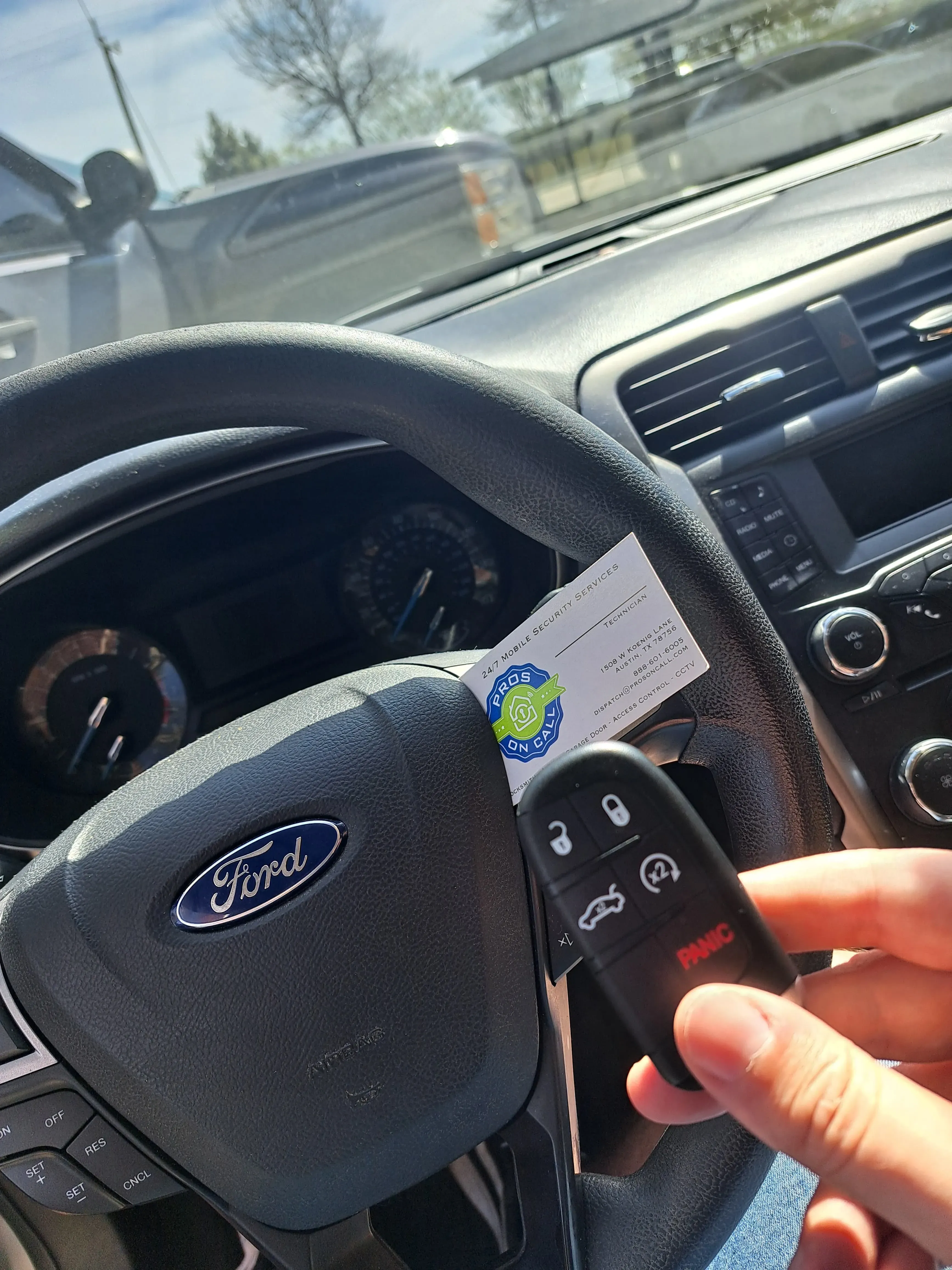
A proximity fob or smart key cannot be copied the way a metal key or a fixed-code chip can, because it authenticates to the vehicle through a radio exchange rather than a static shape or value, so there is nothing fixed to trace or clone. Making a working spare means enrolling, or programming, a new and distinct fob into that specific vehicle's system, a different operation with different tools and often a different price.
"Copy" is the wrong word for a smart key. There is nothing fixed inside it to trace.
Smart-key fobs also carry vehicle-identification data that is deliberately not overwritable without proprietary software, a designed theft deterrent that keeps a lost or stolen fob from simply being reassigned to a different car. Many vehicles require dealer-level software, the vehicle's own PIN, or an all-keys-lost procedure to enroll a smart key from scratch. Our key fob replacement guide walks through those DIY and professional programming methods for the specific case where no working fob exists to start from.
Building and Gate Fobs: Which Credentials Can Be Cloned
An older 125 kHz proximity fob used for apartment or gate access can be cloned in under two minutes with inexpensive, off-the-shelf hardware, because it broadcasts a static, unencrypted ID with no authentication check at all. A modern 13.56 MHz credential such as MIFARE DESFire cannot be cloned the same way, because it requires the reader to prove it holds a matching encrypted key before the card will share anything.
125 kHz Fobs: Fast, Cheap, and Easy to Clone
A 125 kHz card or fob transmits a fixed, unencrypted data stream, typically a static 26-bit ID. Because there is no encryption and no mutual authentication step, any nearby compatible reader or writer, including low-cost consumer duplicators, can capture and reproduce that ID quickly. If your building or gate fob is an older 125 kHz format, treat it the way you would a house key: assume it can be copied, and control who has access to one.
WHAT A REAL KEY COPY COSTS
Basic house or office key
about $1.50 to $10 at a hardware store or self-serve kiosk, and about $10 to $25 from a locksmith who holds tighter tolerances.
Transponder chip clone
runs roughly $60 to $190.
Smart-fob add-a-key job
runs $150 to $400 or more, because that job is really a programming service rather than a mechanical duplication.
13.56 MHz Cards: Encrypted and Effectively Uncloneable
A 13.56 MHz smart card format like MIFARE DESFire uses mutual authentication with per-card diversified encryption keys, so the reader has to prove it holds the correct secret before the card shares anything. A generic duplicator has no valid key to present, and researchers report no known practical cloning attack against a properly implemented DESFire deployment. Our access control guide covers this same 125 kHz versus 13.56 MHz distinction from a building owner's perspective, including which one to install.
What a Real Key Copy Costs in Texas
A basic house or office key copy in Texas costs about $1.50 to $10 at a hardware store or self-serve kiosk, and about $10 to $25 from a locksmith who holds tighter tolerances. A transponder chip clone runs roughly $60 to $190, and a smart-fob add-a-key job runs $150 to $400 or more, because that job is really a programming service rather than a mechanical duplication.
| Duplication type | Texas 2026 range | Notes |
|---|---|---|
| Hardware store cut (basic house or office key, no chip) | $1.50 to $10 per key | Consistent across Ace, Home Depot, and Lowe's counters |
| Big-box self-serve kiosk (MinuteKey or KeyMe-style machine) | $2 to $10 per key | Similar range to a hardware-store counter |
| Locksmith cut, basic metal key | $10 to $25 per key | Tighter tolerance, calibrated equipment |
| Transponder (chip) key clone, working key present | $60 to $190 | Fixed-code chip families only |
| Smart fob add-a-key, working fob present | $150 to $400 or more | A programming service, not a mechanical duplication |
These figures assume a working key or fob already exists to copy from. A lost-everything job costs more and is priced separately. See our locksmith pricing guide for the full range of Pros On Call service costs, or our car key replacement cost guide and key fob replacement guide for replacement-specific pricing.
Building a Spare-Key Plan That Actually Works
The most reliable spare-key plan starts with the original key, never a copy of a copy, and treats a lost-everything scenario as a separate emergency rather than an everyday duplication job. If you have no working key at all right now, that is a replacement or lockout situation with its own pricing and process, not the copying work covered in this guide.
If You Have No Spare Right Now
Call (888) 601-6005 and our team can dispatch a mobile technician to cut a fresh key on-site or, if the lock itself is the problem rather than the key, our lock repair versus replacement guide covers how to tell the difference before you pay for the wrong fix.
Cut Every Spare From the Original
Every additional spare should be cut from the original key, not from an existing duplicate, so tolerance never has a chance to stack across generations. Keep one spare with a trusted person outside the property, one spare in a secure fixed location, and re-cut future spares from the original the next time you need one.
Duplicating Is Not Rekeying
Duplicating copies a key that already works. Rekeying changes which key works in the lock, without touching the key you carry today. If your goal is actually to make an old key stop working, for example after a move-in or a lost key you can no longer trust, our rekeying service and our Kwikset rekeying guide cover that different job.
Frequently Asked Questions
Q: Can a locksmith legally copy a key stamped "Do Not Duplicate" in Texas? A: Yes. Texas has no statute that gives a "Do Not Duplicate" stamp independent legal force, and Texas Occupations Code Chapter 1702, which licenses locksmiths, does not address the stamp at all. California explicitly bans it by law instead. Whether to cut a stamped key in Texas is a business decision for the locksmith, not a licensing requirement.
- No Texas Occupations Code provision addresses DND stamps directly
- California Business and Professions Code Section 6980.54 bans it explicitly, for comparison
- Cutting a key for someone not authorized to have it can still create civil liability
- Verify current requirements, since state law and administrative rules can change
CLONABLE VS. MUST-BE-PROGRAMMED CHIPS
Fixed-Code Chips
Early Texas Instruments, Megamos, Philips, and Temic chip families hold a value that never changes, so a compatible cloning device can read that value once and write it onto an unlimited number of new transponders.
Encrypted and Rolling-Code Chips
Exchange a challenge and response with the car's computer, or use a value that changes on a schedule the vehicle expects, so there is no static value sitting inside the chip to copy.
Q: Can a hardware store copy my car's transponder key? A: Usually not. Most retail counters and kiosks lack chip-cloning equipment entirely, and even a locksmith can only clone fixed-code chip families, not the encrypted or rolling-code chips that arrived on most vehicles built after the late 1990s and 2000s. Those need programming to the vehicle, not a copy.
- Fixed-code families (early TI, Megamos, Philips, Temic) can be cloned onto a blank
- Encrypted and rolling-code chips must be programmed to the specific vehicle instead
- No single model year marks the switch across every manufacturer
- A locksmith with the right equipment is the most likely channel for either job
Q: Why did my copied key stop turning smoothly after a few months? A: The most likely causes are cut-depth tolerance error on the cutting machine, a wrong reference point used during cutting, or copying from a duplicate rather than the original key, which compounds small errors across generations. All three are mechanical issues with the cut itself, not a defective blank or a bad lock.
- Retail-grade machines hold looser tolerances than locksmith equipment
- Wrong-reference-point errors are especially common on Kwikset-style keys
- Copying a copy compounds each prior generation's small errors
- Re-cutting from the original, not the worn copy, is the fix
DUPLICATING VS. REKEYING
Duplicating
copies a key that already works.
Rekeying
changes which key works in the lock, without touching the key you carry today.
Q: Is it illegal to copy a USPS arrow key or community mailbox key? A: Yes, for arrow keys specifically. Federal law, 18 U.S.C. Section 1704, makes stealing, forging, or possessing an unauthorized USPS key a crime punishable by a fine, up to ten years in prison, or both, and real federal prosecutions confirm this is actively enforced rather than a rarely-used technicality.
- 18 U.S.C. Section 1704 covers arrow keys and other USPS-controlled keys
- Community mailbox blanks are also treated as restricted, not general locksmith inventory
- Real federal prosecutions confirm this is actively enforced, not just a technicality
- Contact your property manager first for a mailbox key, before assuming USPS involvement is needed
Q: How much does it cost to duplicate a car key in Texas? A: A basic non-chip car key runs about the same as a house key at a locksmith, roughly $10 to $25, while a fixed-code transponder clone runs about $60 to $190 when a working key already exists to copy from. Encrypted or rolling-code chips cost more, since they require programming rather than cutting.
- Prices assume a working key exists to copy from, not an all-keys-lost scenario
- Encrypted or rolling-code chips cannot be cloned at any price and must be programmed
- Smart-fob add-a-key work runs $150 to $400 or more, since it is a programming job
- Dealer pricing for the same clonable job typically runs higher than a locksmith
Ready for Spare Keys Cut Right?
A spare key is only worth having if it still works the day you need it, which comes down to starting from the right original, using calibrated equipment, and knowing which keys need programming instead of cutting. Pros On Call runs mobile service across Texas for house keys, car keys, fixed-code transponder clones, and smart-fob programming, with technicians who carry the equipment on the truck.
If you need spare keys cut for your home, your car, or your business, our team covers key replacement across Texas with same-day mobile service in most cases.
Call (888) 601-6005 for mobile key cutting and programming anywhere in Texas.
Content strategy and SEO by Optymizer.