
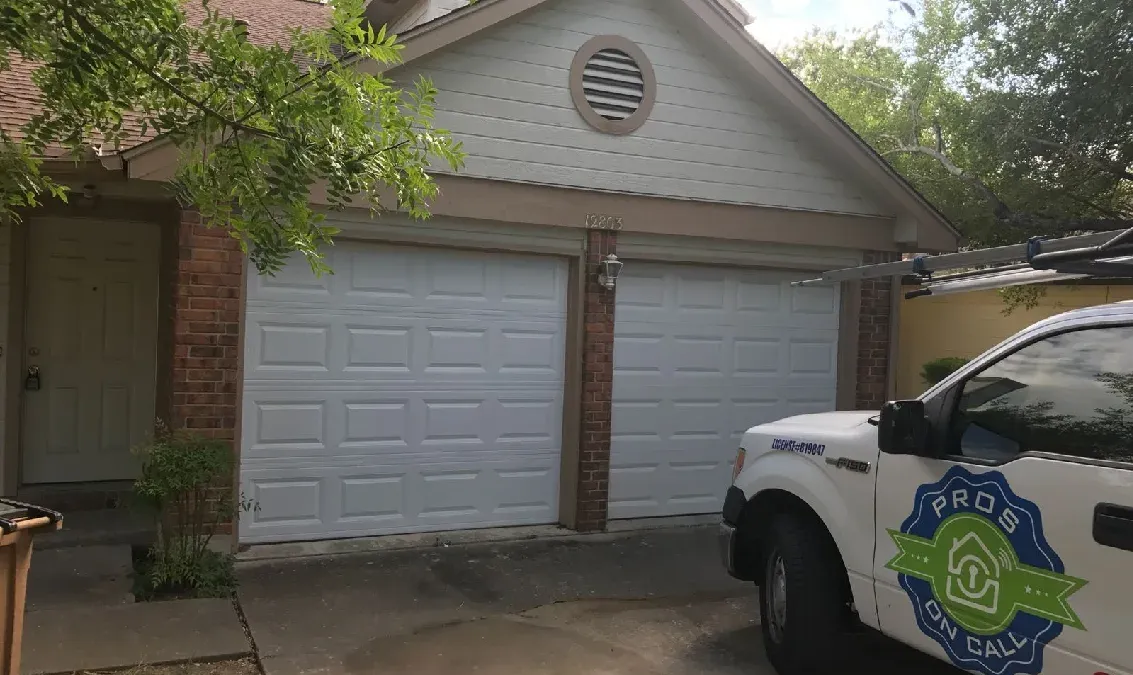
Garage doors are a common entry point for burglars in Texas homes, and our garage-centric culture makes them an even more frequent target here. The average Texas home has 2-3 garage doors, making them prime targets for thieves.
This guide reviews the best garage door locks and security options for Texas homes, from traditional manual locks to smart technology that lets you monitor your garage from anywhere.
Why Garage Security Matters in Texas
Texas garages are bigger targets than most homeowners realize. The garage-centric culture here means a large share of burglars in Texas enter through the garage rather than the front door, and most households park valuable vehicles, tools, and equipment inside daily. On top of that, many homes have a direct interior door from the garage into the house, which means a burglar who gets into your garage is already past the outer perimeter. The financial exposure from a single break-in easily exceeds the cost of a full security upgrade.
Texas garages have a specific set of weak points that repeat again and again in our service calls:
- Opener remotes in cars - Thieves break car window, use remote to open garage
- Emergency release cord - Can be accessed from outside with coat hanger
- Weak service door locks - Side door has basic doorknob lock only
- No lock on main door - Relying on opener only (can be hacked or manually lifted)
- Windows allow visibility - Burglars can see what's inside before breaking in
Types of Garage Door Locks
1. Manual Deadbolt Locks (Side-Mounted)
Best for: Extra security when away for extended periods (vacation, business trips)
A manual deadbolt slides a steel bolt through the door track on both sides, locking the door in place so it physically cannot be lifted even if the opener is triggered. This is the most tamper-resistant option in the lineup because it has no electronic component to hack or disable. The trade-off is that you must be inside the garage to engage or release it, which makes it impractical for daily use but ideal before a two-week vacation.
- Most secure physical lock (can't be bypassed electronically)
- Cheap ($15-$40)
- Easy DIY installation (30 minutes)
- Works during power outages
- Must manually lock/unlock from inside garage
- Can't use garage door opener when locked
- Inconvenient for daily use
Top models worth considering, all confirmed to fit standard residential doors:
- Clopay Defender Garage Door Lock - $30-$40, fits most doors
- Ideal Security Inc. SK110W - $18-$25, budget option
- Prime-Line Products U 9847 - $20-$30, heavy-duty steel
WHERE TEXAS GARAGES FALL SHORT
Opener Remotes in Cars
Thieves break car window, use remote to open garage.
Emergency Release Cord
Can be accessed from outside with coat hanger.
Weak Service Door Locks
Side door has basic doorknob lock only.
2. T-Handle Locks with Exterior Key
Best for: Garages without electric openers or as backup security
T-handle locks are the legacy standard: a T-shaped handle mounts on the exterior face of the door, and turning it lifts the door manually. The keyed cylinder in the center prevents the handle from rotating, which means nobody can lift the door without the key. These are extremely common on older Texas garages and are a straightforward swap when the original cylinder wears out. They also work without electricity, which matters during grid outages.
- Allows manual entry from outside (if power is out)
- Secure keyed lock (can match house key)
- Common on older garage doors (easy replacement)
- Works without electricity
- Vulnerable to lock picking
- Requires lifting heavy door manually
- Lock can freeze in Texas winter (rare but happens)
- Visible keyhole attracts burglars
Reliable models at each price point:
- National Hardware N185-945 T-Handle - $35-$50, heavy-duty
- Prime-Line T-Handle Replacement - $25-$35, budget option
- Henderson T-Handle Lock - $40-$60, commercial grade
3. Slide Bolt Locks (Interior)
Best for: Securing garage door from inside when home
A slide bolt is the simplest lock on this list: you push a steel rod horizontally into a bracket mounted to the door track, and the door cannot move. No keys, no electronics, no moving parts to wear out. Because it can only be operated from inside the garage, this is a great overnight or at-home lock rather than an away-from-home solution. The one real danger is forgetting to slide it back before hitting the opener button, which can damage the door and track.
- Very cheap ($10-$20)
- Simple installation (drill and screw)
- Impossible to bypass from outside
- No maintenance required
- Only works from inside garage
- Easy to forget to unlock before using opener (can damage door)
- Not convenient for daily use
Top picks:
- Garage Door Slide Lock by Ideal Security - $12-$18
- Master Lock 1490DAT Slide Bolt - $15-$25, padlock compatible
- National Hardware N280-022 Barrel Bolt - $10-$15, budget option
4. Padlocks with Hasps (Track-Mounted)
Best for: Temporary security or rental garages
Hasp-and-padlock is the most portable option: a metal hasp brackets to the door track on each side, and the padlock links them together so the door can't rise. When you need normal operation, the padlock comes off. This setup costs almost nothing and works on virtually any door, which makes it the go-to for renters, construction sites, and storage garages where a permanent lock isn't practical. The main frustration is that you must be inside to lock or unlock, and an opener accidentally triggered while the padlock is engaged will stress the door badly.
- Very cheap (hasp $5-$10, padlock $10-$30)
- Portable (can take padlock with you)
- No keys to lose (combination padlocks available)
- Easy to install (2 screws per hasp)
- Must be inside garage to lock/unlock
- Can damage door if opener is activated while locked
- Not aesthetically pleasing
Recommended hardware:
- Master Lock 141D Hasp - $8-$12 + padlock
- Abus 83/45 Rekeyable Padlock - $25-$40, high security
- Master Lock 1535DPF Padlock - $15-$25, weather resistant
TOP SLIDE BOLT PICKS
Ideal Security Slide Lock
Garage Door Slide Lock by Ideal Security.
Master Lock 1490DAT
Master Lock 1490DAT Slide Bolt, padlock compatible.
National Hardware N280-022
National Hardware N280-022 Barrel Bolt, budget option.
5. Smart Garage Door Openers
Best for: Tech-savvy homeowners who want remote monitoring and control
Smart openers connect your garage door to your phone, which changes the security game entirely. Instead of wondering "did I close the garage?" from the airport, you can check the app, close it remotely, and get an alert if it opens again. Beyond convenience, smart openers let you grant temporary access to delivery drivers or visiting family without cutting new keys or being home yourself. The trade-off is cost and reliance on WiFi. A router outage means no remote access until it comes back up.
- Monitor garage from anywhere (Texas vacations, work trips)
- Get alerts when door opens/closes
- Grant temporary access to guests, delivery drivers
- Integration with smart home (Alexa, Google, HomeKit)
- Auto-close if left open (prevents "did I close the garage?" anxiety)
- Expensive ($200-$500)
- Requires WiFi (vulnerable to internet outages)
- Subscription fees for some features ($3-$10/month)
- Can be hacked (though rare with proper security)
Top models by use case:
- Chamberlain myQ Smart Garage Hub - $30-$50 (works with existing opener)
- LiftMaster 8500W Elite Series - $400-$500 (full opener replacement)
- Ryobi GD200 Garage Door Opener - $250-$350, built-in camera and fan
- Tailwind iQ3 - $100-$150 (GPS auto-open/close)
- Nexx Garage - $90-$130 (budget smart controller)
6. Garage Door Service Door Locks
Best for: Securing walk-through door to garage (the side door)
The service door, the regular hinged door into your garage, is the entry point burglars prefer most because it responds to pry bars and kick attacks just like any exterior door. Many homeowners install a solid deadbolt on the front door and then leave the service door with a basic doorknob lock, which an experienced burglar can kick through in seconds. Matching your service door deadbolt to your house key system keeps things simple, and upgrading to a smart lock here adds remote visibility without requiring a full opener replacement.
Locks we recommend for service doors:
- Kwikset SmartKey Deadbolt - $35-$50, rekey in 30 seconds
- Schlage B60N Deadbolt - $40-$60, ANSI Grade 1 security
- August Smart Lock Pro - $200-$250, smart lock with remote access
- Yale Assure Lock SL - $180-$250, keyless entry with code
Best Overall Security Setup for Texas Garages
No single lock solves the whole problem. Garage security works in layers, where each layer stops a different type of attack and forces a burglar to spend more time and make more noise. The three levels below are how we typically scope projects for Austin and San Antonio homeowners, ranging from a quick weekend upgrade to a full monitored system.
Level 1: Basic Security (Under $100)
For under $100 you can eliminate the easiest attacks and deter casual burglars who are looking for a quick, quiet entry. A slide bolt on the main door stops lifting, a Grade 1 deadbolt on the service door replaces the weakest link, and window film removes visibility so a burglar cannot case what's inside without committing to the break-in.
- Slide bolt lock on main garage door ($15)
- Kwikset deadbolt on service door ($40)
- Window film or curtains to block visibility ($20-$40)
Total cost: $75-$95. Deters casual burglars and stops quick grab-and-go thefts.
Level 2: Enhanced Security ($100-$300)
The enhanced setup adds a permanent lock to the main door, a smart lock that logs every entry on the service door, a camera for evidence, and motion lights that eliminate the darkness burglars rely on. This combination makes your garage one of the harder targets in the neighborhood without requiring a professional alarm contract.
- Manual deadbolt lock on main door ($30)
- Smart deadbolt on service door ($150-$250)
- WiFi camera pointed at garage interior ($50-$100)
- Frosted window film + motion-sensor lights ($40)
Total cost: $270-$420. Deters most burglars and provides evidence if a break-in occurs.
SMART OPENER PICKS BY USE CASE
Works With Existing Opener
Chamberlain myQ Smart Garage Hub, works with existing opener.
GPS Auto-Open
Tailwind iQ3, GPS auto-open/close.
Budget Smart Controller
Nexx Garage, budget smart controller.
Level 3: Maximum Security ($400-$800)
The full setup integrates every layer into a monitored system: a smart opener with camera, a smart lock on the service door, door and window sensors tied to your alarm, and a tamper-resistant emergency release shield. At this level you have real-time visibility from anywhere in Texas, an activity log of every entry, and a system that can qualify you for homeowners insurance discounts.
- Smart garage door opener with camera ($300-$500)
- Smart deadbolt on service door ($200-$250)
- Security system integration (door/window sensors) ($100-$150)
- Tamper-resistant emergency release ($20-$30)
Total cost: $620-$930. Maximum protection, remote monitoring, and potential insurance discounts.
Garage security pays for itself if it prevents 1 break-in over 10 years.
Texas-Specific Garage Security Considerations
1. Extreme Heat (100F+ Summers)
Texas summers push garage hardware to its limits in ways most product specs don't account for. Plastic T-handle components can warp when a west-facing garage door sits in direct sun all afternoon. Smart opener batteries drain measurably faster in triple-digit heat than manufacturer ratings assume. And lubricants that are just fine in a Chicago climate dry out and gum up after a few Austin summers.
Metal locks hold up far better than plastic under sustained heat. Replace smart opener batteries every 6 months rather than annually, and lubricate all lock mechanisms quarterly with graphite powder or Teflon spray rather than oil-based products, which attract dust and bake into a residue over time.
2. Large Garages (3-Car or Workshop)
Bigger garages mean more doors to lock, more floor area for a WiFi signal to cross, and more points where a burglar can attempt entry. A homeowner who secures the main door and forgets the side overhead on a 3-car garage has done half the job.
Lock every overhead door, not just the primary one. If your smart opener app shows intermittent connectivity, add a WiFi extender or mesh node in or near the garage before assuming the opener is faulty. For workshop garages holding $10,000+ in tools, a professionally monitored sensor system is worth the monthly fee.
3. Detached Garages (Common in Rural Texas)
A detached garage in rural Travis, Bexar, or Hidalgo County sits out of natural sight lines from the house, which gives a burglar time to work without being spotted from a window. The contents are often the most valuable items on the property, including tractors, ATVs, and trade tools.
Motion-activated floodlights are the single highest-impact upgrade for detached garages because they remove the cover of darkness burglars depend on. Pair them with a WiFi camera with night vision, a padlock and slide bolt combination on the main door, and a driveway sensor that alerts your phone when a vehicle approaches.
4. Hurricane and Tornado Preparedness
South and coastal Texas homeowners face a unique requirement: the lock must still function when the power is out for days, and it must hold the door against wind pressure that an attacker would never generate. An electronic deadbolt with dead batteries during an outage is worse than no lock at all.
For storm preparedness, the right combination is:
- Manual deadbolt locks (work without power)
- Heavy-duty slide bolts (secure door against wind)
- Smart opener with battery backup (monitor remotely during evacuation)
5. High-Value Items (Tools, Vehicles, Equipment)
Texas garages tend to hold a lot of value. The typical Austin or San Antonio garage contains tens of thousands of dollars in vehicles, power tools, and outdoor equipment. Tools are the most common target because they're easy to carry and hard to trace. Classic cars and motorcycles are also high on the list.
An interior camera that records continuously is the best evidence layer for high-value garages. Pair it with a smart opener activity log so you know exactly when the door was opened and by whom. GPS trackers on high-value tools and vehicles add a recovery layer that physical locks cannot provide.
A homeowner who secures the main door and forgets the side overhead on a 3-car garage has done half the job.
How to Prevent Emergency Release Cord Exploitation
The emergency release cord is a genuine vulnerability most homeowners don't know about. A burglar can bend a coat hanger, slide it through the gap at the top of a closed garage door, and snag the red handle to pop the door off its opener track. All in under 30 seconds and with no visible damage. The cord is there for safety and it has to stay, but you can block access to it from outside.
Option 1: Disable Emergency Release (Not Recommended)
Zip-tying the emergency release to the carriage so it can't be pulled stops the attack but creates a serious safety problem. You cannot manually open the door if the opener fails during a fire or medical emergency. Skip this option.
Option 2: Shield the Cord
Install a shield kit that physically blocks the gap at the top of the door so a coat hanger cannot reach the cord from outside. The handle remains fully functional from inside the garage.
- Products: Garage Shield, Door Devil Garage Door Lock ($15-$30)
- Safe - Can still pull cord from inside in emergency
Option 3: Use a Zip-Tie
Loop a zip-tie through the emergency release handle and the cord itself, making it harder to snag with a hook. This is free and better than nothing, but a strong tug still breaks it. Treat it as a backup measure only.
Best option for Texas: Option 2 (shield kit). It stops the attack without compromising the safety feature it's designed to protect.
Smart Garage Opener Comparison
The five openers below represent the realistic range from a $30 add-on that works with your existing motor all the way to a full wall-mount unit with professional features. Price, camera inclusion, and subscription cost are the three variables that matter most for Texas homeowners choosing between them.
| Model | Price | Camera | Auto-Close | Works With | Subscription |
|---|---|---|---|---|---|
| Chamberlain myQ Hub | $30-$50 | No | Yes | Alexa, Google | Free (premium $1/mo) |
| LiftMaster 8500W | $400-$500 | No | Yes | myQ, HomeKit | Free |
| Ryobi GD200 | $250-$350 | Yes | Yes | Alexa, Google | Free |
| Tailwind iQ3 | $100-$150 | No | Yes (GPS) | Alexa, Google, HomeKit | Free |
| Nexx Garage | $90-$130 | No | Yes | Alexa, Google, IFTTT | Free |
Winner for Texas: Ryobi GD200 - Built-in camera, fan (helps with heat), and $100 cheaper than LiftMaster.
DIY Installation vs. Professional Installation
DIY Garage Lock Installation
Most basic locks are genuinely DIY-friendly, and the hardware stores in Austin and San Antonio carry everything you need. If you're comfortable with a drill and a screwdriver, you can handle any of these without calling anyone.
Good candidates for DIY:
- Slide bolt locks (drill 4 holes, screw in)
- Padlock hasps (2 screws per side)
- T-handle lock replacement (remove old, install new)
- Smart garage hub (plug in, connect to WiFi)
Time required: 15-60 minutes. Tools needed: Drill, screwdriver, level, measuring tape. Cost savings: $50-$150 (labor).
Price, camera inclusion, and subscription cost are the three variables that matter most for Texas homeowners choosing between them.
Professional Installation
Some jobs require precise alignment to work safely and to avoid voiding the product warranty. Anything involving wiring, safety sensor adjustment, or door reinforcement belongs in this category. A deadbolt on a service door that's slightly out of plumb is a deadbolt that binds and eventually fails, which is why proper installation matters.
Work that's worth calling us for:
- Smart garage door opener replacement (wiring, safety sensors)
- Deadbolt locks on service door (proper alignment critical)
- Security system integration (sensors, wiring)
- Garage door reinforcement (hurricane bracing)
Time required: 1-3 hours. Cost: $75-$200 (labor). Professional installation also protects the warranty on products that void it for improper DIY installs.
Garage Security Checklist for Texas Homeowners
Run through this checklist to audit where your garage stands. It covers every layer from the main door to the interior house connection.
Main Garage Door: The overhead door is the largest moving part in your home's security envelope and deserves its own lockset, not just an opener.
- Manual lock installed (deadbolt or slide bolt)
- Emergency release cord is shielded or disabled safely
- Garage door opener is less than 10 years old (older ones easy to hack)
- Opener has rolling code technology (prevents code grabbers)
Service Door (Walk-In): The side entry door is where most forced entries happen because it looks and behaves like any residential door, and gets treated like one with a cheap lock.
- Deadbolt installed (Grade 1 ANSI rated)
- Door is solid core (not hollow)
- Strike plate has 3" screws (not 1" screws)
- Hinges are on interior (can't be removed from outside)
Windows: Garage windows are rarely secured and almost never obscured, which makes them a quick scouting tool for anyone casing your home.
- Frosted film or curtains installed (blocks visibility)
- Windows have locks (not just latches)
- Sensors installed (for security system)
LAYER ONE: BASIC SECURITY
Slide Bolt Lock
Slide bolt lock on main garage door.
Kwikset Deadbolt
Kwikset deadbolt on service door.
Window Film
Window film or curtains to block visibility.
Smart Technology: Remote visibility is the upgrade that changes your relationship with your garage. You stop wondering and start knowing.
- WiFi camera installed (interior view)
- Smart opener or hub installed (remote monitoring)
- Auto-close enabled (door closes after 10 minutes)
- Activity alerts enabled (notifies when door opens)
General Security: These items address behavior and habits, which no hardware upgrade can fully replace.
- Motion-sensor lights installed
- Valuables are not visible from windows
- Ladders and tools are locked up (can't be used to break in)
- Interior door to house is locked (secondary barrier)
Score: Tally up how many boxes you checked and find your range below.
- 12-15 checked: Excellent security
- 8-11 checked: Good security
- 4-7 checked: Fair security (improvements recommended)
- 0-3 checked: Poor security (high risk)
GOOD CANDIDATES FOR DIY
Slide Bolt Locks
Slide bolt locks: drill 4 holes, screw in.
Padlock Hasps
Padlock hasps: 2 screws per side.
T-Handle Replacement
T-handle lock replacement: remove old, install new.
Cost-Benefit Analysis: Are Garage Locks Worth It?
The math here is straightforward. A garage break-in in Texas carries a wide range of potential losses depending on what's stored inside. If you keep tools, bikes, and sporting equipment in there, a single event can run $5,000-$10,000 in stolen items plus $500-$2,000 in forced-entry damage. If a vehicle is parked inside, losses can reach $15,000-$40,000. Against that exposure, a full security upgrade runs $480-$800. A fraction of the cost of even the most modest claim.
The insurance angle is worth factoring in too. Many Texas homeowners insurers discount premiums 5-10% for documented smart home security systems. On a $1,500/year policy, that's $75-$150 back per year, meaning the hardware pays for itself within a decade from savings alone, before you count any break-ins prevented.
GARAGE DOOR LOCK SERVICES WE HANDLE
Lock Installation
Lock installation across all types.
Smart Opener Setup
Smart opener installation and setup.
Free Security Consultations
We audit your garage, give you specific recommendations based on your garage type and neighborhood.
Full security upgrade cost breakdown: Three purchases cover the main door, the service door, and remote visibility. The three layers that matter most.
- Smart opener with camera: $300-$500
- Deadbolt on service door: $150-$250
- Manual lock on main door: $30-$50
- Total: $480-$800
Need Help Securing Your Texas Garage?
Pros On Call (License #B19847) serves Austin, San Antonio, McAllen, and communities across Texas. Our licensed technicians install, replace, and upgrade garage security hardware, and we can walk through your specific setup before recommending anything.
Garage Door Lock Services we handle daily: lock installation across all types, smart opener installation and setup, security system integration, and garage door reinforcement.
Service Door work includes Grade 1 ANSI deadbolt installation, smart lock installation (August, Kwikset, Yale), kick-proof strike plate upgrades, and lock rekeying to match your house keys.
Security Consultations are free: we audit your garage, give you specific recommendations based on your garage type and neighborhood, and provide documentation for insurance discount requests.
Common project costs we see regularly: a smart opener plus locks plus camera runs $500-$800 total; an older opener upgraded to smart runs $300-$500; a deadbolt plus service door reinforcement runs $200-$400.
We cover Austin, San Antonio, Houston, Dallas, Fort Worth, El Paso, Arlington, Corpus Christi, Plano, McAllen, and all major Texas metro areas.
Call (888) 601-6005 for a free garage security consultation anywhere in Texas.
Last updated: December 2025 | Based on GSC data: 10 clicks and 5,132 impressions over 16 months. Pricing accurate as of December 2025.
Content strategy and SEO by Optymizer