Getting locked out of your car in Texas heat (or losing your only car key 200 miles from home) is stressful enough without worrying about whether the locksmith you're calling is legitimate, licensed, or going to charge you $500 for a $75 service.
This guide provides 10 essential tips for finding a reliable automotive locksmith in Texas, before you need one in an emergency.
Why Finding the Right Automotive Locksmith Matters
Texas has a real scam problem in the locksmith industry. Out-of-state call centers buy fake Google listings, advertise rock-bottom prices, and dispatch unqualified contractors who arrive with a coat hanger and leave with $400 of your money and a damaged door lock. Knowing the warning signs before you're stranded in a San Antonio parking lot at midnight is the difference between a $95 repair and a nightmare.
The price range for legitimate automotive locksmith work in Texas is predictable. A car lockout should cost $75-$125. A traditional duplicate key runs $50-$100. A transponder or chip key with programming lands at $125-$250. Smart key fob replacement sits at $200-$400, and an ignition cylinder replacement falls between $150 and $350. If a quote lands far outside those bands in either direction, that itself is information worth acting on.
Here are the most common scam patterns you'll encounter:
- "$15 lockout" bait-and-switch - Advertised price is $15, actual bill is $300+
- Unlicensed "locksmiths" - Use coat hangers and screwdrivers, damage your car
- Out-of-state call centers - Dispatch unqualified contractors, take 2+ hours to arrive
- Fake Google listings - Scam companies with fake addresses and reviews
- Drill-happy technicians - Destroy locks unnecessarily to charge more
Tip #1: Verify Texas Locksmith Licensing
Texas does not leave this up to chance. State law requires every locksmith to carry a license issued by the Texas Department of Public Safety (DPS), and that license must appear on the company's website, on their service vehicle, and on every invoice they hand you. This applies to automotive work the same as residential. Anyone who tells you "automotive doesn't require a license" is either ignorant or lying, and neither is someone you want near your car.
Verifying a license takes about 60 seconds. Ask for the license number upfront (format: B12345 or AB1234), then check it yourself at the Texas DPS Regulatory Services portal: https://txapps.texas.gov/tolapp/LocVerification/. Enter the number or company name and confirm the status reads "Active." The following steps lay out the process:
Verifying a license takes about 60 seconds.
VERIFY A TEXAS LOCKSMITH LICENSE
Ask for license number
Format: B12345 or AB1234.
Visit Texas DPS Regulatory Services
https://txapps.texas.gov/tolapp/LocVerification/
Enter license number or company name
Verify status is Active
Not Suspended or Revoked.
Watch for these red flags when you ask:
- Refuses to provide license number
- Says "license is pending" or "not required for automotive"
- Provides out-of-state license
- Company not listed in Texas DPS database
An unlicensed locksmith creates real exposure for you: damaged locks, broken windows, and zero recourse if something goes wrong. Licensed locksmiths are accountable to a regulatory board. Unlicensed ones are accountable to no one.
Tip #2: Look for Mobile Locksmith Services (Not Just Brick-and-Mortar)
When your keys are locked inside your car in a McAllen HEB parking lot, driving to a locksmith shop is not an option. You need someone who comes to you. That sounds obvious, but plenty of companies list themselves as "automotive locksmiths" while operating out of a fixed shop with no mobile unit. If they can't meet you where you're stranded, they're useless in the scenario that matters most.
A legitimate mobile locksmith operates from a properly equipped van or truck, not a personal vehicle with tools in the back seat. The van should have the company name on the side. Professional shops also give you GPS tracking or ETA updates so you're not sitting in 100-degree heat wondering if anyone is actually coming. Ask these questions before you agree to anything:
ASK BEFORE YOU AGREE TO ANYTHING
Do you have a mobile unit available now?
How far away is your technician?
Should be under 30 minutes in metro areas.
Is there a service call fee?
$50-$75 is normal, $150+ is excessive.
Do you have the equipment to program my key?
If you have a chip key.
These are the warning signs that tell you to call someone else:
Tip #3: Check Google Reviews (But Read Them Carefully)
Google reviews are useful, but only if you read them the right way. Raw star ratings are easy to manipulate, so what you're really looking for is volume, recency, specificity, and geographic authenticity. A company with 200 reviews spanning three years, photos of actual service vans, and detailed write-ups mentioning specific Austin neighborhoods is credible. A company with 40 identical five-star reviews all posted on the same Tuesday is not.
Use these markers as your baseline:
- 50+ reviews (shows established company)
- 4.5+ star average (some bad reviews are normal)
- Recent reviews (within last 3 months)
- Photos of actual work (service van, technician, finished product)
- Detailed reviews (specific names, prices, services)
And look for these as reason to keep looking:
- All 5-star reviews (likely fake)
- Generic reviews ("Great service!") without specifics
- Reviews all posted on same day (purchased reviews)
- No response to negative reviews (company doesn't care)
- Disputed location (Google listing says Austin, reviews mention Dallas)
To spot fake profiles, click through to the individual reviewer's account. Fake accounts typically review only one business, post in clusters, and never include photos. Following this process takes two minutes and can save you hundreds:
- Click on reviewer's profile
- Check if they've reviewed other businesses (fake accounts only review one company)
- Read multiple reviews from same person (fake reviews use template language)
- Look for photos (real customers post photos, fake reviewers don't)
Texas-specific tip: Search for reviews mentioning your city or neighborhood ("Round Rock," "The Woodlands," "Southlake"). Local reviews are harder to fake.
Tip #4: Get Pricing BEFORE Technician Arrives
The single most reliable sign of a legitimate locksmith is that they can give you a complete, all-in price over the phone before anyone gets in a truck. A real company knows what a service call costs, what labor runs, and what parts are required. An all-in quote for a car lockout should be in the $75-$125 range for most metro Texas locations. Anything that requires a technician to "assess on-site" before naming a price is a setup for a bait-and-switch.
A full quote covers four components: service call fee ($50-$75 covers travel and time), labor ($50-$150 depending on complexity), parts ($25-$300 depending on key type), and a programming fee ($50-$100 if the key needs chip programming). When you call, ask each of these:
ASK THESE FOUR PRICING QUESTIONS
What is your total price for this service?
Demand an all-in price, not itemized.
Does that include service call, labor, and parts?
Make sure nothing is left out.
Are there any additional fees I should know about?
Taxes, after-hours, weekend.
Do you charge extra if the first method doesn't work?
Should be no.
Walk away from any of these:
- "$15 lockout service!" (bait-and-switch scam)
- "Prices start at $XX" (always ends up 3x higher)
- "I can't give a price over the phone" (scam tactic)
- Technician arrives and says "that'll be $400" (should have told you before dispatching)
Here is what the difference looks like in practice:
Scam: "Yes, it's $15 base, plus $75 service call, plus $50 trip fee, plus $100 after-hours fee... total is $240."
Legit: "It's $95 total to unlock your car right now. That includes everything."
Tip #5: Ask About Response Time (Especially in Texas Heat)
In most Texas emergencies, response time isn't just a convenience issue. When it's 103 degrees in Austin and you have a child or a pet in the car, the difference between a 20-minute arrival and a 90-minute arrival is a medical emergency. Even in less extreme scenarios, being stranded in an unfamiliar area at night or on the shoulder of I-35 is a real safety concern. Always get an honest ETA before you confirm the call.
For the major Texas markets, reasonable expectations are: 15-30 minutes for Austin, Dallas, Houston, and San Antonio; 20-40 minutes for suburbs like Plano, Frisco, and Round Rock; 30-60 minutes for smaller cities like Tyler, Temple, and Waco; and 60 or more minutes for rural areas. Ask these three questions to confirm what you're actually getting:
- "How soon can you get here?" (should give specific ETA, not "as soon as possible")
- "Is your technician currently on another call?" (honesty about wait time)
- "Can you text me when the technician is 5 minutes away?" (professional companies do this)
These answers should send you elsewhere:
- "We'll try to get there in 1-2 hours" (you could overheat in Texas sun)
- "Our technician is on another job, not sure when he'll finish"
- No GPS tracking or ETA updates
Tip #6: Verify They Have Equipment for Modern Car Keys
Most cars on Texas roads today use keys that are more computer than metal. A transponder or chip key (common from the mid-1990s through about 2015) contains an embedded circuit that has to be programmed to match the vehicle's immobilizer. Smart key fobs on newer vehicles add another layer of software complexity. A locksmith who shows up without the right equipment isn't just slower: they literally cannot complete the job.
The four key types, from newest to oldest, are smart key fobs (2015 and newer, with keyless entry and push-button start), transponder/chip keys (roughly 1995-2015), traditional metal keys (pre-1995), and high-security laser-cut or Tibbe keys used by luxury brands. A properly equipped mobile locksmith carries a key cutting machine, an OBDII-connected key programmer, and a stock of blank keys and transponder chips for the common makes. Before you confirm the call:
- "Can you program a [year/make/model] key on-site?" (should say yes for most cars)
- "Do you have the equipment in your van?" (should be yes, not "I'll get it from the shop")
- "How long does programming take?" (10-30 minutes is normal)
If you hear any of these, call the next number:
- "I'll need to tow your car to the shop" (modern locksmiths program on-site)
- "I'll have to order the chip" (professional locksmiths carry inventory)
- "You'll need to go to the dealership for that" (most keys can be programmed by locksmiths)
Texas's most common vehicles are worth naming specifically, because a locksmith who handles them daily will have the right blanks and chips on the van.
- Toyota/Lexus - Very common in Texas, locksmith should have Toyota blanks and chips
- Ford F-150 - Most popular truck in Texas, locksmith should have Ford chips in stock
- Chevy Silverado - Common work truck, same as above
Tip #7: Check for Insurance and Bonding
Things go wrong occasionally, even with competent locksmiths. A slip of a wedge tool scratches your door. A worn ignition cylinder cracks during removal. If the technician working on your vehicle isn't properly insured, you are left holding the repair bill for damage they caused. This is not a hypothetical: it happens, and it is far easier to verify insurance before a technician arrives than to chase down an uninsured contractor afterward.
Texas locksmith businesses are required to carry general liability insurance (covering damage to your vehicle), workers' compensation (covering the technician if injured on your property), and bonding (protecting you from theft or fraud). Confirming all three takes one phone call. Ask whether they're insured and bonded, request a certificate of insurance by email, and call the insurer to verify the policy is current before the technician leaves your parking lot. Watch for these:
- "I don't carry insurance" (illegal in Texas for business operations)
- "My insurance lapsed but I'm working on renewing it"
- Refuses to provide certificate of insurance
If a locksmith does damage your car, follow these steps immediately:
- Take photos immediately (before locksmith leaves)
- Get written statement from locksmith acknowledging damage
- File claim with locksmith's insurance (use certificate you verified earlier)
- If locksmith has no insurance, file small claims court lawsuit
Tip #8: Avoid "Locksmith Near Me" Scam Listings
Searching "locksmith near me" on Google is the single fastest way to land in a scam. The tactic is well-established: a bad actor creates a fake local listing with a plausible address (often a house or long-closed business), spends a few dollars on ads, and immediately shows up in results ahead of legitimate companies who've been in business for years. When you call, you're actually reaching a national call center that dispatches whoever is closest, licensed or not.
Here is how the scam works step by step:
- Scammer creates fake Google listing "ABC Locksmith - Austin"
- Uses fake address (often residential or closed business)
- Ranks high for "locksmith near me" searches
- Dispatches unlicensed contractor from out of state
- Contractor arrives, damages your lock, charges $500
Running this five-step check before you commit takes less than three minutes:
FIVE-STEP CHECK BEFORE YOU COMMIT
Check address on Google Maps
Is it a real business or someone's house?
Call and ask for address
Scammers often can't provide a real address.
Verify license
Check the Texas DPS database (Tip #1).
Look for established online presence
Website, Facebook, real reviews.
Check how long they've been in business
Scam companies rotate names frequently.
These signs in a listing point to a scam:
- Google listing shows residential address
- "Locksmith" name is generic ("24 Hour Locksmith," "Fast Locksmith")
- Phone number has out-of-state area code (not Texas)
- Website is template site with stock photos
- No physical shop or showroom (mobile-only can be legit, but verify license)
These sources are reliably safer:
- Search for company name directly (not "locksmith near me")
- Ask for referrals from AAA, insurance, or car dealership
- Check BBB.org for accredited locksmiths
- Use ALOA (Associated Locksmiths of America) directory: findlocksmith.com
Tip #9: Understand Different Types of Automotive Locksmith Services
Not every locksmith who handles cars does every kind of automotive work. A shop that's excellent at lockouts may not have the OBDII programmer required for a 2019 Camry. Knowing which service you actually need before you call lets you ask the right questions upfront and avoid arriving at a shop that can't finish the job.
Car Lockout Service
A lockout is the most common call: keys are inside the car, you are not. A skilled technician uses a wedge and long-reach tool to open the door without damage in roughly 5-15 minutes. This service is straightforward and should cost $75-$125 all-in. Every automotive locksmith should offer it.
Key Duplication (Spare Key)
Key duplication means making an extra key while you still have a working original. The technician cuts a new blade to match yours and, for chip keys, programs the new key to talk to the vehicle's immobilizer. Traditional keys run $50-$150; chip keys add the programming step and land at $125-$300. The job takes 15-30 minutes. Most locksmiths handle this, though you should confirm they have the right programmer for your make and model before booking.
Key Replacement (Lost All Keys)
Replacing all keys is meaningfully harder than duplication because there is no original to copy from. The technician has to read the car's lock codes directly, cut a new blade from scratch, and program the new key to the immobilizer without a working reference. That process takes 30-60 minutes and costs $150-$400 depending on the vehicle. Not every locksmith can do this: ask specifically whether they handle lost-all-keys for your make before they head out.
Ignition Repair/Replacement
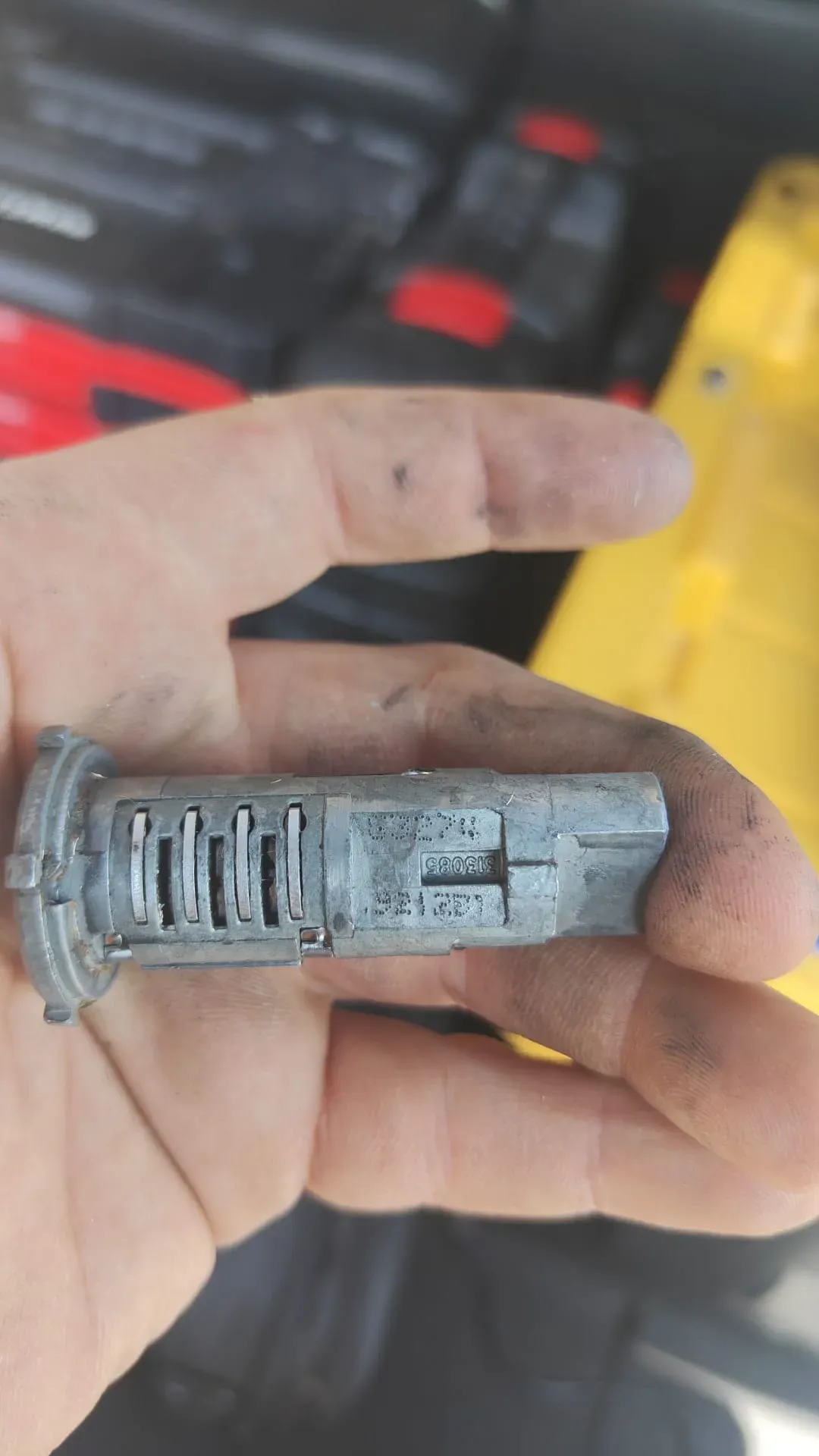
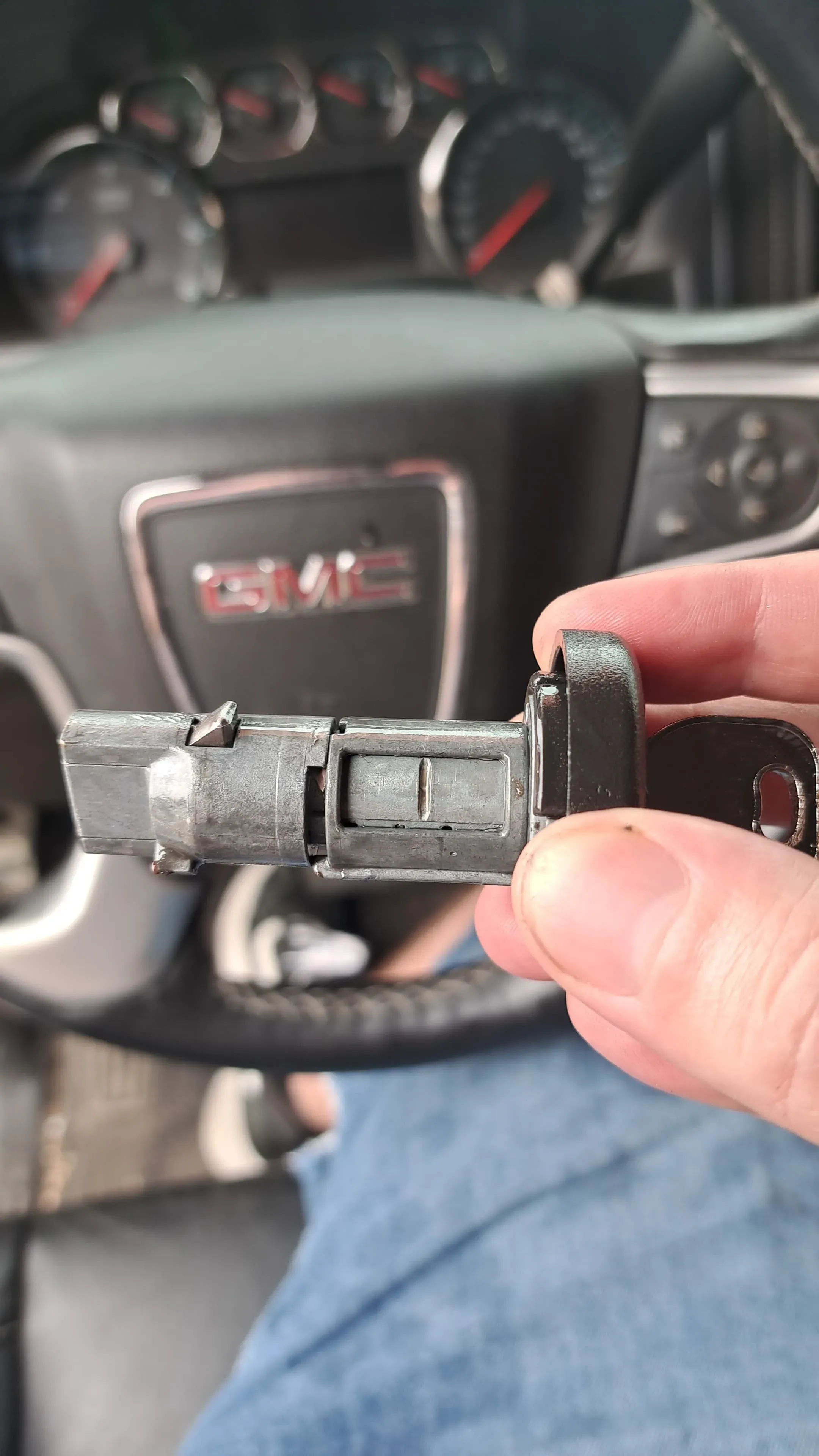
When a key won't turn in the ignition, the cylinder itself may be worn, damaged, or seized. Replacing it requires pulling the steering column, extracting the old cylinder, installing and keying a new one, and reassembling everything. Plan on 45-90 minutes and $150-$400. This is automotive locksmith work with a mechanical component, so verify the shop has hands-on ignition experience, not just key cutting.
Transponder Key Programming
Transponder programming is the step that makes a cut key actually start the car. Without it, the key turns but the engine won't fire because the immobilizer doesn't recognize the chip. The technician connects an OBDII programmer to your car's port, runs the pairing sequence, and confirms the engine starts. This takes 15-30 minutes and costs $125-$250 on top of key cutting. Not all locksmiths carry the software licenses for every make, so ask ahead.
Smart Key Fob Replacement
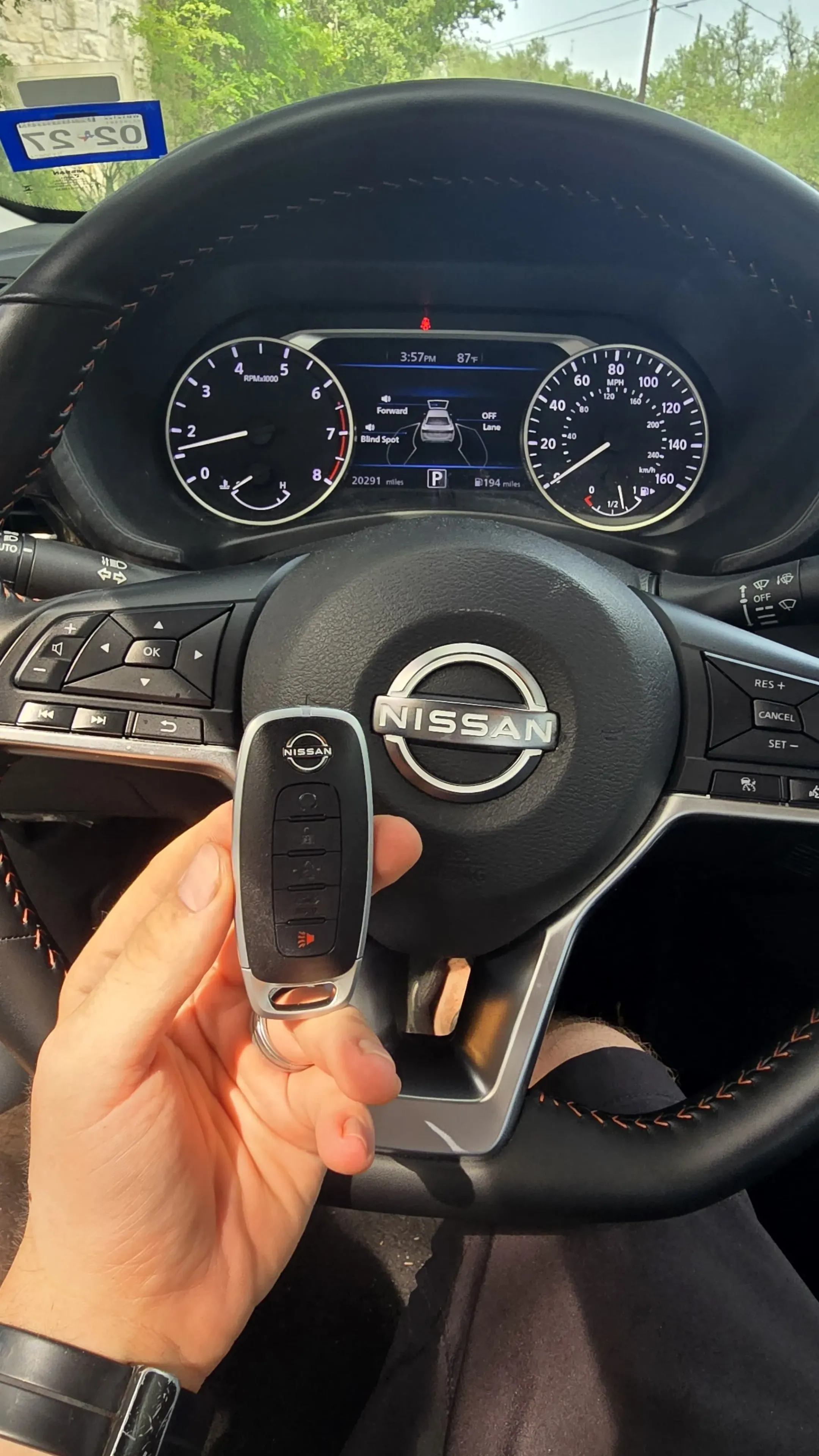
Smart fobs on push-button-start vehicles are the most technically demanding replacement a locksmith handles. The technician programs a blank fob to match your car's security system, which requires specific software and often a seed key or dealer token depending on the manufacturer. Expect 20-40 minutes and $200-$450. Many generalist locksmiths can't do this; find one who specializes in automotive and confirms your specific make is in their kit.
Before booking any of these services, ask whether the company offers your needed service type, whether they have experience with your car's make and model, and how many keys of that type they have programmed recently.
Tip #10: Know When to Call a Locksmith vs. Dealership
The default instinct for many drivers is to call the dealership, because it feels official. In most situations, that instinct costs you time and money. A licensed automotive locksmith can handle the full range of key and lock work for the vast majority of vehicles on Texas roads, often at half the cost and in a fraction of the time. The dealership's edge is narrow: brand-new cars under warranty, some late-model luxury vehicles with proprietary security systems, and a handful of 2020-and-newer models where the manufacturer has restricted key programming to dealer-only tools.
Call a locksmith when:
- Locked out of car (locksmith is far faster than towing to dealership)
- Need spare key made (locksmith is typically half the price of dealership)
- Lost one key but have a spare (locksmith can duplicate from working key)
- Car is 3+ years old (locksmith has equipment for most older models)
- Ignition is stuck or broken (locksmith can replace on-site)
Call dealership when:
- Car is brand new (<1 year old) and under warranty
- Luxury brand (BMW, Mercedes, Audi) with complex security system
- Lost all keys to 2020+ model (some new cars require dealership programming)
- Key fob has advanced features (remote start, memory seats) that locksmith can't program
The table below shows what the cost difference looks like across the most common services. In almost every case, a licensed automotive locksmith is the better financial call.
| Service | Locksmith Cost | Dealership Cost | Savings |
|---|---|---|---|
| Car lockout | $75-$125 | $150-$300 (tow + service) | $75-$175 |
| Spare key (chip) | $125-$250 | $250-$500 | $125-$250 |
| Lost all keys | $200-$400 | $400-$800 | $200-$400 |
| Ignition replacement | $150-$350 | $400-$800 | $250-$450 |
Winner: Locksmith for most situations (50-60% cheaper + faster service)
Red Flags to Watch Out For
Scam locksmiths follow a predictable pattern, and the warning signs appear at every stage of the interaction. Knowing them lets you exit before money changes hands.
During the phone call, the following should end the conversation immediately:
- Won't provide license number or company address
- Can't give total price ("depends on what I find when I get there")
- Pressures you to commit before giving details
- Advertises $15-$20 service (bait-and-switch scam)
When the technician arrives, watch for:
- No company logo on van (personal vehicle)
- Asks for payment BEFORE doing the work
- Tells you price is 3x what you were quoted on phone
- Says your lock needs to be drilled (rarely necessary)
- Refuses to show Texas locksmith license
After the service, these are warning signs of further problems:
- Demands cash only (no card, check, or invoice)
- Receipt doesn't have company name, address, or license number
- Tells you not to turn car on for 24 hours (nonsense)
- New key doesn't work (poor programming)
If you encounter these red flags mid-service, here is what to do:
- Don't pay - Tell technician you want to verify pricing with your bank
- Call police - If technician threatens or demands payment
- File complaint - Texas DPS Regulatory Services (if licensed) or Attorney General (if scam)
- Leave review - Warn others on Google, Yelp, BBB
Questions to Ask Before Hiring an Automotive Locksmith
Before you confirm anyone is heading your way, run through this checklist. A legitimate locksmith answers all of these without hesitation. A scam operation will stumble on licensing, pricing, or insurance questions every time.
EIGHT QUESTIONS TO ASK BEFORE HIRING
What is your Texas locksmith license number?
What is the total all-in price for this service?
Does that include service call, labor, and parts?
How soon can you get here?
Do you have the equipment to program my car's key on-site?
Are you insured and bonded?
What payment methods do you accept?
Can you email me an estimate before sending a technician?
If the company can't or won't answer these questions, hang up and call someone else.
Need a Reliable Automotive Locksmith in Texas?
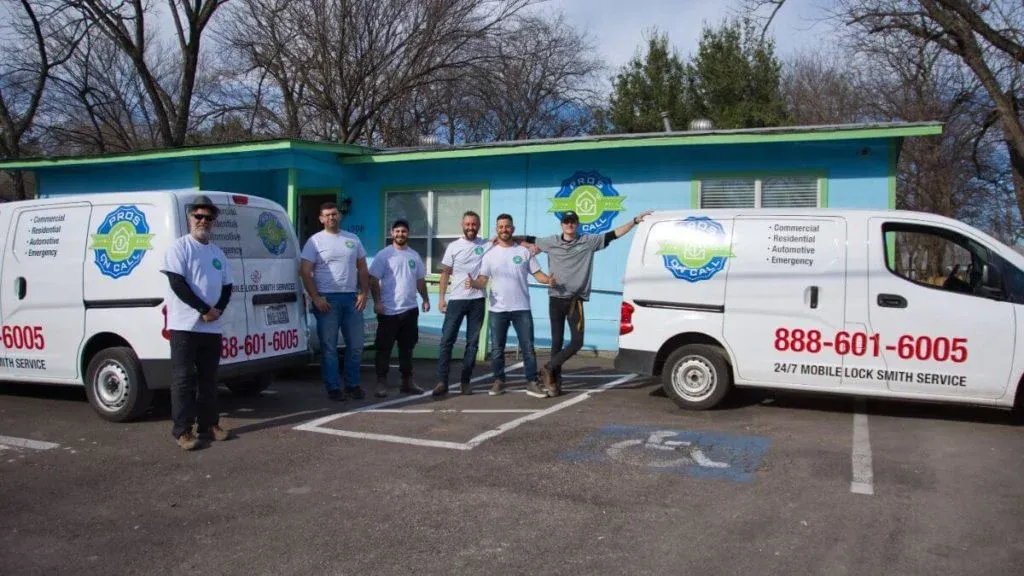
Pros On Call has served Texas drivers since 2010. We're licensed under Texas DPS License #B19847, fully insured, and operate mobile units across Austin, San Antonio, McAllen, and all major Texas metro areas. Our technicians carry programming equipment for every major make and model, so the job gets done on-site without a tow.
Our mobile technicians handle the full range of automotive locksmith work, from a simple lockout to a from-scratch key replacement on a late-model truck.
- 24/7 emergency car lockout service
- Car key duplication (traditional, transponder, smart keys)
- Lost key replacement (all makes/models)
- Ignition repair and replacement
- Transponder key programming
- Smart key fob replacement
Every standard in this guide applies to us. Here is how we hold up against each one.
- Texas DPS licensed (#B19847) and insured
- 15-30 minute response time (metro areas)
- Upfront pricing (no bait-and-switch)
- All work done on-site (no towing needed)
- Lifetime warranty on workmanship
- We program keys for all major brands (Toyota, Ford, Chevy, Honda, Nissan, etc.)
To give you a sense of real-world pricing, here are four typical calls we run across Texas, with what each one actually cost.
- Locked keys in car at grocery store ($95 lockout service)
- Lost only key to 2015 F-150 ($250 key replacement + programming)
- Need spare key for family SUV ($150 chip key duplication)
- Ignition won't turn on 2008 Honda ($200 ignition cylinder replacement)
Service areas: Austin, San Antonio, McAllen, Houston, Dallas, Fort Worth, El Paso, Arlington, Corpus Christi, Plano, and all major Texas metro areas.
Call us at (888) 601-6005 for fast, reliable automotive locksmith service anywhere in Texas. Texas DPS License #B19847.
Last updated: December 2025 | Pricing accurate as of December 2025. Content strategy and SEO by Optymizer.