
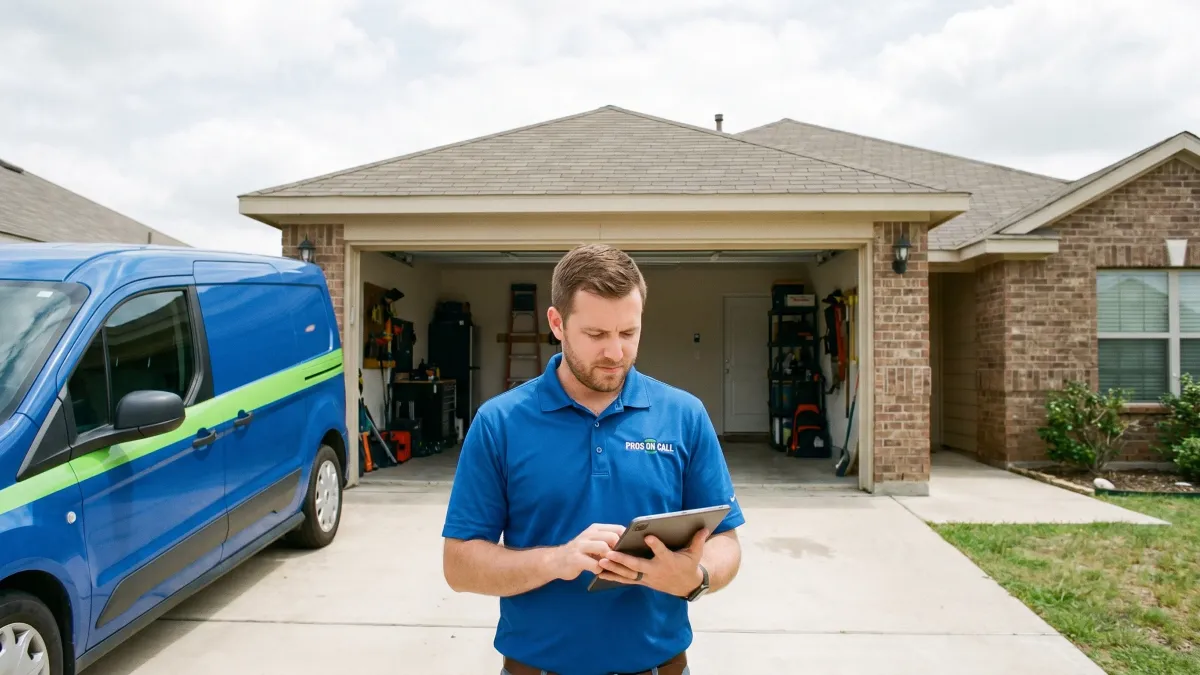
Your garage door opens and closes 1,500+ times per year. It's the largest moving part of your home, lifting hundreds of pounds thousands of times.
Yet most homeowners never think about garage door maintenance until something breaks.
Here's what 15 years fixing garage doors across Texas has taught me: A properly maintained garage door lasts 15-20 years. A neglected door starts failing at 8-10 years.
The difference? About 20 minutes of attention per month and one professional tune-up per year.
Why Garage Door Maintenance Matters
Skip the maintenance, pay the price. Every component is either wearing against another surface or holding tension that wants to release. Without regular attention, that wear compounds faster than most homeowners expect. Here is what develops when maintenance gets skipped:
Springs Fail Prematurely. Standard springs have a rated lifespan of 10,000 cycles, but neglected ones routinely fail between 6,000 and 7,000. That early failure typically happens on a cold morning when you are already running late, and the emergency service call costs $200-$350 on top of the parts.
Rollers Wear Out Faster. Without lubrication at the bearing, rollers generate heat and wear unevenly. Properly maintained rollers last 10-15 years. Dry rollers start binding and chipping in 5-7 years, at a replacement cost of $150-$200.
Opener Works Harder, Dies Sooner. A well-maintained door lets the opener do its rated 15+ years of work. Neglect the door and the opener follows it to an early grave, typically at 10-12 years and $400-$600 to replace.
Track Alignment Issues. Catching early drift costs nothing beyond a minor adjustment. Ignoring it until the door binds or jumps the track turns a $0-$50 tweak into a $200-$400 repair.
Weather Seal Deterioration. Texas UV radiation destroys rubber seals faster than the national average. A seal caught early costs $40 to swap. One ignored until pests find the gap costs $150 or more.
The Financial Case for Maintenance
A professional tune-up runs $100-$125 per year. What it prevents - spring failure, roller replacement, opener repair, and emergency service premiums - adds up to $600-$1,000 in potential repairs over that same period. That is a return of five to ten times the investment.
Schedule annual maintenance: (888) 601-6005
| Component | Neglected Cost |
|---|---|
| Spring failure | $200 to $350 emergency service |
| Roller replacement | $150 to $200 |
| Opener replacement | $400 to $600 |
| Track repair | $200 to $400 |
| Weather seal replacement | $150 or more |
Monthly Maintenance Checklist (15 Minutes)
Set a monthly reminder on your phone. Fifteen minutes once a month catches the problems that turn into expensive repairs.
Visual Inspection (5 Minutes)
Work through each component in order, looking for changes since last month.
Look at the Springs. Springs show their age through rust, gaps between coils, and uneven winding. A gap in the coils means a coil has already separated and full failure is imminent. Any of these signs means the spring is close to failure - call a professional immediately rather than waiting for it to snap.
Inspect the Cables. Run your eyes along the full length of both cables. Check where they wrap around the drum and where they attach at the bottom bracket. Rust on the cable body is also a warning. Any visible fraying means the cable could snap without further notice; treat it as urgent.
Check the Rollers. Grab each roller and give it a spin by hand. It should rotate freely and quietly. Grinding or scraping tells you the bearing is dry or damaged. Visible cracks or chips on the roller body mean the roller is about to break free from the track, which can cause the door to drop.
Examine Weather Stripping. Work your way around the bottom seal, then the side seals, then the top. You are looking for cracks, compression gaps where the seal lifts off the floor, and sections that have pulled away from the door. Texas UV rays destroy rubber faster than northern climates - a cracked seal should be replaced immediately.
Inspect the Door Panels. Look for new dents, rust on steel doors, and panel alignment. Dents that create sharp folds concentrate stress and can cause the panel to crack under the door's weight.
MONTHLY VISUAL INSPECTION, WHAT TO CHECK
Springs
Rust, gaps between coils, and uneven winding. A gap in the coils means a coil has already separated and full failure is imminent.
Cables
Run your eyes along the full length of both cables, checking where they wrap around the drum and where they attach at the bottom bracket.
Rollers
Grab each roller and give it a spin by hand. It should rotate freely and quietly.
Weather stripping
Cracks, compression gaps where the seal lifts off the floor, and sections that have pulled away from the door.
Lubrication (5 Minutes)
Proper lubrication is the single most important thing you can do for your garage door. Metal components grinding against each other without lubrication generate heat, accelerate wear, and create the kind of noise that tells you a repair is coming.
Torsion Springs sit above the door and take the full weight load on every cycle. Spray the entire length of the spring with silicone lubricant or a garage door-specific product, then wipe off the excess. Never lubricate extension springs.
Hinges are the pivot points between each door section. Spray each hinge where the two pieces meet, then open and close the door once to work the lubricant in.
Rollers need lubricant at the bearing, not on the roller body itself. A quick spray at the point where the roller stem meets the wheel, then spin the roller to distribute it. Wipe off any excess that drips onto the track.
Tracks should not be lubricated. Lubricant on tracks attracts dust and grit, which packs into a grinding paste that accelerates roller wear. Keep tracks clean and dry.
Opener chain or belt gets a light coating on chain-drive openers only. Belt-drive systems don't need lubrication.
For lubricant selection: silicone spray lasts longest and doesn't attract dust. Garage door-specific products like Blaster or WD-40 Specialist Garage Door are also good choices. Avoid regular WD-40 - it is a cleaner and water displacer, not a lubricant, and it evaporates quickly.
Metal components grinding against each other without lubrication generate heat, accelerate wear, and create the kind of noise that tells you a repair is coming.
Safety Test (5 Minutes)
Your garage door has safety features designed to prevent injury. These are not set-and-forget systems - sensors drift, force settings change, and the consequences of a failed test are serious.
Auto-Reverse Test (Obstruction Sensor): The opener's force sensor should detect any obstruction and immediately reverse the door. Test it with a solid object so the door has to do real work to stop:
- Place a 2x4 board flat on the floor under the door
- Press the button to close the door
- When door contacts board, it should immediately reverse
If the door does not reverse, the opener needs adjustment or replacement. This is a safety-critical issue, not a minor inconvenience.
Photo Sensor Test: The photo sensors create an invisible beam across the door opening. Breaking that beam while the door is closing should stop and reverse it immediately:
- Start closing the door
- Wave your hand through the sensor beam
- Door should immediately reverse
If it does not reverse, the sensors need realignment or replacement.
TWO SENSOR TESTS, IN ORDER
Auto-reverse test
The opener's force sensor should detect any obstruction and immediately reverse the door. Test it with a solid object.
Photo sensor test
The photo sensors create an invisible beam across the door opening. Breaking that beam while the door is closing should stop and reverse it immediately.
Manual Release Test: Disconnecting the opener lets you check whether the springs are carrying the door's weight properly on their own. A balanced door hangs at whatever height you leave it:
- Pull the red emergency release handle
- Manually lift door halfway
- Door should stay in place (springs properly balanced)
If the door drops, the springs are out of balance. Don't operate it until a professional adjusts the spring tension.
Balance Test: This confirms the springs hold the door exactly where you leave it:
- Disconnect opener (pull red handle)
- Manually lift door to waist height
- Release - door should stay in place
If the door falls or shoots upward, the springs are out of balance. A door that falls unexpectedly can injure anyone underneath it.
A properly maintained garage door lasts 15-20 years. A neglected door starts failing at 8-10 years.
Seasonal Maintenance Tasks (Texas-Specific)
Texas weather runs harder on garage doors than most of the country, and each season brings a specific failure mode.
Spring Maintenance (March-May)
After winter, clean accumulated track debris thoroughly, check weather seals for any cracking that appeared during temperature swings, and run the balance test. Lubricate all moving parts now to protect them through the summer stress period. Temperature changes from winter to spring affect spring tension, making a balance check worth doing in March even if you just did one in December.
Summer Preparation (June-August)
Texas garage temperatures regularly hit 120 degrees Fahrenheit or higher in summer. Before the heat arrives, apply UV protectant to all weather seals and check the door's finish for any sun damage from last year. Test your opener in high heat before the worst weeks arrive, since openers sometimes shut down on thermal protection when the garage gets extremely hot. Do your lubrication work in the early morning before the garage heats up - lubricant applied in extreme heat runs off before it can work in.
Fall Maintenance (September-November)
Fall is the best time for annual professional service. You can assess whatever heat damage accumulated over summer before the temperature swings of autumn arrive. Texas fall brings dramatic daily temperature variation: 90-degree days followed by 50-degree nights. Check all moving parts for signs of summer heat damage, replace any cracked weather sealing before the first cold front, and run all four safety tests.
Winter Checks (December-February)
Texas winters are short but not gentle. Occasional hard freezes can cause the bottom seal to bond to the concrete floor or the opener to struggle against a door stiffened by cold. Check the bottom seal for gaps and contact with the floor, and test door operation in cold temperatures before relying on it. Openers that work fine in fall sometimes need a sensitivity adjustment in winter when the door itself is heavier to move.
Annual Professional Tune-Up
Monthly maintenance covers what you can see and reach. A professional tune-up once a year covers everything else - the measurements you cannot make without specialized tools, the wear patterns that don't show up visually until they are already causing damage, and the calibration work that keeps the whole system operating as a unit.
A professional tune-up starts with a full system evaluation: measuring spring tension against the door's actual weight, inspecting cable condition at the drum wraps and bottom brackets, and running the opener through a calibrated force test. What technicians find in those measurements often reveals problems that would have shown up as a broken spring or jammed door within the next few months.
Precise adjustments follow the inspection. Spring tension is set to the door's actual weight. Tracks are aligned with a level and gauge rather than by eye. All hardware gets torqued to specification. Opener force, speed, and sensor alignment are calibrated as a unit.
Safety verification confirms that every auto-reverse and sensor function meets the standard - not just that it works, but that it responds within the required distance and force threshold.
Minor repairs are included in the tune-up, and you get a written report noting which components are approaching end of life so you can plan ahead instead of reacting to failures.
Cost of professional tune-up: $100-$150 Value received: Prevention of $500-$1,000 in future emergency repairs
Schedule your annual tune-up: Call (888) 601-6005 - Serving all of Texas since 2010
Minor repairs are included in the tune-up, and you get a written report noting which components are approaching end of life.
Deep Cleaning: Twice Per Year
Spring and fall, give your garage door a thorough cleaning. Cleaning is not just cosmetic - it is the occasion to inspect every surface you are wiping down and catch corrosion, cracks, and alignment issues early.
Door Panels get cleaned with mild detergent and water, starting at the top and working down. Clean both sides, rinse, and dry completely. Steel doors should be checked for rust at any point where paint is chipped. Wood doors need inspection for rot at the bottom corners and along the horizontal rails where water sits.
Tracks accumulate grit that acts like sandpaper against the rollers. Remove debris with a stiff brush, then wipe the track interior with a damp cloth. For heavy grease buildup, use a degreaser followed by a dry wipe. Do not apply lubricant to the tracks.
Photo Sensors need clean lenses to work reliably. Wipe both lenses with a soft, dry cloth, remove any cobwebs from the sensor housing, check that mounting brackets are secure, and finish with a functional test.
Weather Stripping is cleaned with a damp cloth. While it is clean and visible, check carefully for cracks and tears. Apply a UV protectant after cleaning - this step is essential in Texas, where UV exposure without protection cuts seal life roughly in half.
Windows, if the door has them, are cleaned inside and out with standard glass cleaner. Check the seals around each window and make sure the window is secure in its frame.
TWICE-A-YEAR DEEP CLEANING CHECKLIST
Door panels
Cleaned with mild detergent and water, starting at the top and working down. Steel doors checked for rust where paint is chipped.
Tracks
Remove debris with a stiff brush, then wipe the track interior with a damp cloth. Do not apply lubricant to the tracks.
Photo sensors and weather stripping
Wipe lenses with a soft, dry cloth. Clean weather stripping with a damp cloth and apply a UV protectant.
Component-Specific Maintenance
Each component ages differently and needs a different kind of attention.
Spring Maintenance
Torsion springs are the most dangerous component in a garage door system. They store enormous mechanical energy at all times, and that energy does not know the difference between a controlled release and an uncontrolled one. Your role with springs is inspection and lubrication only, not adjustment.
Every month, run your eyes along the full length of each spring looking for rust, gaps between coils, and visible damage. A light coat of silicone spray on the full length helps prevent rust. Never touch a spring under tension.
Tension adjustment, replacement, and balance correction are always professional work. Springs have a rated lifespan of 10,000-25,000 cycles depending on quality.
Roller Maintenance
Each month, check that every roller spins freely by hand, apply a small amount of lubricant at the bearing point, and look for cracks or chips in the roller body.
Replace rollers that don't spin freely, show visible damage, make excessive noise, or have been in service 7-10 years. Nylon rollers run quieter than steel and last longer under normal use. The additional cost of $40-$50 for a full set pays back quickly in reduced noise and longer service life.
SPRINGS AND ROLLERS, MONTHLY ROLE
Springs, inspect only
Your role with springs is inspection and lubrication only, not adjustment. Never touch a spring under tension.
Rollers, inspect and lubricate
Check that every roller spins freely by hand, apply a small amount of lubricant at the bearing point, and look for cracks or chips.
Cable Maintenance
Cables are under extreme tension at all times, which makes them a look-but-don't-touch component for homeowners. Monthly, check for fraying or broken strands along the full cable length, look for rust, and confirm both cables are properly seated in their pulleys.
Any visible fraying is grounds for immediate professional service - do not continue using the door. Never attempt to adjust, lubricate, or repair cables yourself. The tension stored in a cable under load can cause severe injury if released suddenly.
Track Maintenance
Every month, check alignment visually - a door that tilts or gaps unevenly along the seal line often has a track that has drifted. Clear debris from the track channel and wipe down with a damp cloth.
Quarterly, check the mounting brackets that hold the tracks to the wall and ceiling. Tighten any bolts that have worked loose. Look for bends or damage at the curve where the vertical section transitions to the horizontal section, as this area takes the most stress.
Never lubricate tracks, and never attempt to adjust track position yourself. Never ignore a bent track - it creates a wear point on every roller that passes through it.
CABLES AND TRACKS, MONTHLY ROLE
Cables, look but don't touch
Monthly, check for fraying or broken strands along the full cable length, look for rust, and confirm both cables are properly seated in their pulleys.
Tracks, check alignment
Check alignment visually, a door that tilts or gaps unevenly along the seal line often has a track that has drifted.
Opener Maintenance
Monthly opener maintenance centers on the safety features. Run all four safety tests described in the monthly checklist. Listen for unusual sounds during operation - grinding, clicking, or hesitation that wasn't there before.
Quarterly, clean the photo sensor lenses with a dry cloth and check chain or belt tension. A proper chain drive has about a half-inch of play at the midpoint. Tighten the mounting hardware where the opener head attaches to the ceiling bracket.
Annually, have the opener included in your professional tune-up. Replace batteries in remote controls and keypads. If your opener is more than 15 years old, ask your technician about current safety features, as older units lack rolling-code security and some newer auto-reverse standards.
Weather Seal Maintenance
The bottom seal contacts the floor on every close and sits in direct UV exposure year-round. Monthly, inspect it for cracks and check that it contacts the floor evenly with no gaps. Side and top seals should be checked for sections that have pulled away from the door frame.
Quarterly, clean the seals and apply a UV protectant - particularly important in Texas, where unprotected rubber seals degrade noticeably faster than in cooler climates. Replace seals when you see cracks or tears, when the seal no longer contacts the floor evenly, or when the seal is 3-5 years old regardless of appearance.
Common Maintenance Mistakes to Avoid
Mistake 1: Using Wrong Lubricant
Regular WD-40 is a cleaner and water displacer, not a lubricant - it evaporates quickly and leaves moving parts dry within days. 3-in-1 oil attracts dust and thickens into a gummy residue that binds instead of lubricating.
Use silicone spray or a garage door-specific lubricant for springs, hinges, and rollers. Lithium grease works for heavy-duty applications.
Mistake 2: Lubricating Tracks
Tracks should be clean and dry. Lubricant on the track surface attracts dust and debris, which packs into the track channel and grinds against the rollers.
Mistake 3: DIY Spring Adjustment
Spring adjustment looks deceptively approachable from the outside, which is why homeowners attempt it.
A winding bar slipping under load releases the spring's full stored energy in an instant. This is a professional job with specialized tools and trained technique. Never attempt to adjust spring tension, replace springs, or apply DIY repairs to spring hardware.
Mistake 4: Ignoring Small Problems
A squeak usually means a bearing is running dry - lubrication now is free; a seized roller later costs $150-$200. A slight hesitation might be a worn roller binding intermittently. A gap in the seal lets in pests and weather - a $40 seal replacement is a fraction of what pest control costs.
Fix the small thing when you notice it.
Mistake 5: Skipping Safety Tests
Test safety features monthly. It takes 5 minutes and could prevent a serious accident.
Mistake 6: Over-Lubricating
Excess lubricant drips onto cars, floors, and the track surface where it attracts grit. A light coat on each bearing or pivot point is correct. Wipe off any visible excess immediately.
Mistake 7: Neglecting Professional Service
Professionals catch problems that are not visible to the naked eye: springs approaching their cycle limit, subtle track alignment drift, and opener wear that doesn't show up in normal operation. Professional service once per year is essential backup for everything your monthly routine cannot measure.
Schedule professional maintenance: (888) 601-6005
MISTAKES 5, 6, AND 7
Skipping safety tests
Test safety features monthly. It takes 5 minutes and could prevent a serious accident.
Over-lubricating
A light coat on each bearing or pivot point is correct. Wipe off any visible excess immediately.
Neglecting professional service
Professionals catch problems that are not visible to the naked eye: springs approaching their cycle limit and subtle track alignment drift.
Maintenance Tools and Supplies
The up-front investment in the right tools and supplies is modest. You need a 6-8 foot step ladder, a socket set, both Phillips and flathead screwdrivers, a level, a flashlight, and cleaning cloths.
For supplies: silicone spray lubricant ($8-12), a garage door-specific lubricant product ($10-15), an all-purpose cleaner, a soft brush for track cleaning, and gloves. Optional additions worth keeping in Texas include UV protectant for weather seals and touch-up paint for minor scratches on steel doors.
Total initial investment: $50-$75 for supplies that last years. Compare that to one emergency service call at $200-$400.
WHAT'S IN THE TOOL KIT
Tools
A 6 to 8 foot step ladder, a socket set, both Phillips and flathead screwdrivers, a level, a flashlight, and cleaning cloths.
Supplies
Silicone spray lubricant, a garage door-specific lubricant product, an all-purpose cleaner, a soft brush for track cleaning, and gloves.
Creating a Maintenance Schedule
Consistency is what makes maintenance work. A thorough inspection done once every 18 months does less good than a quick monthly check every month.
Monthly on the 15th: visual inspection, lubrication, and safety tests. Quarterly in March, June, September, and December: deep cleaning, hardware tightening, and weather seal check. Annually in fall: professional tune-up, full component inspection, and planning for any replacements coming due.
A simple log captures what you did and when:
Date: January 15, 2025
Tasks completed:
- Visual inspection (springs look good)
- Lubricated all moving parts
- Tested safety features (all working)
- Noted: Right roller making slight noise, monitor
Next service: February 15, 2025
The log tells you when parts were last replaced, helps you spot patterns before they become failures, and documents service history for a future home sale.
Monthly garage door maintenance pairs well with another monthly habit: the same day you pay bills, check smoke alarms, or replace HVAC filters. Habits that attach to existing triggers stick better than standalone reminders.
THE SCHEDULE, AT A GLANCE
Monthly, on the 15th
Visual inspection, lubrication, and safety tests.
Quarterly
March, June, September, and December: deep cleaning, hardware tightening, and weather seal check.
Annually, in fall
Professional tune-up, full component inspection, and planning for any replacements coming due.
Texas-Specific Maintenance Considerations
Texas weather is not average weather, and a maintenance routine built for the national norm misses the specific conditions that cause most failures here.
Extreme Heat Issues
Summer temperatures reach 110 degrees Fahrenheit and higher inside closed garages. Springs soften slightly under extreme heat, which accelerates metal fatigue - using high-cycle springs rated for 25,000+ cycles is worth the upgrade in Texas. Many standard lubricants break down at these temperatures, which is why silicone-based or garage door-specific products are worth the small premium. UV radiation from Texas sun destroys rubber seals faster than the rated lifespan assumes - applying UV protectant quarterly and planning on replacement every three years rather than five keeps the seals functional.
Clay Soil Foundation Movement
Texas clay soil expands and contracts dramatically with soil moisture changes, and that movement affects everything attached to the house. Track misalignment is one of the most common garage door complaints in Central Texas because the tracks are anchored to walls and ceilings that move seasonally. Checking track alignment quarterly rather than just annually catches drift before it creates roller wear or door binding. All mounting hardware should be checked and tightened quarterly.
Humidity and Rust
Coastal areas including Houston and Corpus Christi deal with sustained high humidity that accelerates rust on springs, cables, and door hardware. Regular cleaning and silicone lubricant provide a degree of corrosion protection. Wood doors in humid areas need annual inspection for rot at the bottom rail and lower corners. Steel doors need any paint chip or scratch addressed immediately - bare metal in coastal humidity starts rusting within weeks.
Pest Pressure
Texas pests are aggressive and inventive. Scorpions, roaches, rodents, and snakes all use gaps in garage door weather seals as entry points. Worn seals should be replaced every three years and inspected quarterly for any new gaps. Monthly inspection of the door mechanics should include clearing any debris or nesting material from the spring hardware, track brackets, and opener housing.
FOUR TEXAS-SPECIFIC FACTORS
Extreme heat
Summer temperatures reach 110 degrees Fahrenheit and higher inside closed garages, which accelerates metal fatigue on springs.
Clay soil foundation movement
Texas clay soil expands and contracts dramatically with soil moisture changes, and that movement affects everything attached to the house.
Humidity and rust
Coastal areas deal with sustained high humidity that accelerates rust on springs, cables, and door hardware.
Pest pressure
Scorpions, roaches, rodents, and snakes all use gaps in garage door weather seals as entry points.
When to Call a Professional
Knowing where DIY stops and professional work begins keeps you safe and avoids turning a small problem into a large one.
Always call a pro for: spring replacement or adjustment, cable replacement, major track repair, opener replacement, and structural damage from vehicle impact or severe weather. The tension stored in torsion springs and cables is genuinely dangerous, and DIY attempts by untrained homeowners account for a significant share of garage door injuries.
You can handle: monthly lubrication, safety feature testing, visual inspections, weather seal replacement, basic cleaning, and minor hardware tightening. When in doubt about whether a task belongs in this category, call first and ask.
Professional help available 24/7: (888) 601-6005
WHO HANDLES WHAT
Always call a pro
Spring replacement or adjustment, cable replacement, major track repair, opener replacement, and structural damage.
You can handle
Monthly lubrication, safety feature testing, visual inspections, weather seal replacement, basic cleaning, and minor hardware tightening.
Maintenance Cost Breakdown
DIY monthly maintenance takes 15 minutes and costs nothing after the initial $50 tool and supply investment. Annual professional tune-up runs $100-$150 and takes about an hour of the technician's time. Total annual investment: roughly six hours of your time and $100-$150 in professional service.
What that investment prevents: spring failure at $200-$350, opener repair at $150-$300, roller replacement at $150-$200, and the emergency service premium of $100-$150 on top of any repair. Total potential savings of $600-$1,000 per year against an investment of $100-$150 puts the net benefit at $450-$850 annually in avoided repairs.
Extending Component Lifespan
Maintenance does not just prevent failures - it fundamentally changes how long components last.
Springs without maintenance typically run 6,000-8,000 cycles before failure, roughly five to seven years of average use. With regular lubrication and monitoring, the same spring reaches its full 10,000-cycle rating. High-cycle springs combined with maintenance can reach 25,000+ cycles - 15-20 years of service. Rollers double their service life with proper bearing lubrication and timely replacement. Openers last 50-100% longer when the door they're driving is properly maintained. Weather seals in Texas last 2-3 years without UV protection and 4-5 years with it.
The bottom line: maintenance doubles or triples the life of most components.
MAINTAINED VS NEGLECTED LIFESPAN
Springs
Without maintenance typically run 6,000 to 8,000 cycles before failure. With regular lubrication, the same spring reaches its full 10,000-cycle rating.
Rollers and openers
Rollers double their service life with proper bearing lubrication. Openers last 50 to 100% longer when the door is properly maintained.
Weather seals
In Texas last 2 to 3 years without UV protection and 4 to 5 years with it.
Our Professional Maintenance Service
At Pros On Call, we've been maintaining garage doors across Texas since 2010.
Our Annual Tune-Up Includes:
Full 27-point inspection Spring tension measurement and adjustment Cable condition assessment All moving parts lubricated Hardware tightened throughout Track alignment verified Opener calibration and testing Safety feature verification Minor adjustments included Written report of findings Recommendations for future service
Cost: $125 (incredible value for what you receive)
Add-ons Available: These upgrades pair well with the tune-up and save a return trip:
- Roller upgrade to nylon: +$50
- Weather seal replacement: +$40
- High-cycle spring upgrade: +$75
Service Area: All of Texas Response Time: Same-day appointments available License: #B19847 (family owned since 2010)
Schedule your tune-up: (888) 601-6005
Final Maintenance Wisdom
Maintenance is cheaper than repairs. Always. Small problems become big problems if you leave them alone. Quality parts last longer - the upgrade pays for itself. Professional service catches what you cannot see. Safety features only protect you if they work, and they only work if you test them. Texas weather is brutal, and your door needs more attention here than a national guide will tell you.
Your garage door is an investment. Twenty minutes per month and one service call per year keeps that investment performing well for 15-20 years. The math is clear.
Start your maintenance routine today.
Questions? Need professional service? Call (888) 601-6005 Available 24/7 across Texas Licensed #B19847 - Family owned since 2010
Content strategy and SEO by Optymizer