
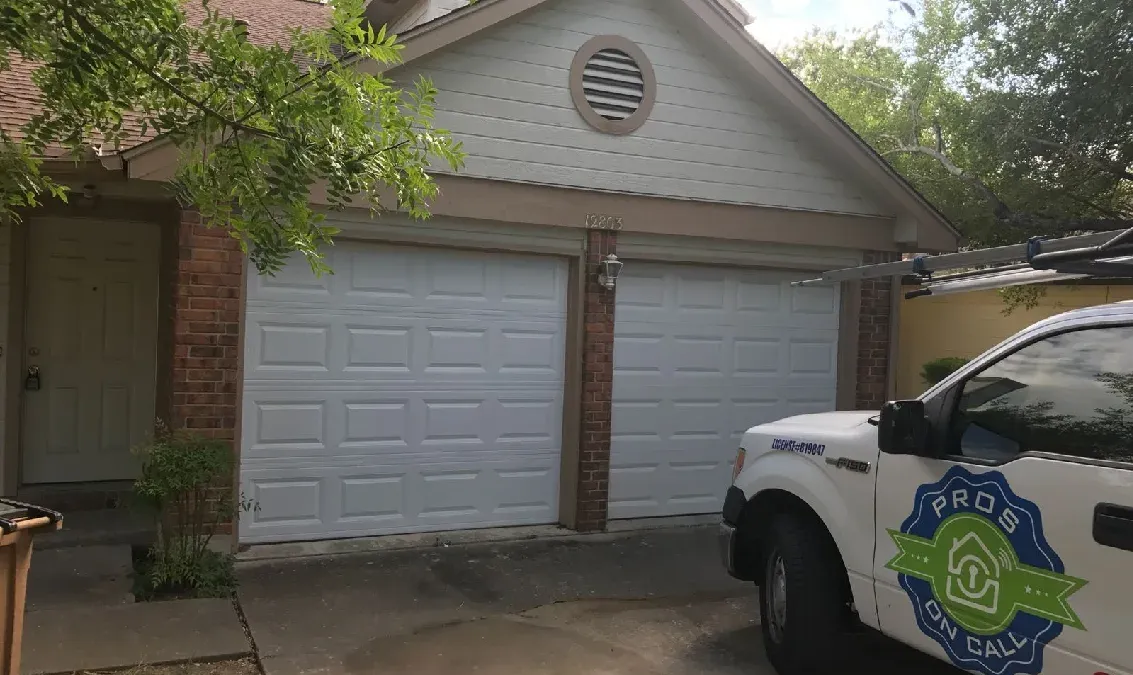
Your garage door is the largest moving part of your Texas home, opening and closing 1,500+ times per year. That's a lot of cycles in our challenging climate - extreme heat, humidity, dust storms, and everything in between. Give it consistent, simple maintenance and you'll avoid expensive repairs, extend its lifespan, and prevent those frustrating moments when it won't open.
After servicing thousands of garage doors across Texas since 2010, we've learned what separates doors that last 15-20 years from those that fail in 7-10. The difference? Consistent, simple maintenance that takes less than an hour every few months.
Monthly Visual Inspection (15 Minutes)
The best maintenance starts with knowing what normal looks like for your door. A few minutes each month of deliberate observation catches small problems before they turn into an urgent call on a Sunday afternoon. Work through each major component in turn, from inside the garage first, then outside.
What to Look For
From Inside the Garage:
Springs: Look along the full length of the spring for rust, corrosion, or visible gaps between coils - gaps signal metal fatigue. Do not touch or adjust springs yourself. They hold extreme tension and require professional tools to work on safely.
Cables: A healthy cable sits taut with consistent strand alignment. A failing one may appear slightly loose, show individual broken strands splaying outward, or wind unevenly on the drum. Fraying anywhere means replacement is needed soon.
Rollers: Each roller should spin freely and track true. Any wobble, flat spot, or cracked plastic shell means it's near the end of its life. A typical door has 10-12 rollers; note how many need attention so you can plan the replacement.
Tracks: Look for any bend, dent, or crimp in the metal - even a minor one forces rollers to fight their way through. Check each mounting bracket to make sure it's still seated tightly against the wall.
Hinges: Tighten any loose screws you find and look for cracks or stress fractures in the hinge plate itself. Replace any hinge showing significant rust penetration or bending.
Door Panels and Bottom Seal: Walk the exterior face and look for dents, cracks, or surface damage. On steel doors, small chips in the finish invite rust in Texas's humid coastal air. On wood doors, probe along the bottom edge for soft spots indicating rot. For the bottom seal, look for cracks, tears, or sections that have compressed flat permanently. If you can see daylight under a closed door anywhere, the seal needs to go.
MONTHLY VISUAL INSPECTION CHECKLIST
Springs
Look along the full length of the spring for rust, corrosion, or visible gaps between coils - gaps signal metal fatigue.
Cables
A healthy cable sits taut with consistent strand alignment. Fraying anywhere means replacement is needed soon.
Rollers
Any wobble, flat spot, or cracked plastic shell means it's near the end of its life.
Tracks
Look for any bend, dent, or crimp in the metal - even a minor one forces rollers to fight their way through.
Hinges
Tighten any loose screws you find and look for cracks or stress fractures in the hinge plate itself.
Door Panels and Bottom Seal
If you can see daylight under a closed door anywhere, the seal needs to go.
The Listen Test
Close your eyes and operate your door - audio is often the first warning a component is failing. A healthy door makes a quiet motor hum, a soft rolling sound as the rollers move through the tracks, and a slight chain or belt noise from the opener mechanism.
Loud grinding usually points to roller bearing failure. Squeaking or squealing means something needs lubrication. Scraping sounds suggest track misalignment or an obstruction inside the track channel. Banging or jerking motion is often a spring or cable issue. New or unusual sounds deserve a closer look right away rather than later.
Lubrication Schedule (Every 3-6 Months)
In Texas, proper lubrication is critical. Our temperature extremes cause lubricants to break down faster than in milder climates, so what works on a schedule in Denver or Chicago needs to happen more frequently here.
What to Use
Use white lithium grease spray, silicone spray, or a garage door-specific lubricant rated for at least -30 degrees F to 300 degrees F. That range covers a Texas summer attic and a North Texas hard freeze in the same product. Avoid WD-40 (it's a degreaser, not a lubricant and will evaporate within days), motor oil (attracts dust and gums up), and cooking oils (they break down quickly in heat and can attract insects).
WHAT TO LUBRICATE
Torsion springs
Spray along the full length of the spring, apply generously to the coils, wipe off excess, then operate the door several times.
Hinges
Spray each hinge pin, work the door up and down to distribute the lubricant, and wipe away any drips.
Rollers
Nylon rollers need lubricant only on the bearing and stem, never on the nylon surface itself.
Tracks
Do not lubricate the track surface. Wipe tracks clean with a dry cloth and leave it at that.
Lock mechanism
Spray the lock cylinder and work the key in and out several times to distribute the lubricant.
Opener chain or belt
Chain drive: apply a light spray along the chain. Belt drive: most manufacturers specify no lubrication.
What to Lubricate
Torsion Springs (if you have them):
Spray along the full length of the spring, apply generously to the coils, wipe off excess, then operate the door several times to work the lubricant into the coil gaps.
Hinges:
Spray each hinge pin, work the door up and down to distribute the lubricant, and wipe away any drips.
Rollers:
Nylon rollers need lubricant only on the bearing and stem, never on the nylon surface itself. Steel rollers take a more generous application. Spin each roller by hand to work the lubricant through.
Tracks:
Do not lubricate the track surface. Lubricant in the track channel attracts dust and debris, which packs into a gritty paste that slows the rollers down and can cause them to slip. Wipe tracks clean with a dry cloth and leave it at that.
Lock Mechanism:
Spray the lock cylinder and work the key in and out several times to distribute the lubricant through the internal linkages.
Opener Chain/Belt:
Chain drive: apply a light spray along the chain. Belt drive: most manufacturers specify no lubrication - check your manual before applying anything. Wipe off excess to prevent dripping onto the car or floor.
Seasonal Lubrication Tips
Texas seasons hit garage doors differently than most of the country, so your lubrication schedule should follow the climate rather than a fixed calendar.
In summer (May through September), heat causes lubricant to thin and migrate off components faster - plan to check and re-apply every three months. In winter (December through February), use cold-weather-rated lubricants that stay fluid even when temperatures drop suddenly. A hard freeze in San Antonio or Austin can stiffen an under-rated lubricant overnight and make the opener fight against its own hardware. In spring and fall, do a full deep lubrication of all moving parts while temperatures are moderate.
LUBRICATION BY SEASON
Summer
Heat causes lubricant to thin and migrate off components faster - plan to check and re-apply every three months.
Winter
Use cold-weather-rated lubricants that stay fluid even when temperatures drop suddenly.
Spring and fall
Do a full deep lubrication of all moving parts while temperatures are moderate.
Balance Test (Every 6 Months)
A balanced door puts less stress on your opener and lasts longer. In Texas heat, springs can lose tension faster than in cooler climates, so checking balance twice a year gives you a chance to catch that drift before the opener starts compensating and eventually burning out early.
How to Test Balance
Disconnect the opener by pulling the red emergency release cord and make sure nothing is under or behind the door. Then manually lift the door to waist height (about 3-4 feet), let go carefully, and step back. The door should stay roughly in place or drift very slowly. Repeat at different heights - 2 feet, 3 feet, 5 feet - to check consistency across the full range.
A properly balanced door stays at whatever height you leave it with minimal drift and requires only light force to lift. If the door falls closed on its own, the springs have lost tension - a common finding as springs age through several Texas summers. If the door shoots upward when released, the springs are wound too tight, which is less common but more immediately dangerous. If the door is very hard to lift manually, the springs are severely weakened and the opener is doing work it was never designed to do.
Safety Feature Testing (Monthly)
Modern garage door openers have critical safety features. These systems exist because a garage door weighs several hundred pounds and can cause serious injury if it closes on a person, pet, or vehicle. Test them monthly - they are not optional checks.
Auto-Reverse Test
Photo-Eye (Physical Contact) Test:
Open the door completely, place a cardboard box in the doorway, and press the button to close the door. The door should reverse when it contacts the box. If it does not stop and reverse, do not use the door until this is repaired.
Obstruction Sensor (Beam Interruption) Test:
With the door closing, wave a broom or rake through the photo-eye beam. The door should immediately reverse. Photo-eyes sit 4-6 inches above the floor on either side of the door opening. If the door does not reverse, the system is unsafe - call for service before using the door again.
Photo-eye problems are usually one of four things: sensors knocked out of alignment, dirty lenses, damaged wiring, or a failed sensor. Check that both sensor LED lights are solid (not blinking), adjust each sensor until they face each other perfectly, tighten the mounting brackets, and test again.
Manual Release Test
Power outages happen across Texas, from Austin ice storms to Gulf Coast hurricanes. Run this procedure with the garage door closed and the car out of the way.
Pull the red emergency release cord that hangs from the opener carriage. The cord should release with moderate force - not stuck, not falling off. Then try lifting the door manually; it should rise smoothly. Re-engage the opener by running it through a normal cycle. If the release mechanism is stuck or the door won't lift manually, call a professional.
THE TWO FORCE TESTS
Down-Force Test
Place a 2x4 board flat on the floor in the doorway and close the door. The door should reverse when it contacts the board.
Up-Force Test
Start closing the door, grab the bottom edge, and pull down with moderate force. The door should stop and reverse.
Force Setting Test
Force settings determine how much resistance the opener will tolerate before stopping. If set too high, the door can push through an obstruction rather than stopping.
Down-Force Test: Place a 2x4 board flat on the floor in the doorway and close the door. The door should reverse when it contacts the board. If it crushes the board or pushes through, the down-force setting is too high.
Up-Force Test: Start closing the door, grab the bottom edge, and pull down with moderate force. The door should stop and reverse. If it continues closing against your pull, the up-force setting is too high.
Most openers have adjustment dials on the motor unit labeled "Up Force" and "Down Force." Make small adjustments - a quarter turn at a time - and test after each one.
Weather Seal Maintenance
In Texas, your weather seals work overtime. The bottom seal alone contends with scorching summer pavement, blowing dust, heavy rain events, and the occasional hard freeze - all of which accelerate cracking and compression.
Clean seals every three months with a damp cloth, removing dirt and debris from the seal surface and the retainer channel. Check behind seals for pest nests, which accumulate quickly in Texas garages. Once a year, scrub with mild soap and a soft brush, rinse thoroughly, and let the seal dry completely before closing the door.
UV exposure is the main enemy of rubber seals in Texas. Apply silicone spray every six months to keep the rubber supple and protect against UV degradation. Keep the floor swept near the door as well - sharp grit that the seal rolls over will cut through it far faster than age alone.
Bottom seals typically last 3-5 years in Texas given the UV and heat exposure. Replace when you see visible cracks or tears, when the seal has hardened and won't compress against the floor, or when you can see daylight under the closed door. Side and top seals generally last a bit longer (5-7 years) but show the same warning signs: pulling away from the frame, cracking, or leaving gaps at the door edges.
See our complete seal replacement guide or call for professional installation: (888) 601-6005.
Track Cleaning and Alignment
Dirty or misaligned tracks cause more day-to-day operational problems than almost anything else on a garage door. Texas dust, cottonwood fluff in spring, and fine construction debris from growing suburbs around San Antonio and Austin pack into track channels and turn smooth operation rough over time.
Cleaning: Work from the top of the track down so debris you dislodge doesn't re-contaminate the section you just cleaned below. Brush loose debris out of the track channel, vacuum out remaining dust, spray degreaser on built-up spots, scrub, and wipe clean. Do not lubricate the track surface after cleaning - a clean, dry track is the goal. Do a quick clean every three months and a thorough deep clean annually.
Checking Alignment: Use a level on the vertical track sections - they should be perfectly plumb. The horizontal sections should be level or have a slight upward pitch. If you measure the gap between the two tracks at several heights and find a difference of more than a quarter inch, alignment correction is needed.
Signs of misalignment include the door binding at a specific point in its travel, a roller jumping out of the track, visible daylight between a roller and the track wall, or uneven movement where one side moves faster than the other.
For minor alignment issues, loosen the track mounting brackets, tap the track gently back into position, re-check with a level, and tighten the brackets again. If tracks are bent, if multiple brackets need adjustment, or if the door still binds after a DIY attempt, call a professional.
TRACK CLEANING AND ALIGNMENT
Cleaning
Work from the top of the track down so debris you dislodge doesn't re-contaminate the section you just cleaned below.
Checking alignment
Use a level on the vertical track sections - they should be perfectly plumb.
Hardware Tightening
Garage door vibration loosens hardware over time. In Texas, temperature swings between winter mornings and summer afternoons cause metal to expand and contract repeatedly, which loosens fasteners more quickly than in moderate climates.
Each month, do a hand-tight check on hinge screws, roller bracket bolts, track mounting brackets, and opener mounting bolts. If anything turns under light hand pressure, tighten it with tools right away. Each quarter, go through the full door with a socket set - the common sizes are 7/16-inch, 1/2-inch, and 9/16-inch - and snug everything down properly.
Pay special attention to the top bracket (which supports the spring system), the bottom bracket (a high-stress cable attachment point), and the center bearing plate if your door has one. The goal is snug, not overtorqued - stripped threads are harder to fix than a loose bolt. Replace any missing hardware immediately. Lock washers are worth adding wherever the originals lacked them, since they resist vibration-loosening significantly better than plain washers.
Bottom Brackets: Bottom brackets sit under high cable tension and are professional-only service territory. Never loosen or adjust them yourself. Inspect visually for cracks or damage and call Pros On Call if you see anything concerning.
If you find stripped bolt holes in critical locations, cracked brackets or hinges, bent tracks, or missing hardware you can't readily identify, stop and call Pros On Call: (888) 601-6005.
Opener Maintenance
Most homeowners focus on the mechanical door hardware and forget the motor unit until it fails - which tends to happen at the least convenient moment.
Chain drives are workhorses - durable and common in Texas homes. Check chain tension monthly; at the center of the span, the chain should have about a half-inch of sag. Lubricate every 3-6 months and listen for excessive noise, which often indicates the chain has gone dry. In coastal Texas, inspect for rust on the chain links, since salt air accelerates corrosion significantly.
Belt drives run quieter than chains. Most belt drives need no lubrication - adding it can cause the belt to slip. In extreme Texas heat, belts can soften slightly, which is worth watching if you notice more noise in summer. Screw drives need lubricant applied to the threaded rod annually; listen for grinding sounds indicating the carriage threads are wearing dry.
Dust the motor unit every quarter and blow out the ventilation ports with compressed air - a clogged opener runs hotter in an already hot Texas garage. Replace remote batteries annually, or sooner if range decreases. Backup batteries (if your opener has one) typically last 2-3 years. If you have a MyQ or other WiFi-connected opener, keep the firmware updated when prompted and test the app's open/close functionality monthly.
Most homeowners focus on the mechanical door hardware and forget the motor unit until it fails - which tends to happen at the least convenient moment.
Seasonal Texas Maintenance
Spring (March-May): The best time to prepare for heavy summer use. Deep clean all components, do a full lubrication service, replace worn weather seals, test all safety features, and check balance - springs may need adjustment after winter.
Summer (June-September): Heat affects almost every component, so shift to monthly lubrication checks rather than quarterly. Check photo-eye alignment (summer sun angles can interfere with sensors) and ensure the opener has adequate ventilation. If your garage regularly exceeds 130 degrees F, that's hot enough to damage the opener's circuit board and motor over time.
Fall (October-November): Storm prep season in Texas. Inspect hurricane and wind bracing if you have it (particularly in coastal areas), check all weather seals before rain season, and test the emergency release and backup battery.
Winter (December-February): Texas winters are mild by national standards, but not uniform. A hard freeze in McAllen is rare but possible; in Dallas or Amarillo it's an annual event. Confirm lubricants remain fluid in cold temperatures, and inspect weather seals for cracking that worsened in dry winter air. Temperature swings of 40 degrees or more in a single week - common in Central Texas - are hard on every component.
SEASONAL TEXAS MAINTENANCE
Spring (March-May)
The best time to prepare for heavy summer use. Deep clean all components and do a full lubrication service.
Summer (June-September)
Heat affects almost every component, so shift to monthly lubrication checks rather than quarterly.
Fall (October-November)
Storm prep season in Texas. Inspect hurricane and wind bracing if you have it, particularly in coastal areas.
Winter (December-February)
Confirm lubricants remain fluid in cold temperatures, and inspect weather seals for cracking that worsened in dry winter air.
Troubleshooting Common Problems
Door Won't Open
Work through these in order before calling for service:
- Check power to the opener: look at the circuit breaker, the GFCI outlet if the opener is plugged into one, and confirm the unit is plugged in
- Replace remote batteries
- Check whether the lock button on the wall control is engaged - it disables the remote
- Look at the photo-eye sensor lights; blinking means misalignment
- Confirm the manual release hasn't been pulled without being re-engaged
- Try lifting the door manually - if it feels very heavy, a spring is likely broken
If a broken spring is the issue, call for spring replacement: (888) 601-6005. Do not attempt to operate the door repeatedly with a broken spring.
Try lifting the door manually - if it feels very heavy, a spring is likely broken.
Door Reverses When Closing
A door that reverses before reaching the floor is usually protecting itself from something - either an actual obstruction or a sensor that thinks there is one.
- Clean and realign the photo-eyes first - dirty or misaligned sensors are the most common cause
- Clear anything from the doorway
- Adjust the down-force setting slightly upward if the sensor and path are clear
- Clean the tracks and check for debris inside the channel
Door Opens Partially Then Stops
A door that stops partway through its travel is usually fighting something mechanical.
- Adjust the up-force setting upward
- Clean the tracks and check alignment at the point where the door stops
- If a spring or cable has broken, professional replacement is needed
- If the opener gear shows wear, the opener may need repair or replacement
Door Noisy During Operation
Noise is information. Use it to guide where you look first.
- Lubricate all moving parts - this resolves most noise in doors that have been dry for a while
- Replace worn rollers (nylon rollers with good stems are a DIY job; bent stems need a pro)
- Tighten all hardware
- Replace worn hinges
- Adjust chain or belt tension per the opener manual
Door Crooked or Uneven
An uneven door is a safety concern and should not be operated until the cause is identified.
- A broken torsion spring is the most common cause - professional replacement is required
- A failed cable on an extension spring door produces similar symptoms - also professional work
- Track misalignment can cause uneven movement - minor cases are DIY, major cases need a pro
- A broken roller can let one corner of the door drop out of alignment
TROUBLESHOOTING CATEGORIES
Door won't open
Work through these in order before calling for service.
Door reverses when closing
A door that reverses before reaching the floor is usually protecting itself from something - either an actual obstruction or a sensor that thinks there is one.
Door opens partially then stops
A door that stops partway through its travel is usually fighting something mechanical.
Door noisy during operation
Noise is information. Use it to guide where you look first.
Door crooked or uneven
An uneven door is a safety concern and should not be operated until the cause is identified.
Maintenance Schedule Quick Reference
Monthly (15 minutes)
Do a visual inspection of springs, cables, rollers, tracks, and hinges. Run the listen test. Hand-check hardware for looseness. Test both auto-reverse systems and the manual release.
Quarterly (30 minutes)
Full lubrication of all moving parts. Clean the weather seals. Clean the tracks. Tighten all hardware with tools. Check chain or belt tension on the opener.
Semi-Annually (1 hour)
Perform the balance test. Do a deep track cleaning. Test force settings. Do a full visual inspection of every component including the opener mounting and the ceiling brackets.
Annually (2 hours or professional)
Complete system inspection from top to bottom. Replace remote batteries. Deep clean all components. Apply weather seal treatment. Consider a professional tune-up if you haven't had one recently.
As Needed
Weather seals typically need replacement every 3-5 years in Texas. Springs have a 10,000-15,000 cycle lifespan, roughly 7-10 years for a typical household. Replace rollers when worn, cables when frayed, and panels after impact damage.
Professional Maintenance Benefits
While DIY maintenance is valuable, professional service reaches parts of the system that are genuinely dangerous to touch without the right tools and training. A technician can check spring tension precisely, adjust bearing and shaft lubrication points that aren't accessible from outside, align tracks to tolerances a level can't verify, and calibrate opener force settings to manufacturer specs rather than trial and error.
Annual Professional Tune-Up Includes:
A complete safety inspection, spring tension adjustment, bearing and shaft lubrication, track alignment, opener force calibration, hardware replacement as needed, identification of components nearing failure, and performance optimization for your specific door and opener combination. Cost typically runs $89-150, and in our experience that investment regularly prevents repair bills of $300-800 by catching problems before they become emergencies.
Call (888) 601-6005 for professional garage door tune-up. We'll ensure your door operates safely and efficiently year-round. Texas License #B19847.
Cost typically runs $89-150, and in our experience that investment regularly prevents repair bills of $300-800 by catching problems before they become emergencies.
Signs You Need Professional Service
Stop using the door and call immediately for:
Broken Spring: Springs usually fail with a loud bang. The door will feel extremely heavy to lift manually, you may see a visible gap in the coils, and the door won't stay open on its own.
Broken Cable: Look for a cable hanging loose from the drum, the door hanging crooked, one side sitting higher than the other, or visible fraying of the cable strands. A door with a broken cable can fall suddenly.
Off-Track Door: When a roller jumps out of the track, the door jams partway open or closed. Forcing an off-track door creates serious injury risk.
Schedule service within a few days for:
Excessive Noise: Grinding, scraping, or loud squealing after you've already lubricated suggests multiple worn components. The longer you wait, the more will need replacing.
Slow or Jerky Operation: A door that starts and stops mid-cycle is usually dealing with worn rollers, a binding track, weakened springs, or all three together.
Age-Related Issues: A door over 15 years old with original springs and opener deserves a professional evaluation. Components that have outlasted the rest are often the next to go.
STOP USING THE DOOR AND CALL IMMEDIATELY FOR
Broken spring
The door will feel extremely heavy to lift manually, you may see a visible gap in the coils, and the door won't stay open on its own.
Broken cable
Look for a cable hanging loose from the drum, the door hanging crooked, or visible fraying of the cable strands.
Off-track door
When a roller jumps out of the track, the door jams partway open or closed. Forcing an off-track door creates serious injury risk.
Garage Door Maintenance Myths
WD-40 is a good lubricant. It's actually a water displacer and degreaser. It penetrates, then evaporates - leaving residue that attracts dust and dirt. Use white lithium grease or silicone spray instead.
Lubricating tracks helps operation. Tracks should be clean and dry. Lubricant in the track channel attracts debris, builds up into a gritty paste, and causes rollers to slip or bind. Clean the tracks; lubricate only the rollers and stems.
Springs last forever. Springs have a 10,000-15,000 cycle lifespan - roughly 7-10 years of typical use. Texas heat accelerates wear. Replacing them on a schedule before they break is safer and often cheaper than emergency replacement after a sudden failure.
DIY spring replacement saves money. Springs hold 300+ pounds of tension and require specialized winding bars and procedures. The risk of serious injury is real. Professional replacement is safer and typically more cost-effective when you factor in the alternative.
Maintenance Tools and Supplies
The basic kit is simple: a socket set with 7/16-inch, 1/2-inch, and 9/16-inch sockets, an adjustable wrench, screwdrivers, a 4-foot level, a stepladder, work gloves, and safety glasses. For supplies, you need white lithium grease spray, silicone spray, clean rags, household degreaser, and a stiff brush. The full kit runs $75-150 and lasts for years.
For lubricants specifically, Clopay Pro-Lube, 3-IN-ONE Professional Garage Door Lubricant, and B'laster Silicone Lubricant (rated for high temperatures) all hold up well in Texas conditions. All are available at home improvement stores.
GARAGE DOOR MAINTENANCE MYTHS
WD-40 is a good lubricant
It's actually a water displacer and degreaser. It penetrates, then evaporates, leaving residue that attracts dust and dirt.
Lubricating tracks helps operation
Tracks should be clean and dry. Lubricant in the track channel attracts debris and causes rollers to slip or bind.
Springs last forever
Springs have a 10,000-15,000 cycle lifespan, roughly 7-10 years of typical use. Texas heat accelerates wear.
DIY spring replacement saves money
Springs hold 300+ pounds of tension and require specialized winding bars and procedures. The risk of serious injury is real.
Consistent Care Means Long-Lasting Performance
Your garage door faces extreme heat, humidity swings, dust, pests, and heavy use in Texas. Give it the attention it deserves and it'll serve you reliably for 15-20 years or more. The maintenance investment is minimal: 15 minutes monthly, 30 minutes quarterly, 1-2 hours annually. The return on that time is avoiding $500-1,500 repair bills and keeping the door quiet and smooth for everyone who uses it daily.
None of these first steps take long, and together they'll tell you immediately whether your door is in good shape or needs attention.
- Do a visual inspection now
- Lubricate if it's been more than 6 months
- Test the auto-reverse and manual release safety features
- Call for a professional tune-up if you've never had one or it's been more than a year
Pros On Call provides expert garage door maintenance and repair throughout Texas, from Austin and San Antonio to McAllen and beyond. Call (888) 601-6005 for annual professional tune-ups ($89-150), spring replacement, safety inspections, and same-day emergency repairs. Licensed, insured service: Texas License #B19847.
Family owned and operated since 2010, Pros On Call provides fast, friendly service for locks, doors, and garages all over Texas. Content strategy and SEO by Optymizer.