Being locked out of your house is frustrating and stressful, especially if it happens late at night or in bad weather. Don't panic. This step-by-step guide walks you through exactly what to do when you're locked out of your home, from quick DIY checks all the way to calling a professional locksmith. Whether you're standing on your front porch in Austin at midnight or sweating through a San Antonio afternoon, the approach is the same: slow down, work through the options in order, and know when to call for help.
Step 1: Stay Calm and Assess the Situation
Panic is your worst enemy in a lockout. The adrenaline hits, your mind races toward worst-case scenarios, and you start making bad calls, like trying to force a door that will cost $400 to repair or climbing a porch railing you should not be on. Take thirty seconds, breathe, and run through a quick mental checklist before doing anything else.
The most important question you can answer right now: is anyone or anything inside at immediate risk? A child, a pet on a hot Texas day, or a stove you left on are genuine emergencies that change your first move entirely. If the answer is yes, stop reading and call 911. They can get inside faster than any other option and will not bill you for it.
If there is no immediate emergency, work through these situational checks before taking action:
- Are you in a safe location, or do you need to move to a well-lit or sheltered spot?
- Do you have your phone with you?
- Is anyone else home who can let you in?
- What time is it? Late-night lockouts narrow your options faster.
- Is there any immediate danger inside: child, pet, or appliance left on?
Step 2: Check for Unlocked Entry Points
Most people head straight for the front door, realize it is locked, and immediately reach for their phone. Before you do that, spend two minutes walking the perimeter of your house. A fair number of Texas homes have at least one door or window that was left unlocked, and finding it costs you nothing.
One important note: everything in this section applies only to your own home. Attempting entry to someone else's property, even if you think you have permission, creates real legal exposure under Texas law. If you are a renter and this is not your unit, call your landlord or property manager first.
Windows
Ground-floor windows are worth checking methodically, not just at a glance. Screens make windows look closed from a distance even when the sash is open. Push gently on each one, starting with any you habitually leave cracked for ventilation. Basement windows, if your home has them, are another option that people forget about entirely.
Back Doors and Side Entrances
The back of your house is worth a full walk-through. Doors that get less daily use, like a laundry room door, a patio door, or a side entry into the garage, are the ones most likely to have been left unlocked the last time someone used them. Even a door that looks locked sometimes just has a handle that sticks. Try the knob with a firm grip and a slight shoulder push before moving on. Check the following access points in order:
- Back door (kitchen or laundry room entry)
- Side door into the garage
- Basement door
- Patio or deck sliding door
- Any secondary utility entrance
Garage Access
If you have an attached garage, this is often the fastest path back inside. Try the exterior keypad if you have one, or check whether the garage's side door is unlocked. Some garage doors also have an emergency release cord accessible from outside with a thin wire hook if you know what you are doing, though that is more of a last resort before calling a locksmith. If you get into the garage but the door into the house is also locked, you are still one door short, so confirm both are accessible before banking on this route.
Step 3: Look for Spare Keys
Before calling anyone, check whether you or a previous occupant stashed a spare key outside. The obvious spots are checked first for a reason: many people still use them. Work through the list quickly rather than dismissing it.
Common hiding spots worth checking include: under the doormat, under flower pots or planters, inside a fake rock or lawn ornament, above the door frame, in the mailbox, under a loose brick or paver, and inside your vehicle if your car key and house key are on separate rings.
Step 4: Contact Someone with a Spare Key
Think through who you have given a copy of your key to, or who you trust enough to have one. This is the step most people skip in the moment because they feel embarrassed calling at an odd hour, but most people with a spare key would much rather get a phone call than hear you had to break a window or pay for an emergency call you could have avoided.
Potential key holders worth contacting: your spouse or partner, parents or adult children, a trusted neighbor, a close friend who lives nearby, your property manager or landlord if you rent, a house sitter or pet sitter, or anyone who has watched your place recently. If someone can bring a key to you in under thirty minutes, that is almost always the fastest and cheapest resolution.
Step 5: Try the Credit Card Method (Only on Spring Bolt Locks)
Here is where the movies lie to you. The credit card trick has a very narrow range of situations where it actually works. It requires a spring bolt lock, which is the angled latch that automatically pops out when you push a door closed. It does not work on deadbolts, period. It also fails on metal door frames, doors that fit tightly in the frame, and any modern lock built with anti-shim guards, which is most locks installed in the last decade.
If your door uses a spring bolt and you want to try it before calling a locksmith, use an expired credit card, a gift card, or a loyalty card, not an active card you need. A credit card that gets bent out of shape or scratched is inconvenient; a maxed loyalty card is not a loss.
HOW TO ATTEMPT THE CREDIT CARD METHOD
Find a flexible plastic card
Grab an expired credit card, gift card, or loyalty card. Do not use a card you rely on daily.
Insert the card between the door and frame
Slide it into the gap where the latch meets the strike plate, right at latch height.
Tilt the card toward the frame and push
Angle the card toward the door frame while simultaneously wiggling and turning the door knob.
Apply pressure to push the latch back
If the latch starts to give, push the door open. If nothing moves in 2-3 minutes, stop and call a locksmith.
This method fails more often than it works on real residential doors. If you have tried it for two or three minutes without progress, move on. Continuing to work at it rarely changes the outcome and just costs you time.
Step 6: Call a Professional Locksmith
At this point, you have done your due diligence. Calling a licensed locksmith is not giving up; it is the smart move. A skilled technician can open most residential locks in minutes using non-destructive methods, without damaging your door or your lock. The $75-$200 range for an emergency residential lockout is real money, but it is far less than a broken door, a broken window, or the ER bill from a fall off a porch railing.
A licensed locksmith is often the fastest, safest, and most cost-effective solution once DIY options are exhausted.
Finding a Reputable Locksmith
Texas requires locksmiths to be licensed through the Department of Public Safety. That license requirement exists because this is skilled work with real security implications, and it also gives you a way to screen out the scam operators who flood search results in major metros. A legitimate Texas locksmith will give you their license number without hesitation when you ask.
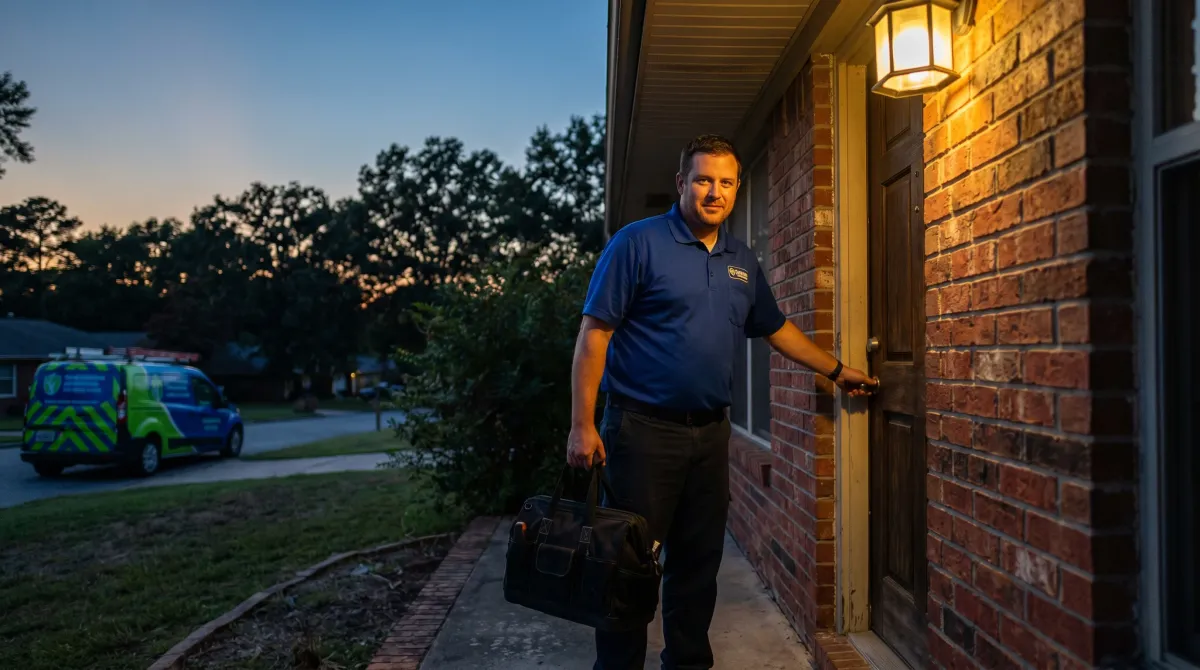
When evaluating a locksmith before they arrive, look for these signals: they are licensed and insured and will confirm their license number on the phone, they have a physical business address in your area (not just a call center), their online reviews reflect real customers with consistent experiences, they quote you a price range before arrival rather than just saying "it depends," and they arrive in a marked company vehicle. A technician who shows up in an unmarked personal car and then produces a hand-written invoice is a yellow flag.
Red Flags to Watch For
Scam locksmith operations are documented in Austin, San Antonio, Houston, and across Texas metro areas. They typically advertise an implausibly low rate, then escalate the price dramatically once they are on site and you have few options. Common patterns include quoting "$39 service call" on the phone and then claiming the job requires a full lock replacement at several hundred dollars. Real residential lockouts rarely require drilling or replacing a lock.
Specific red flags: a quoted price that sounds too good to be true, refusal to provide a license number, an unmarked vehicle, a price quoted on the phone that bears no relationship to what they charge on arrival, and an immediate recommendation to drill or replace your lock before attempting to open it.
Questions to Ask Before They Arrive
Getting clear answers to these questions before the technician leaves to come to you protects you from surprises:
- "What is your license number?" - A real locksmith provides this immediately.
- "What is the total cost, including the service call fee?" - Get a number, not a range that can double.
- "How long until you arrive?" - Thirty to sixty minutes is a realistic window for most Texas cities.
- "Will you need to drill my lock?" - For a standard residential lockout, the answer should almost always be no.
- "Do you guarantee your work?" - Professional services back up what they do.
What to Expect from the Service
A professional locksmith will ask to see ID confirming you live at the address before they start work. This protects you as much as it protects them, because it means no one can call a locksmith to open your house while you are away. They should attempt non-destructive entry first, provide a written estimate before doing anything, and use proper picking or bypass tools rather than immediately reaching for a drill. After getting you in, they may offer to rekey your locks, which is worth considering if you are not sure who else has a copy of your current key.
Step 7: Prevent the Next Lockout
Once you are back inside and the immediate stress has passed, spend fifteen minutes putting measures in place so this does not happen again. The most effective preventive steps are also some of the simplest.
Immediate Solutions Worth Taking Today
Keyless entry systems have come down dramatically in price and are now a practical option for most homes. Electronic keypad deadbolts from brands like Schlage and Kwikset are available at hardware stores and can be installed without a locksmith in most cases. Smart locks that you control from your phone add the benefit of being able to verify whether your door is locked from anywhere, which solves the "did I lock the door?" anxiety as well as the lockout problem.
If you prefer to stick with physical keys, the most reliable solution is still a combination lockbox mounted near your door or in a less obvious location like a fence post. You set the combination, give it to trusted people, and you always have a way back in that does not depend on anyone else being available.
Habits That Actually Work
The most common cause of a house lockout is not a broken lock or a lost key. It is closing a door behind you without checking whether you have your keys first. A few habits that help: check your pocket or bag for keys before pulling a door shut rather than after, keep your car key on a separate ring from your house key so a car lockout does not lock you out of both, and if you have a smart lock, set it to send a notification when the door is locked so you have a record.
When to Consider Lock Replacement
After a lockout, there are situations where replacing the lock entirely makes more sense than just getting back in. If the lock had to be drilled to open it, the lock is compromised and needs replacement anyway. If the lock sticks regularly or requires force to operate, that is wear that will get worse. If you are moving into a previously occupied home, you do not know how many copies of the current key exist, and rekeying or replacing the locks is standard practice for good reason. If you have had a break-in attempt, even an unsuccessful one, upgrading to a higher-grade deadbolt is worth the investment.
For most Texas homes, a Grade 1 deadbolt meets the security standard most people need. High-security options from brands like Medeco or Mul-T-Lock offer additional resistance to picking and drilling for situations where that matters. Smart locks with remote access add monitoring capability on top of the physical security.
Special Situations
Kids or Pets Locked Inside
If a child or pet is locked inside and you cannot get in quickly, call 911 rather than escalating through DIY attempts. In Texas summers, a pet or small child in a hot car or home can reach dangerous temperatures quickly, and that is a medical situation, not a locksmith situation. While you wait, try to communicate calmly through windows or doors to keep them from panicking. Only break a window if there is clear immediate danger, because a broken window creates its own hazards.
Locked Out in Bad Weather
Texas weather can make a lockout genuinely dangerous. Extreme heat in Austin or McAllen in July is not a minor inconvenience; it is a health risk after extended outdoor exposure. If the weather is severe, your first call should be a locksmith and your second call should be to find shelter while you wait. A neighbor's porch, your car, or a nearby business are all better than standing in the sun or rain. When you call, mention the weather situation; most dispatchers will flag it as a priority.
Locked Out at Night
Late-night lockouts have their own set of concerns beyond the inconvenience. Stay in a well-lit, visible area while you wait. If you feel unsafe where you are standing, get into your car with the doors locked or ask a nearby neighbor if you can wait inside. Emergency locksmith service is available 24/7, and most companies in Texas have technicians who work overnight precisely because lockouts do not keep business hours.
Locked Out? We're Here to Help
Don't let a lockout ruin your day or night. Pros On Call provides fast, professional lockout service across Texas with licensed technicians available 24/7.
We are licensed under Texas DPS License #B19847, insured, and have been serving Austin, San Antonio, McAllen, and communities across Texas since 2010. Our technicians arrive in marked vehicles, always ask for ID before starting work, and use non-destructive entry methods first. You get a price before we start, not a surprise when the job is done.
Locked Out Right Now?
Call: (888) 601-6005
We serve all major Texas cities including Austin, Houston, Dallas, San Antonio, and more. Our licensed locksmiths are ready to help you get back inside safely and quickly.
Don't break a window. Don't damage your lock. Call the pros.
Content strategy and SEO by Optymizer
Pros On Call (24 Service LLC DBA Pros On Call) - Professional lockout service across Texas since 2010.