Here's the question I get more than almost any other: is it safe to just search "locksmith near me" and call whoever shows up first. The honest answer is no, not without one extra step. Some of the listings that come up in that search are real local businesses. Others are built by networks that never touch your city at all, and each of those fake listings rings back to the same call center as the rest of its network, usually nowhere near your city. That call center quotes you a low price to get you off the phone, then sends a subcontractor who charges three to four times that number once your door is already unlocked, or your car is already sitting in a parking lot with a locksmith standing next to it. This is not a rare glitch in the algorithm. It is a documented pattern with a name, and it is checkable, for free, in under a minute, before you ever pick up the phone.
What "Locksmiths Near Me" Actually Shows You Right Now
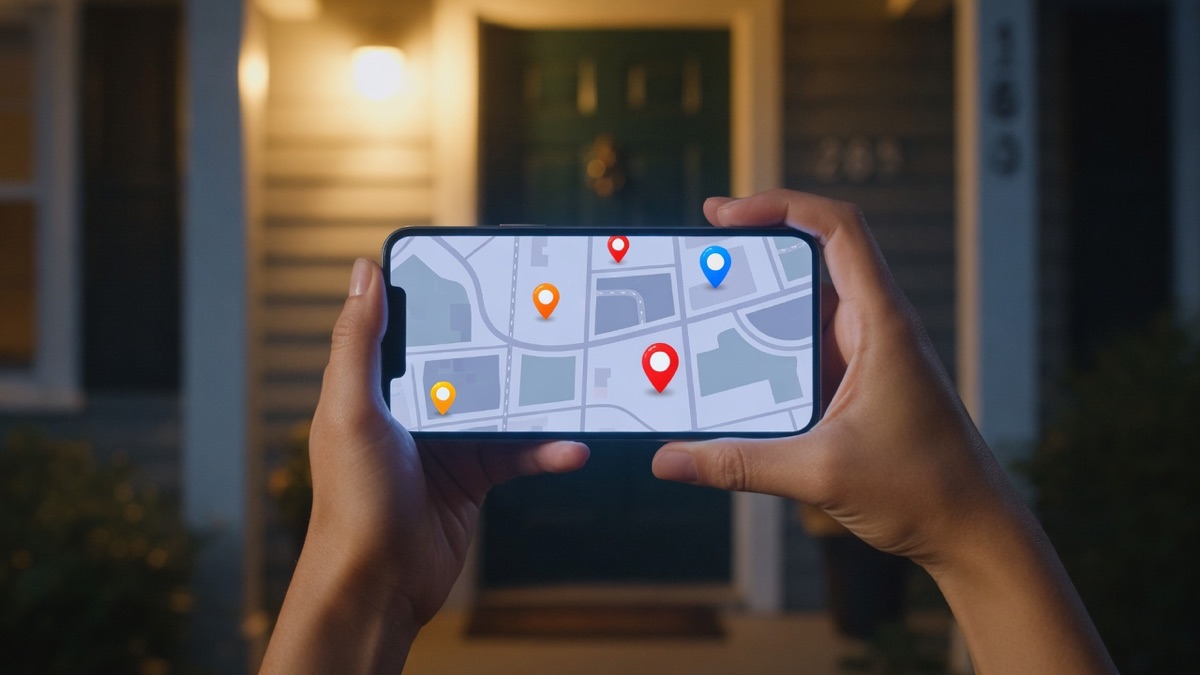
A "locksmith near me" search result today mixes real local businesses with fake listings built by out of state networks to look local. Both types can carry five star reviews and a phone number with a local area code, and the search results page itself gives you no visual signal that tells them apart. That is exactly why the rest of this post is a verification method, not a recommendation of which listing to click.
None of this means every listing you see is fake. Most are exactly what they claim to be. It means the search results themselves will not do the sorting for you, and something else has to.
Why This Is Not a Rare Glitch
A widely cited academic study, published in 2017 using data collected in 2014 and 2015, first proved just how big this problem already was. Researchers working with Google found that on call contractor categories, locksmiths among them, made up about 40 percent of all the fake Google Maps listings they examined, and that a national sample of locksmith search results was, at the time, roughly 11 percent fraudulent. Those numbers are a decade old now, and I am citing them for exactly one reason: to show this pattern is old and well documented, not a new problem or a rare glitch. The specific percentage has surely shifted since then. The underlying mechanism has not.
Four Listings, One Call Center: How the Routing Actually Works
Multiple locksmith listings that look completely unrelated, different names, different logos, different five star review counts, can ring the exact same out of state call center behind the scenes. That call center then dispatches a local subcontractor to your address. This is not a one time fluke. The New York Times documented this exact call routing mechanism in 2016, and it is still the backbone of how this scam runs today.
The Google Case That Started With One Texas Locksmith's Complaint
Google filed its own lawsuit in March 2025 against a network running exactly this scheme, and by the company's own account, removed more than 10,000 fraudulent listings tied to that one operation. Reporting on the case says the investigation traces back to a Texas business that flagged a locksmith impersonating its own Google Maps listing. Four listings ringing one call center is not a hypothetical anymore. It is the same mechanism Google itself just took to court, close to a decade after the mechanism was first described in print.
The mechanism is not complicated once you see it laid out. The New York Times' investigation into fake online locksmith networks described lead generation operations that built fake Google Maps listings styled to look like a real local storefront, complete with a phone number that rang, just not anywhere near your city. The Times cited phone quotes in the 35 to 90 dollar range, followed by a bill three to four times that amount once the subcontractor was already standing at your door, usually with a story about how the job turned out to be more complicated than expected. Google itself now names locksmiths as a duress vertical, meaning a category where people search under real stress and are more likely to accept whatever they are told, which is part of why fraud concentrates there. A locally styled phone number can ring a call center two states away, and whoever answers already knows the price you were quoted is about to change.
A locally styled phone number can ring a call center two states away, and whoever answers already knows the price you were quoted is about to change.
How a Fake Google Business Profile Gets Built in the First Place
Setting up or moving a Google Business Profile today requires a live, unedited video, at least 30 seconds long, recorded on a phone signed into the managing account. The video has to show where the business actually operates and proof the person filming manages it, not just a logo and an address typed into a form. That is the real verification bar a fake listing has to clear.
Most fake listings never clear that bar fresh. Instead, they take over a listing nobody ever claimed, or one that passed verification years ago under completely different management, before this level of scrutiny existed. That gap, between what a brand new listing has to prove and what an old, taken over listing was never asked to prove, is exactly where this scam lives. Read Google's own requirements for verifying a Business Profile and you will see this is a real, specific process, not a policy statement with no teeth behind it. None of it makes a listing you find today scam proof, though. Google does not apply this check retroactively to every listing that was already live before the rule existed, and a five star rating tells you nothing about whether a listing ever passed it in the first place.
The $15 to $35 Quote Nobody Can Actually Honor
Locksmith ads advertising a 15 to 35 dollar service call show up constantly in near me searches, and that number is bait, not a discount. Pros On Call's published pricing puts a standard daytime lockout at 100 to 175 dollars, rising to 200 to 300 dollars late at night. A 15 to 35 dollar quote sits below every published floor for real locksmith work in Texas.
The full range for locksmith work sitewide, everything from a simple rekey to a full emergency lockout, runs from about 50 dollars up to 400 dollars or more depending on scope, and the general bracket for legitimate emergency service alone lands between 75 and 200 dollars. The FTC's own guidance on this exact bait and switch pattern describes the same low phone quote followed by a much higher on site price. A 15 to 35 dollar quote is not a deal. It is a number picked to keep you on the phone long enough to get a truck moving toward your address.
A 15 to 35 dollar quote is not a deal. It is a number picked to keep you on the phone long enough to get a truck moving toward your address.
The Real Floor: Fake Listing Pattern vs a Legitimate Texas Locksmith
A fake listing rarely gives itself away with one obvious mistake. It is a consistent pattern across several small signals at once: the price, the phone greeting, the vehicle that shows up, the entry method offered, and how payment gets handled. The table below lines up a fake listing's typical pattern against a legitimate Texas locksmith's, signal by signal, so more than one thing has to line up before you trust it.
| Signal | Fake Listing Pattern | Legitimate Texas Locksmith |
|---|---|---|
| Phone greeting | Generic "Hello, locksmith services," no company name given | Names the actual company by name every time |
| Phone quote | $15 to $35 teaser, unrelated to the real job | A range tied to the published service type, $75 to $400+ |
| License number | Refused, or does not match a TOPS search | Given on request and matches the TOPS record |
| Vehicle on arrival | Unmarked, no uniform, no ID or business card | Branded company vehicle, uniformed technician |
| Entry method | Drilling proposed immediately, door called "impossible" | Non-destructive entry attempted first |
| Payment | Cash only, or a method that blocks a dispute | Itemized invoice, multiple payment methods accepted |
| Listing history | Sudden burst of five star reviews, unverifiable address | Established history, address confirmable on Street View |
None of these signals proves anything alone. A legitimate company can occasionally answer the phone in a hurry and sound generic for one call. What matters is the pattern across the whole row, not any single box. If you want the full breakdown of what each specific service should cost by job type, not just this scam-focused snapshot, our full breakdown of average locksmith prices by service type covers it service by service.
What "Best" Should Mean Before You Ever Dial the Number
"Best" in a near me search result is a function of the platform's own ranking signals, not a verified fact about anyone's licensing or reliability. A five star average and a high map pin position tell you the algorithm likes a listing. Neither one tells you the business behind it is real, licensed, or actually located where it claims to be. The only way to make "best" checkable is the verification step covered next.
That is not a knock on Google's ranking system, it is just not the job that system is doing. Ranking signals measure engagement and relevance. They do not run a background check. If you want the fuller walkthrough of how to vet a listing top to bottom, our full seven-step process for finding a locksmith online covers the whole search-and-verify workflow. This section stays narrow: what "best" actually measures, and why that is not enough on its own. The next section is the missing piece, the one thing a star rating cannot give you.
The 30 Second License Check Before You Say Yes to Anyone
Checking a Texas locksmith's license takes about 30 seconds and costs nothing. Go to tops.portal.texas.gov, choose Search Licensees, then choose Individuals or Companies depending on whether you have a person's name or a business name. Enter the license number if you have one, or search by company name if you do not. Confirm the license type and status shown match what you were told on the phone.
THE 30 SECOND LICENSE CHECK
Go to tops.portal.texas.gov
Open the free, public Texas Online Private Security search tool.
Choose Search Licensees
Select the licensee search function on the portal.
Choose Individuals or Companies
Pick the correct search category depending on whether you have a person's name or a business name.
Enter the license number or company name
License number is fastest if the caller gave you one, otherwise search by company name.
Confirm the license type and status match
Check that what shows on the portal matches what you were told on the phone.
The Texas Department of Public Safety's Private Security Bureau is the agency that actually issues and tracks these licenses, and the free TOPS license lookup tool is the public search window into that same database. No account, no fee, no phone call required. Do this before the truck leaves the shop, not after it is already parked outside your house. For readers checking this in Spanish, the Spanish vocabulary for vetting a cerrajero in Austin breaks down terms like presupuesto and cargo por servicio so a quote is never ambiguous.
What You'll Hear When You Call Us, Compared to a Call Center Script
When you call Pros On Call, the person answering the phone names the actual company, not a generic service description. Ask for the license number and you get an answer, not a dodge. Ask who is coming and you get a real answer about which technician is being dispatched. Compare that to the documented tell the BBB warns about: a generic "Hello, locksmith services" greeting that never names a specific company at all.
It sounds like a small thing until you are standing outside your own door wondering who is actually about to show up. A dispatcher who can tell you the technician's name, the truck they are driving, and the license the company operates under is not doing you a favor. That is just what a real intake call sounds like. For the fuller list of what to check before you hire any mobile locksmith, not just us, our guide to choosing a mobile locksmith covers the complete criteria. You can browse Pros On Call's full locksmith services any time, and every technician on that list works under the same license number, which you are always welcome to ask for.
The Moment the Price Changes: What the Bait and Switch Actually Sounds Like
The bait and switch has a recognizable shape once you have heard it described. An unmarked vehicle pulls up, no uniform, no business card, no company name anywhere. The technician says the lock is more complicated, or flatly impossible, compared to the phone quote. Drilling gets proposed before any non-destructive entry is even attempted, and cash, or a payment method that blocks a dispute, comes next. These signs arrive together, as a set.
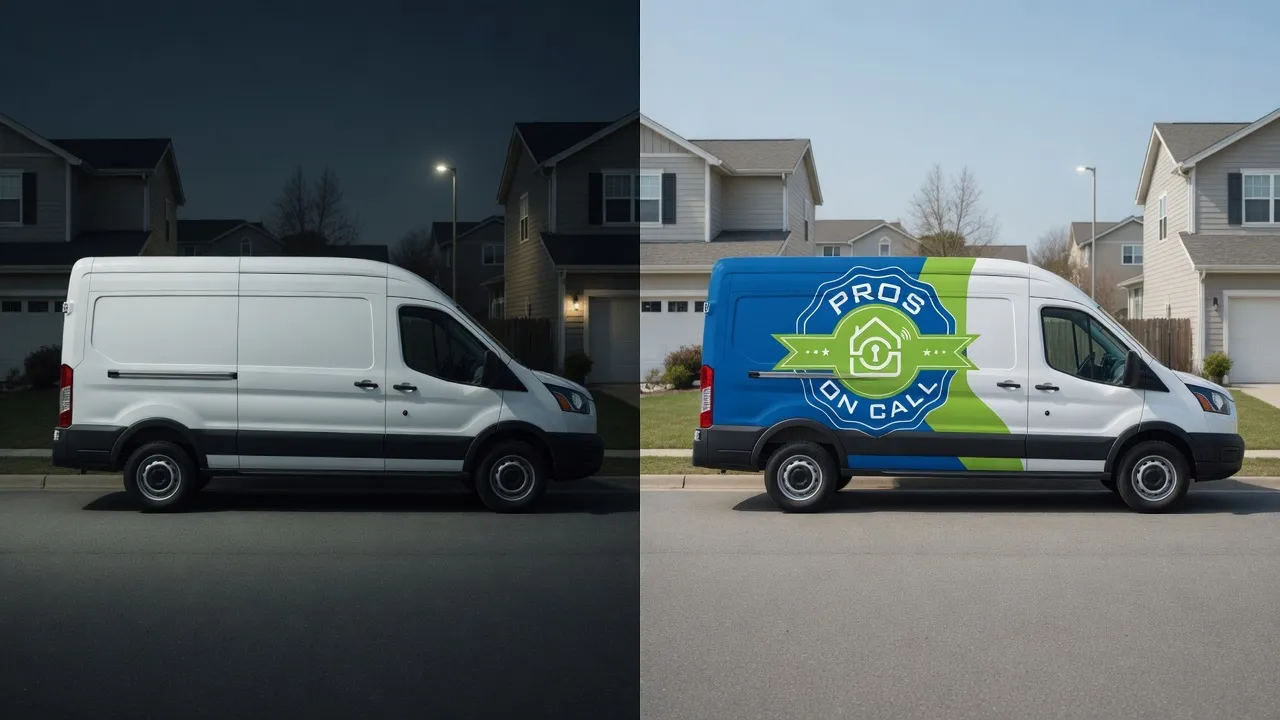
I've talked to enough people after the fact to recognize the shape of this call even secondhand. Somebody tells me the tech quoted them thirty dollars on the phone and then asked for a hundred and twenty once he was standing there. Somebody else says the guy took one look at the lock and said it needed to be drilled out completely, no other option, and by the time they thought to question it the lock was already gone. The Better Business Bureau's own scam alert on this pattern names every one of these signs specifically: the unmarked vehicle, the sudden claim that a simple lock is impossible, the refusal to hand over a written, itemized estimate before work starts. None of it is bad luck. It is the same script, told to a different person, every time.
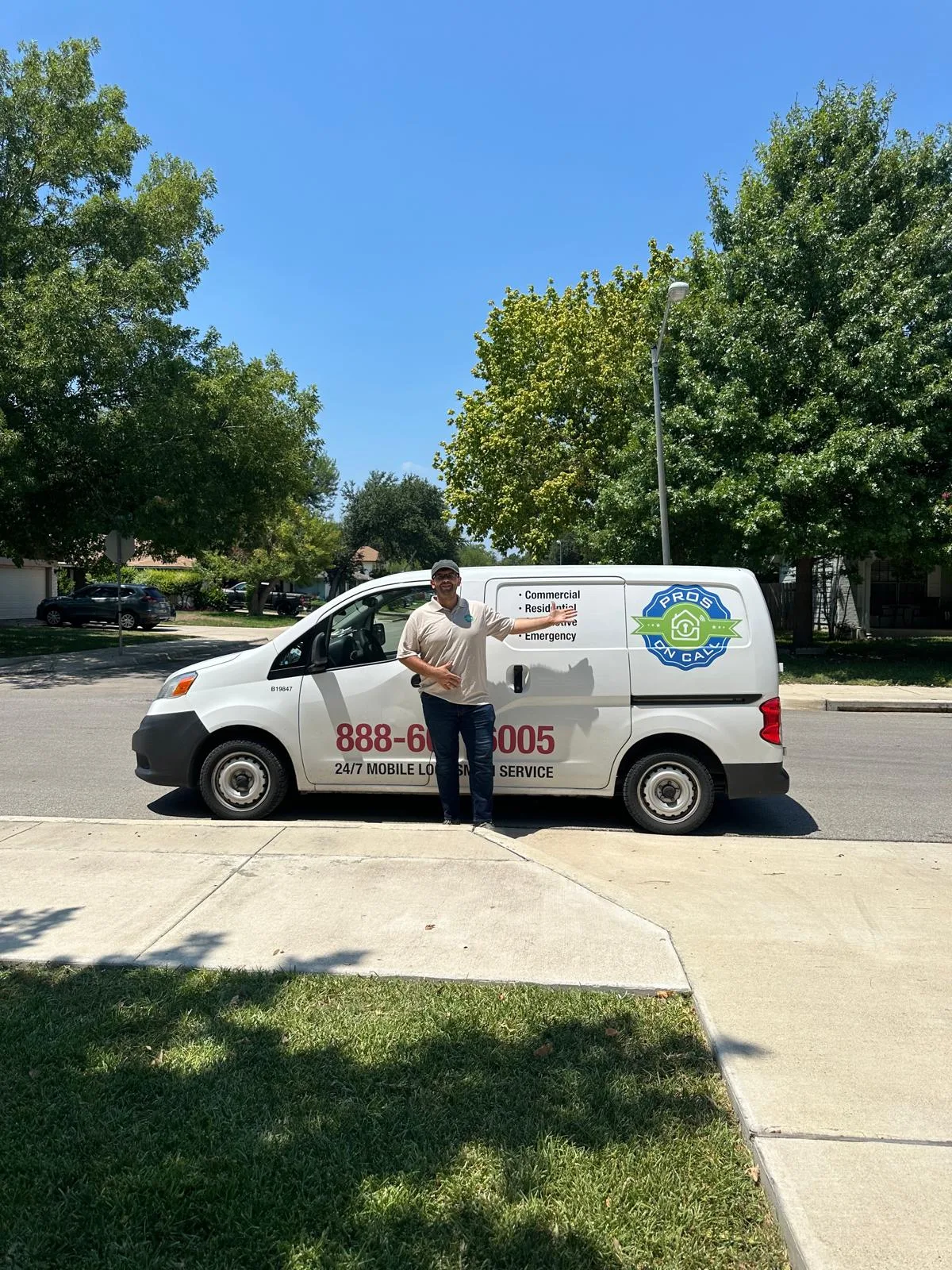
If you want to understand how mobile locksmith dispatch actually works in Texas when it is done the right way, marked vehicle, uniformed technician, a real invoice, that guide walks through it. And if you need our emergency locksmith service right now, the price we quote you on the phone is the price that shows up on the invoice when we leave.
Why Google and the FTC Both Treat Locksmiths as a High Fraud Category
Locksmiths are not randomly caught up in online fraud. Two separate authorities name them specifically as a documented high-abuse category. Google's April 2025 transparency post calls locksmiths a "duress vertical", a service people search for under real stress, and says it removed or blocked more than 12 million fake Business Profiles in 2024 alone. Google Ads separately requires locksmiths to pass an Advanced Verification step before they can run search ads.
Google's April 2025 transparency post calls locksmiths a "duress vertical", a service people search for under real stress.
Google states plainly that this extra step exists because locksmith and garage door categories have a documented history of abuse. None of this is new, either. The FTC's 2008 warning about locksmith listing scams was the first federal notice describing locksmiths who advertised in local listings but were not actually local, with phone quoted prices that got replaced by much higher charges once the technician arrived. This scam is old enough that a federal agency was warning about the phone book version of it before most people had a smartphone in their pocket.
Two organizations as different as a search engine and a consumer protection agency do not both single out the same trade by accident. When a category earns its own verification rule and its own decade-plus paper trail of warnings, that is worth taking seriously before you dial a number, not after.
If the Company on the Phone Can't Answer These Three Things, Hang Up
Ask for three specific things while you are still on the phone, before anyone dispatches a truck. First, the company's actual name, not a generic description like "locksmith services". Second, a license number you can independently confirm on TOPS, not just take on faith. Third, a street address or service area you can cross check. A company that cannot or will not give you any one of these is not a company you book.
If you have already been overcharged or think you were scammed, the full list of common locksmith scams and the recovery steps live in a separate guide, since what to do after the fact is a different conversation than what to check before you say yes. And if you want a directly verifiable, real alternative while you are checking, Pros On Call's Austin service page lists our own information the same way any of your search results should, if they are real.
Frequently Asked Questions
These are the questions callers ask most, before they ever search, answered on their own, no need to read the rest of this post first.
Is it safe to just search "locksmiths near me" and call the first result?
Not without one extra step. A near me search cannot tell a real local business apart from a network run fake listing built to look local, both can carry five star reviews and a convincing phone number. Spend 30 seconds checking the license on tops.portal.texas.gov before you call, and the first result becomes a safe bet instead of a guess.
How can I tell if a Google listing for a locksmith is fake?
No single detail proves it either way, but a pattern usually does. Watch for a sudden burst of five star reviews with no real history, a pinned address that will not resolve on Street View, and a phone greeting that never names the actual company. Most fake listings took over an older, unclaimed listing instead of passing Google's verification fresh.
Why did my locksmith quote go up so much once the technician arrived?
Because the phone quote was never the real number, it was bait to keep you on the line. The New York Times documented phone quotes of 35 to 90 dollars followed by bills three to four times higher once the subcontractor arrived. A big jump is the scam working as designed, not bad luck.
Does Pros On Call show up when someone searches "best locksmiths near me" in Austin?
We won't claim a search ranking we can't prove. What we can tell you honestly is that Pros On Call is a real, licensed, verifiable option in the same Austin market these searches cover. Check our license the same way this whole post asks you to check anyone else's, on tops.portal.texas.gov, before you decide who to call.
What is the fastest way to check a Texas locksmith's license before booking?
Go to tops.portal.texas.gov, choose Search Licensees, then Individuals or Companies, and search by license number if you have one or by company name if you do not. The result shows the license type and current status for free, with no account and no phone call needed. Confirm it matches what you were told before you agree to anything.
Checking a license before you book takes less time than it took to read this post, and it is the single habit that would stop every version of this scam I have ever heard described to me. Ready to skip the guesswork? Call Pros On Call at (888) 601-6005, and ask me anything you would ask any locksmith on your list, including our own license number, DPS Class B #B19847.
Content strategy and SEO by Optymizer