
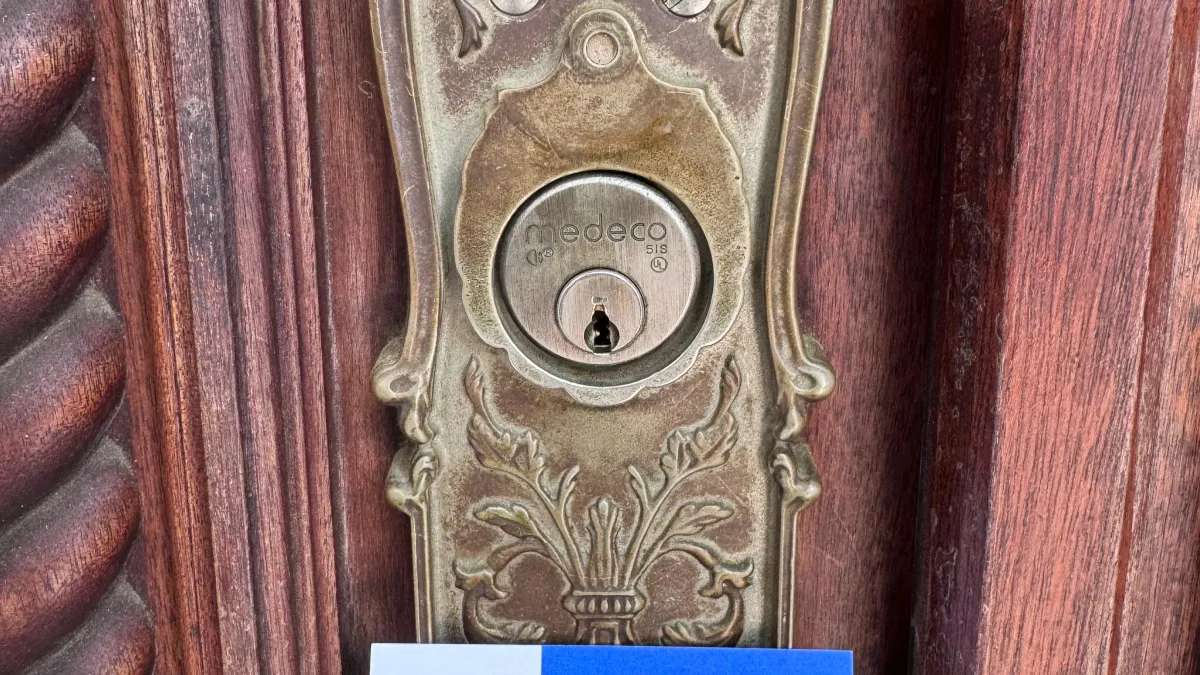
Not all locks are created equal. The $15 deadbolt from the hardware store and the $150 high-security deadbolt might look similar, but they're tested to completely different standards, and the difference could be the factor that stops a burglar or lets them in.
This guide explains ANSI/BHMA lock grading standards (American National Standards Institute / Builders Hardware Manufacturers Association) and helps you choose the right lock grade for your Texas home or business.
What Are Lock Grades? (ANSI/BHMA A156.36 and A156.2)
Two ANSI/BHMA standards work together as the official testing and rating system that separates a serious security lock from the cheap, unrated hardware filling the bottom shelf at any hardware store. ANSI/BHMA A156.36 governs deadbolts and other auxiliary locks. ANSI/BHMA A156.2 governs bored knob and lever locksets, the kind of hardware often installed alongside a deadbolt. Both standards use the same three grade system based on durability, strength, and resistance to forced entry, so the Grade 1, 2, 3 scale below applies whether you are shopping for a deadbolt or a knob and lever set.
- Grade 1 - Commercial/High Security (best)
- Grade 2 - Residential/Light Commercial (good)
- Grade 3 - Residential Basic (minimum acceptable)
Lock Grade Testing Requirements
Every grade must clear a defined battery of tests before earning its rating. Two categories matter most: physical strength (what the lock can survive) and security (how hard it is to defeat). A lock that fails either category doesn't earn the grade, full stop.
Physical Strength Tests
Physical strength testing puts the lock through real-world abuse scenarios - the kind of punishment a determined burglar might apply in the first few seconds at your door. Each successive grade demands the lock survive progressively more punishment before the mechanism fails.
- Door strike test - How many hits can the lock withstand before failing?
- Cycle test - How many lock/unlock cycles before mechanism fails?
- Turn test - How much force can be applied to handle before breaking?
Security Tests
Security testing looks at whether the lock can survive the forced entry attacks burglars actually use: impact strikes, twisting the cylinder, pulling on the bolt, and sawing through it if it's exposed. That's a different question from whether the lock resists picking or bumping, which rely on stealth rather than force. ANSI/BHMA A156.36 does not test picking or bumping at all. UL 437 is the standard that covers that kind of surreptitious entry, and it's a separate listing from the ANSI/BHMA grade. Texas heat and humidity add another dimension here, because a lock that works fine on day one can jam, seize, or corrode into failure over a few seasons without the right construction and finish.
- Resistance to forced entry - Impact, torque, tension, and pulling tests measure how the lock holds up against kicking, twisting, and prying attacks.
- Sawing resistance - Can the extended bolt survive a saw blade under sustained pressure?
- Key security (a separate question) - Picking and bumping resistance comes down to the cylinder's internal pin design, not the ANSI/BHMA grade. UL 437, not A156.36, is the standard that tests it.
- Durability - Will the lock still work after years of use in Texas heat and humidity?
Let's break down each grade:
Grade 1 Locks - Commercial/High Security
Grade 1 is the highest rating in the ANSI/BHMA system and the standard you want on any door that matters. These locks are built for commercial punishment - think office buildings, retail stores, and government facilities cycling through hundreds of people a day - which means they're genuinely overbuilt for most residential applications. That overbuilding is exactly why a Grade 1 deadbolt on your front door is money well spent.
Testing requirements:
The numbers tell the story. A Grade 1 deadbolt must survive 10 full-force kicks to the door, cycle through 250,000 lock/unlock operations without mechanism failure, resist full 360-degree rotation (which defeats torque attacks), and use a strike plate with 3-inch screws anchored into the door frame stud.
- 10 door strikes - Must withstand 10 full-force kicks to the door
- 250,000 cycles - Must lock/unlock 250,000 times without failure
- 360 rotation test - Handle must resist full rotation (prevents torque attacks)
- Grade 1 strike plate - Must have 3" screws into door frame
Typical uses:
Grade 1 hardware shows up anywhere security matters and doors get heavy use. For Texas homeowners, it's the right call for any front door in a neighborhood with elevated break-in rates, or any property left unattended for extended periods.
- Commercial buildings (offices, retail stores)
- High-crime residential areas
- Front doors of luxury homes
- Industrial facilities
- Government buildings
Popular Grade 1 brands:
The market has several solid Grade 1 options at different price points. The Schlage B60N ($60-$80) is the most popular residential Grade 1 and a reliable baseline. The Kwikset 980 ($55-$75) adds SmartKey rekeyable technology. For higher threat environments, the Mul-T-Lock MT5+ ($150-$250) and Medeco Maxum ($200-$300) represent near-professional-grade security used in banks and government buildings.
- Schlage B60N - $60-$80, most popular residential Grade 1
- Kwikset 980 - $55-$75, SmartKey technology
- Mul-T-Lock MT5+ - $150-$250, highest security
- Medeco Maxum - $200-$300, used in banks and government facilities
Pros: Grade 1 hardware earns its price in genuine security advantages and long-term cost avoidance.
- Maximum security and durability
- Built to resist kicking and drilling; pick resistance comes from the cylinder, not the grade
- Lasts 20+ years with heavy use
- Insurance discounts (some insurers require Grade 1)
Cons: The tradeoffs are real but narrow - mostly cost and the occasional need for a licensed installer.
- Higher cost ($60-$300)
- May require professional installation
- Overkill for low-crime areas
When to use Grade 1 in Texas:
Texas geography spreads the risk unevenly. Dense urban corridors in Houston and Dallas and high-traffic neighborhoods in San Antonio see enough property crime that Grade 1 is the sensible default for exterior doors. Vacation homes and storage units with valuable equipment are also strong candidates, since they spend long stretches unoccupied and unmonitored.
Grade 2 Locks - Residential/Light Commercial
Grade 2 sits in the practical middle ground that serves most Texas homeowners well. It's not entry-level and it's not commercial-grade overkill - it's a tested, rated lock that holds up to normal residential use and provides genuine deterrence against opportunistic break-ins.
Testing requirements:
A Grade 2 deadbolt must survive 5 full-force kicks, complete 150,000 lock/unlock cycles without failure, resist 180-degree rotation, and use a strike plate with minimum 1.5-inch screws. That's a meaningful step down from Grade 1, but still a serious departure from the Grade 3 hardware that fails after two kicks.
- 5 door strikes - Must withstand 5 full-force kicks
- 150,000 cycles - Must lock/unlock 150,000 times without failure
- 180 rotation test - Handle resists half-rotation
- Standard strike plate - 1.5" screws minimum
Typical uses:
Grade 2 covers the door scenarios that make up most of daily Texas life. Single-family homes in suburban neighborhoods, apartment units, back doors, garage service doors - these are all appropriate Grade 2 applications where you want real security without the cost of commercial hardware.
- Single-family homes
- Apartments and condos
- Light commercial (small offices, boutiques)
- Back doors and side doors
Popular Grade 2 brands:
The Kwikset 660 ($25-$40) is the most common residential deadbolt in Texas, and for good reason - it's widely available, easy to install, and reliably rated. The Schlage B560 ($35-$50) is a solid alternative. Budget shoppers should note that the Defiant brand ($20-$35, sold at Home Depot) and Yale B1L ($30-$45) round out the accessible end of the Grade 2 market.
- Kwikset 660 - $25-$40, most common residential deadbolt
- Schlage B560 - $35-$50, solid choice
- Defiant by Schlage - $20-$35, Home Depot budget brand
- Yale B1L - $30-$45, good value
Pros: For most Texas homeowners, Grade 2 delivers the right combination of protection and practical value.
- Good balance of security and price
- Suitable for most residential applications
- Easy DIY installation
- Widely available at hardware stores
Cons: Grade 2 has real limits - it's not a commercial solution, and some cylinders have known vulnerabilities.
- Less durable than Grade 1 (may need replacement in 10-15 years)
- Not suitable for commercial high-traffic applications
- Some models vulnerable to bumping or picking
When to use Grade 2 in Texas:
Grade 2 is the right fit for the broad middle of Texas residential life - suburban homes in medium-crime areas, rental properties where you need adequate security at a manageable cost, and secondary exterior doors like garage service entries or back doors.
- Suburban homes in medium-crime areas
- Rental properties (affordable + adequate security)
- Back doors and garage service doors
- Apartments and townhomes
Grade 3 Locks - Basic Residential
Grade 3 is the floor of the ANSI rating system, and it's worth being honest about what that means: these locks are adequate for interior privacy doors and not much else. The testing minimums are low by design, because the intended use cases (bedrooms, closets, interior rooms) carry correspondingly low security demands.
Testing requirements:
A Grade 3 deadbolt must survive only 2 full-force kicks - a motivated intruder with a running start can defeat this in seconds. The 100,000-cycle rating is well below that of Grade 2, the rotation resistance is minimal, and the strike plate typically ships with 1-inch screws that anchor into door trim rather than the structural frame. These numbers aren't a flaw in the standard; they reflect that Grade 3 hardware was never designed for exterior doors.
- 2 door strikes - Must withstand 2 full-force kicks (weak)
- 100,000 cycles - Well below the durability of Grade 2
- 90 rotation test - Minimal handle resistance
- Basic strike plate - Often has short 1" screws
Typical uses:
Keep Grade 3 where it belongs: interior applications where physical security isn't the point. A bedroom lock that gives someone privacy while getting dressed is a fine use case. A front door lock that a burglar can defeat with two kicks is not.
- Budget residential (minimally acceptable)
- Interior doors (bedrooms, bathrooms)
- Closet doors
- Sheds and outbuildings
Popular Grade 3 brands:
The Grade 3 price range runs from $10 to $30. Defiant entry knobs ($15-$25), Kwikset Tylo ($18-$30), and generic hardware store brands ($10-$20) are the common options in this tier.
- Defiant entry knobs - $15-$25, basic protection
- Kwikset Tylo - $18-$30, entry-level
- Generic hardware store brands - $10-$20
Pros: Grade 3 has a short list of legitimate advantages, and they're all about price and ease.
- Very affordable ($10-$30)
- Better than nothing
- Easy DIY installation
Cons: The downsides are significant and should rule Grade 3 out for any exterior application in Texas.
- Weak security (can be kicked in with 2-3 hard kicks)
- Short lifespan (5-7 years)
- Easy to pick or bump
- NOT recommended for exterior doors in Texas
When to use Grade 3 in Texas:
Interior doors only. The cost savings on an exterior door are not worth what you give up in security.
- Interior bedroom/bathroom doors (privacy only)
- Closets and storage rooms
- Sheds or low-value outbuildings
- Temporary rentals or staging
Lock Grade Comparison Table
All three grades side by side - the numbers make the differences between them impossible to ignore.
| Feature | Grade 1 | Grade 2 | Grade 3 |
|---|---|---|---|
| Door strikes | 10 | 5 | 2 |
| Lock/unlock cycles | 250,000 | 150,000 | 100,000 |
| Typical cost | $60-$300 | $25-$60 | $10-$30 |
| Lifespan | 20+ years | 10-15 years | 5-7 years |
| Pick resistance | High | Medium | Low |
| Kick-in resistance | High | Medium | Low |
| Best for | Commercial, high security | Residential, rental | Interior doors only |
| Texas use cases | High-crime areas, businesses | Suburban homes, apartments | Bedrooms, closets |
The $15 deadbolt from the hardware store and the $150 high-security deadbolt might look similar, but they're tested to completely different standards, and the difference could be the factor that stops a burglar or lets them in.
How to Identify Lock Grade
Knowing the grade rating system only helps you if you can verify what you're actually buying. Fortunately, ANSI/BHMA-certified hardware is required to carry that certification visibly - but plenty of ungraded budget locks sit on the same shelf and look identical.
Look for ANSI/BHMA certification: Three places carry the grade information - any one of them is enough to confirm what you're buying.
THREE PLACES TO VERIFY THE GRADE
Check packaging
Should say "ANSI/BHMA Grade X Certified"
Look on lock body
Engraved or stamped "Grade 1," "Grade 2," or "Grade 3"
Check manufacturer specs
Look up model number online
If there's no grade marking on the packaging or the lock body, treat it as Grade 3 or worse. Most budget locks in the $10-$20 range are not graded at all, which means they haven't been tested to any standard.
If there's no grade marking on the packaging or the lock body, treat it as Grade 3 or worse.
Beyond the grade stamp, three certification symbols are worth knowing. The ANSI/BHMA logo confirms the lock was tested and certified. A UL (Underwriters Laboratory) listing covers fire and safety compliance. FIPS 201 approval indicates high-security, government-approved hardware.
Beyond Lock Grade: Other Security Factors
Lock grade is the most commonly discussed security metric, but a Grade 1 deadbolt installed in a weak door frame with a cheap strike plate will fail just as fast as a Grade 3 lock under a determined kick. The lock is only as strong as the assembly around it.
1. Strike Plate Quality
The strike plate is the metal plate on the door frame that receives the deadbolt when the door is locked. It's the point of failure in most forced-entry events, not the lock cylinder itself. A Grade 1 deadbolt with a bargain strike plate attached by 1-inch screws is a false sense of security - those screws anchor into decorative door trim, not the structural framing.
The fix is inexpensive and takes 15 minutes. A box strike plate recessed 2-3 inches into the frame, secured with 3-inch screws that reach into the wall stud, and reinforced with steel to prevent frame splitting costs $10-$30 and dramatically changes what the door can survive.
- Box strike plate - Recessed 2-3" into frame
- 3" screws - Penetrate through frame into wall stud
- Steel reinforcement - Prevents frame splitting
2. Door Material and Thickness
A solid core door - wood or steel, 1.75 inches thick - is the only door that makes a quality lock worthwhile. Hollow core doors are interior-grade components that flex and split under force. Installing a Grade 1 lock on a hollow core front door doesn't improve your security; it just adds an expensive lock to a door that will fail before the lock does.
3. Hinge Protection
Outswing doors - where the hinges are on the exterior - have an additional vulnerability. Hinge pins can be driven out when the door is open, allowing the door to be lifted off even with a locked deadbolt. Three straightforward fixes address this directly.
- Hinge pins with set screws (can't be removed when door is closed)
- Hinge guards - Metal tabs that prevent door from being pried off
- Install inswing doors (hinges on interior)
4. Key Security (Pick/Bump Resistance)
The grade rating covers the hardware, but the keyway cylinder is a separate security consideration. Standard keyways like the Schlage SC1 and Kwikset KW1 are common and widely used - which also means locksport enthusiasts and experienced burglars are familiar with how to defeat them. High-security cylinders change that equation. The Mul-T-Lock uses telescoping pins that are nearly pick-proof. The Medeco uses rotating pins that defeat most picking attempts. The Kwikset SmartKey cylinder is rekeyable without a locksmith, and Kwikset markets SmartKey as designed to resist bumping. Pairing a high-security cylinder with a Grade 1 deadbolt gives you protection at both the hardware and keyway level.
Lock Grade Recommendations for Texas
Residential (Single-Family Homes)
For a standard Texas single-family home, the entry points carry different risk profiles and don't all need the same hardware. Front doors are primary targets and deserve the most investment. Back and garage service doors need solid Grade 2 coverage. Interior doors are privacy-only and Grade 3 is appropriate there.
Front door: The main entry is the highest-value target and gets the best hardware.
- Grade 1 deadbolt (Schlage B60N or Kwikset 980)
- Reinforced strike plate (3" screws)
- Solid core door (1.75" thick)
Back door: Secondary entries need solid Grade 2 coverage - they're common secondary targets.
- Grade 2 deadbolt (Kwikset 660 or Schlage B560)
- Reinforced strike plate
- Solid core door
Garage service door: The door from garage to house is an overlooked entry point that deserves its own deadbolt.
- Grade 2 deadbolt (Kwikset 660)
- Standard strike plate
Interior doors: Privacy only - Grade 3 is the right fit here.
- Grade 3 privacy locks (Kwikset or Defiant)
Apartments and Condos
Apartment and condo entry points share a specific challenge: tenant turnover. A lock that can't be rekeyed without a service call becomes a recurring cost and a security gap every time a tenant changes. Grade 2 hardware with rekeyable cylinders solves both problems. Patio sliding doors need their own treatment - a quality sliding door lock plus a security bar that prevents the door from being forced open is the combination that works.
Entry door: A rekeyable Grade 2 deadbolt with a solid strike plate covers both the security and tenant-turnover requirements.
- Grade 2 deadbolt (Kwikset SmartKey for easy rekeying between tenants)
- Reinforced strike plate
Patio sliding door: Sliding doors need a dedicated lock plus a physical bar - the standard latch is not a security device.
- Sliding door lock (Kwikset or Yale)
- Security bar (prevents forced opening)
Commercial (Texas Businesses)
Commercial properties carry higher liability and often have more valuable contents, which means the security standard needs to match. Grade 1 hardware is the starting point for any commercial exterior door, not a premium upgrade. Front entrances that see public traffic should also account for fire code panic hardware requirements and integrate with whatever access control system the business uses.
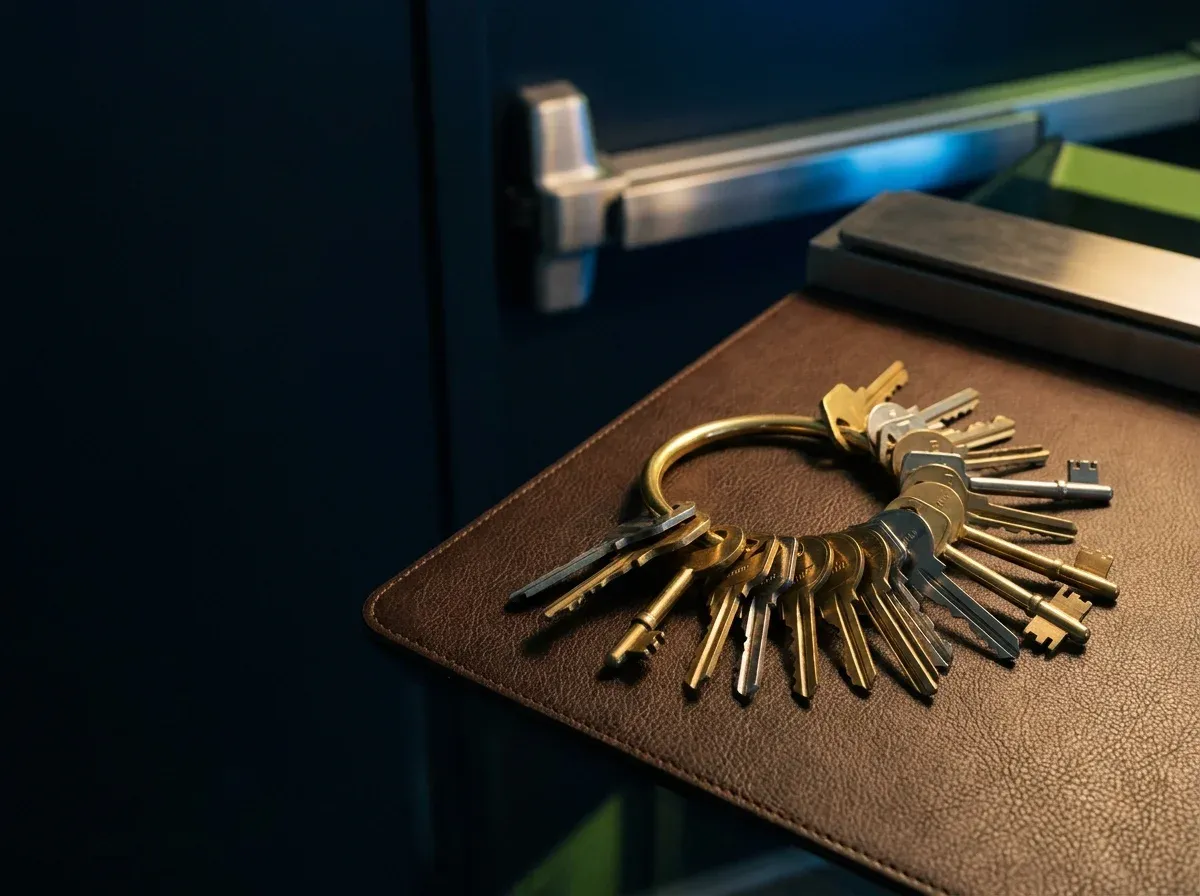
Front entrance: Public-facing entries need Grade 1 hardware, fire-code panic hardware if the occupancy load requires it, and access control tied into whatever system the business already uses.
- Grade 1 commercial deadbolt (Schlage ND Series or Mul-T-Lock)
- Panic hardware (if required by fire code)
- Access control integration (keypad or card reader)
Back door/employee entrance: Employee-only entries still need Grade 1 hardware - and camera coverage to make the deterrence visible.
- Grade 1 deadbolt with access control
- Security camera coverage
Office interior doors: Interior office doors serve access control and ADA compliance, not forced-entry resistance.
- Grade 2 lever locks (ADA compliant)
- Master key system
High-Crime Areas (Houston, Dallas, San Antonio)
In neighborhoods where property crime is elevated, the whole-door approach matters more than any single component. A Grade 1 deadbolt is the floor, not the ceiling. Reinforced door frames, cameras, and motion-sensor lighting stack deterrence in layers - a burglar who sees both a hardened door and active lighting will typically move on to an easier target.
All exterior doors: High-crime neighborhoods call for the full stack - not just a better lock, but a hardened frame, camera coverage, and lighting that eliminates concealment.
- Grade 1 deadbolts (Medeco or Mul-T-Lock)
- Reinforced door frames (steel or metal-wrapped)
- Security cameras at entry points
- Motion-sensor lighting
Texas-Specific Lock Considerations
1. Extreme Heat (100 degrees F+ Summers)
Texas summers put hardware through conditions most locks aren't designed to handle. Sustained high temperatures cause lubricants to dry out faster than normal, plastic components to warp or deform, and metal parts to expand in ways that create binding and sticking. The fix is straightforward: all-metal construction, quarterly lubrication with graphite powder or Teflon spray (not WD-40, which attracts dust and gums up mechanisms), and hardware from brands like Schlage and Kwikset that test their locks across temperature ranges. Brands that test specifically for heat exposure are worth the small premium over unrated alternatives.
- Use all-metal locks (avoid plastic components)
- Lubricate quarterly with graphite powder or Teflon spray (not WD-40)
- Choose locks rated for high temperatures (Schlage, Kwikset are Texas-tested)
2. High Humidity (Houston, Corpus Christi Coast)
Coastal and Gulf-adjacent areas in Texas face a different problem: corrosion. Locks that work fine in Austin can rust, jam, or seize within a year or two in the Corpus Christi or Houston humidity. Weather-resistant finishes in brass, stainless steel, or nickel-plated materials resist corrosion significantly better than bare metal. Annual rust inhibitor treatment and sealed cylinders keep interior mechanisms from deteriorating between service visits.
- Use weather-resistant finishes (brass, stainless steel, nickel-plated)
- Apply rust inhibitor annually
- Choose locks with sealed cylinders
3. Texas Property Code Requirements (Rentals)
Texas law requires landlords to install a functioning deadbolt on all exterior doors and to rekey between tenants. The practical implication is that landlords who ignore this requirement carry legal exposure, and those who comply with bare-minimum hardware get called for locksmith service every tenant cycle. A Kwikset SmartKey Grade 2 deadbolt handles both the legal requirement and the rekeying burden - it rekeyed in about 30 seconds without a locksmith visit, which adds up in savings across a multi-unit portfolio.
Landlords must: Texas Property Code spells out three specific requirements for rental units.
- Install functional deadbolt on all exterior doors (Grade 2 minimum recommended)
- Rekey between tenants
- Provide working doorknob locks
Best for rental properties: Two Grade 2 options work particularly well for landlords managing turnover.
- Kwikset SmartKey Grade 2 - Rekey in 30 seconds without locksmith
- Schlage B560 - Durable, affordable Grade 2
4. Insurance Discounts
Texas homeowners insurance providers treat upgraded locks as a measurable risk reduction, and many offer premium discounts for Grade 1 deadbolts, monitored security systems, and smart locks with activity logging. The discount range varies by insurer, but it's worth a call to your provider before and after any security upgrade. State Farm, Allstate, and USAA (common with Texas military families) all have programs worth asking about. Three qualifying upgrades come up most often:
- Grade 1 deadbolts on all exterior doors
- Monitored security system
- Smart locks with activity logging
How Much Should You Spend on Locks?
The numbers here are straightforward. A front door with a Grade 1 deadbolt and reinforced strike plate costs $60-$100 at minimum, $100-$200 for a smart lock upgrade, and $300-$500 for top-tier hardware like Mul-T-Lock combined with frame reinforcement and camera coverage. Back and side doors need less investment - Grade 2 hardware with reinforcement lands at $50-$100. A garage service door is similar.
For a full three-door home, total costs run roughly $150-$250 for basic security, $250-$500 for solid coverage, and $500-$1,000 for maximum protection. Preventing one burglary (average loss $8,000) pays for lock upgrades 10-20x over.
Common Mistakes When Buying Locks
The same mistakes come up repeatedly when Texas homeowners shop for locks. Knowing them in advance saves money and the frustration of discovering a security gap after the fact.
Mistake #1: Choosing Grade 3 for Exterior Doors "It's just $15, and it looks the same as the expensive one." Grade 3 locks can be kicked in with 2-3 kicks. Not worth the risk.
Mistake #2: Ignoring Strike Plate "I bought a Grade 1 lock, so I'm secure." Even Grade 1 locks fail if strike plate has 1" screws. Upgrade to 3" screws.
Mistake #3: Matching Lock to Door Quality "My door is cheap, so a cheap lock is fine." Upgrade door AND lock together. Cheap door + expensive lock = waste of money.
Mistake #4: Buying Based on Price Alone "This $20 Kwikset is good enough." Check the grade. Grade 3 at $20 is not better than Grade 2 at $35.
Mistake #5: Forgetting Smart Lock Features "I don't need smart features, just a lock." Smart locks (auto-lock, activity log, remote access) add security + convenience for $50-$100 more.
Need Help Choosing or Installing the Right Lock Grade?
Our licensed Texas locksmiths can walk through your specific doors and tell you exactly which grade makes sense - without upselling you past what the situation actually requires. We assess the full picture: lock grade, strike plate, door material, hinge exposure, and any Texas-specific conditions at your property.
We install Grade 1 and Grade 2 deadbolts professionally, upgrade strike plates and door reinforcement, and set up smart locks from August, Kwikset, and Yale. Common projects run $100-$150 to replace a Grade 3 deadbolt with Grade 1, $250-$400 to upgrade an entire home to Grade 2 deadbolts across three doors, and $500-$1,500 for commercial Grade 1 locks with access control.
We serve Austin, San Antonio, Houston, Dallas, Fort Worth, El Paso, Arlington, Corpus Christi, Plano, and all major Texas metro areas, including McAllen and the Rio Grande Valley.
Call (888) 601-6005 for a free lock security consultation. License #B19847.
Last updated: December 2025 | Based on ANSI/BHMA Standards A156.36 (deadbolts) and A156.2 (knob and lever locksets), current as of 2025. GSC data: 7 clicks and 2,948 impressions over 16 months.