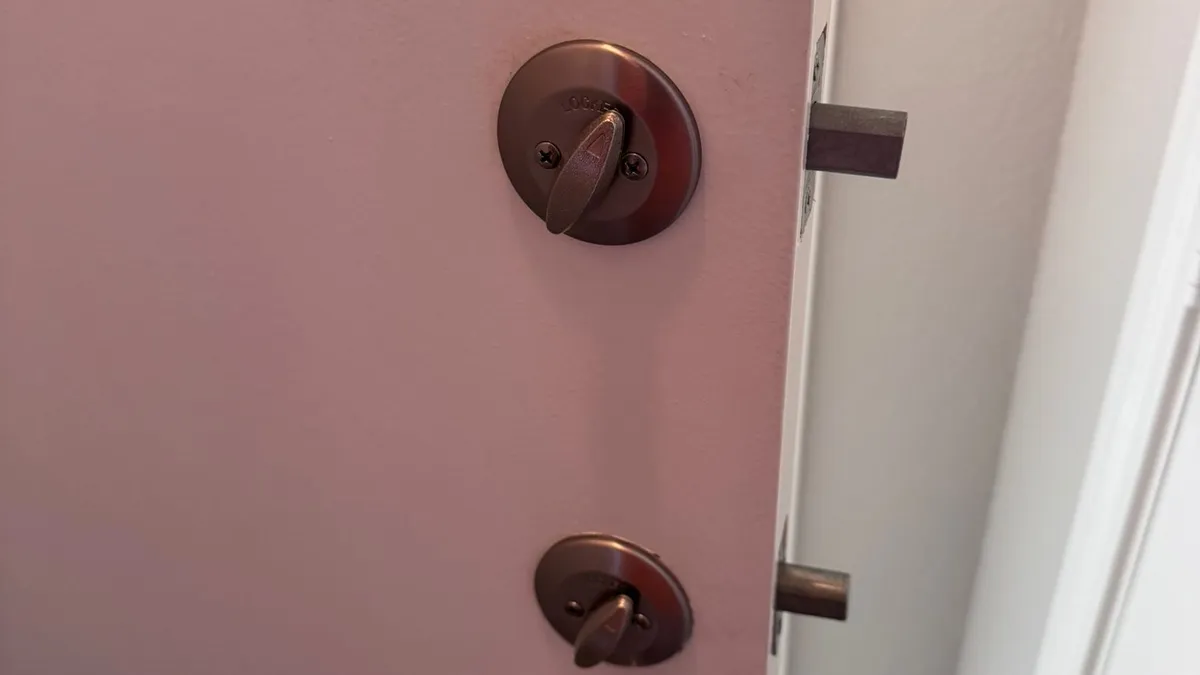
It's 11 PM, you just took the trash out, and the door slammed shut behind you. You're locked out of your house, and your phone, wallet, and keys are inside.
In Texas, residential lockouts are far more common than most people expect. Whether it's a lost key, broken lock, or a simple moment of distraction, being locked out is stressful, expensive, and sometimes dangerous given our extreme summer heat and fast-moving storm seasons.
This guide covers exactly what to do when you're locked out of your house, how to get back in safely without damage, and how to prevent future lockouts.
7 Steps to Take When Locked Out of Your House
Step 1: Stay Calm and Assess the Situation (2 minutes)
Two minutes of clear thinking can save you from a costly mistake. Before you break a window, kick a door, or call the first number you find, run through a quick mental checklist. In Texas especially, your situation can range from a minor inconvenience to a genuine emergency depending on who is inside, the time of day, and what the weather is doing.
True emergencies require 911 first, a locksmith second:
- Small child or infant locked inside alone
- Pet in distress (extreme heat, Texas summer)
- Person with medical condition inside (elderly, disabled)
- Fire, gas leak, or other safety hazard
- Break-in in progress or suspicious activity
If none of those apply, you have a non-emergency lockout. Everyone is safe and there is no immediate security threat, so you have time to find the right solution rather than the fastest one. A few quick questions help: Do you have a spare key with a neighbor or family member? Is there a door or window that might be unlocked? Do you have your phone? What time is it, since after-hours locksmith calls cost more?
Texas-specific considerations:
Texas adds a few wrinkles that change the urgency of a lockout. Keep these in mind when you assess your situation.
TEXAS-SPECIFIC CONSIDERATIONS
Summer heat (100°F+)
If you're outside without water, this becomes urgent
Storms approaching
Get inside before severe weather hits
Late night (after 10 PM)
Higher locksmith fees, fewer options
Step 2: Check for Unlocked Doors and Windows (5-10 minutes)
Before you spend money on a locksmith call, spend five to ten minutes checking every possible entry point. Plenty of Texas homeowners discover they locked the front deadbolt but left a back door or bathroom window unlocked. This costs nothing and should always be your first move after confirming there is no emergency.
Doors to check first:
- Front door - Try doorknob (might be unlocked even if deadbolt is locked)
- Back door - Often left unlocked or has weaker lock
- Garage service door - Check if garage door opener works, then try service door
- Side door - Utility room, laundry room entrance
- Sliding patio door - Check if unlocked or can be lifted off track
- Basement door (if applicable)
Windows worth checking next, particularly ground-floor and bathroom windows, which homeowners commonly leave cracked for ventilation:
WINDOWS WORTH CHECKING
Ground-floor windows
Push up on bottom sash (might be unlocked)
Bathroom windows
Often left cracked for ventilation
Bedroom windows
Check all accessible windows
Kitchen window above sink
Sometimes left open
If your car is parked in the driveway, garage access is worth trying as well:
- Keypad entry - Try code if you have garage keypad
- Car remote - If car is parked outside, use garage opener clipped to visor
- Manual release - Some garages have external release (red handle)
If nothing is open, resist the urge to force your way in. Repair costs almost always exceed a locksmith call, and forced entry creates a security vulnerability even after you fix the visible damage. Do not break windows, kick doors, try to pick locks, or pry doors open with tools.
Step 3: Retrieve Spare Key (10-30 minutes)
A spare key with the right person is the fastest and cheapest solution to a lockout. Think through who might have a copy before deciding the locksmith is your only option.
1. With trusted neighbors or friends
Your best bet is a neighbor close enough to walk to, a family member within reasonable driving distance, or a friend you gave an emergency key to in the past. It is worth a phone call even if you are not sure they still have it.
2. Hidden spare key (if you have one)
Many homeowners keep a spare in a magnetic box under a bumper or a combination lockbox mounted in a hidden spot. Avoid under-doormat, plant pot, or decorative rock locations since those are the first places a burglar checks.
3. Property manager or HOA (if applicable)
If you rent or live in a managed community, the property manager or landlord may hold a master key or a copy of yours. Apartment management offices often have after-hours emergency lines for exactly this reason.
4. At work or in car (if accessible)
Some people keep a spare in a desk drawer or gym locker. If you have a second set of car keys that your spouse can bring, that works too.
If a spare key exists but is far away, weigh the time and cost. Asking a family member to drive it over makes sense if the total cost is less than a locksmith call ($150-$250) and the wait is tolerable.
Step 4: Call a Licensed Residential Locksmith
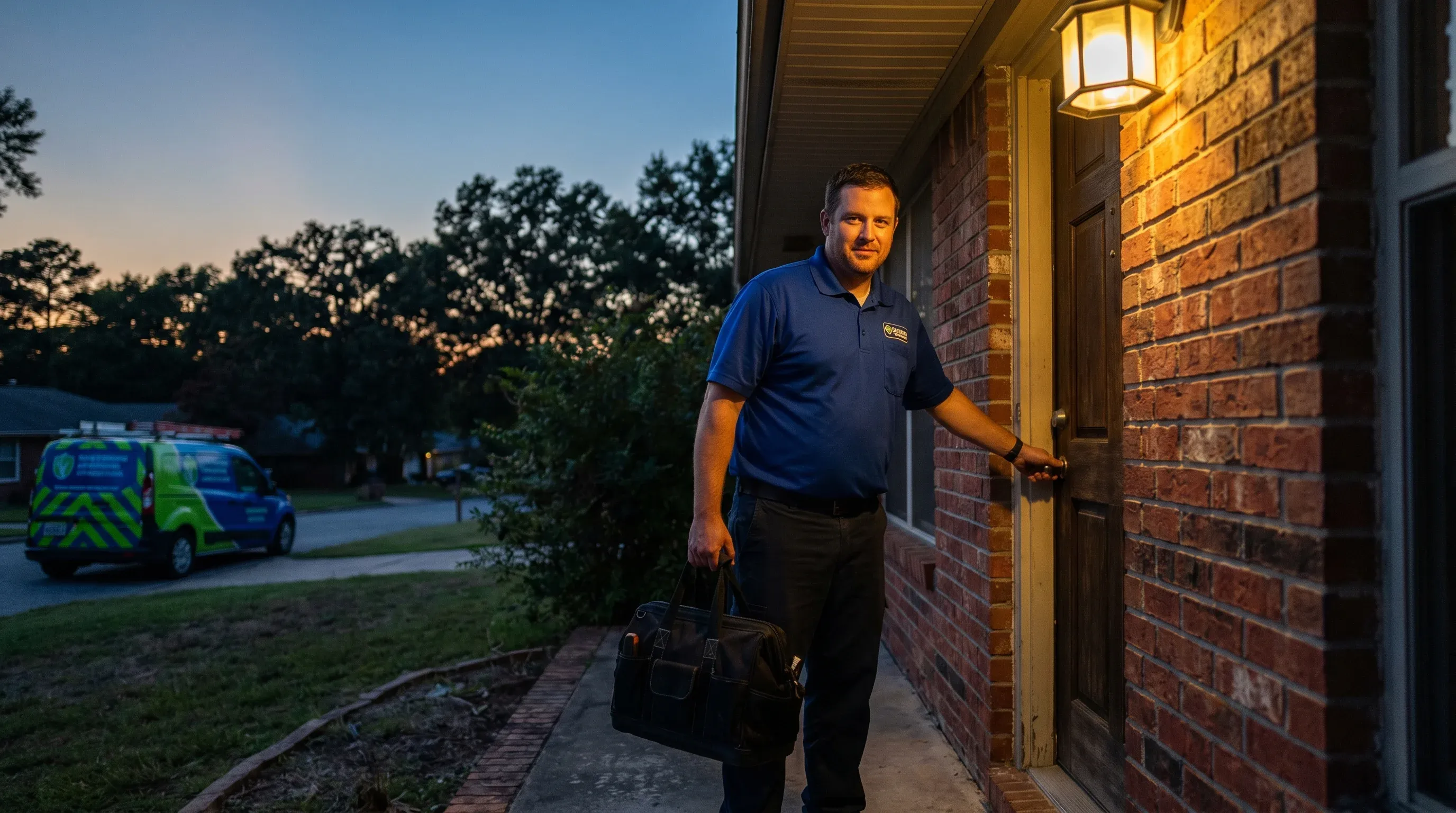
If you cannot reach a spare key within 30 to 60 minutes, a professional locksmith is the right next step. The challenge in Texas is that the industry attracts scam operators who use deceptive advertising to get your call, then inflate the price once they arrive.
How to find a reputable locksmith in Texas:
Texas requires all locksmiths to be licensed by the Department of Public Safety, so that is your first filter. Look for companies with a local phone number rather than an 800 number, read Google reviews carefully (4.5 stars or higher with at least 50 reviews is a reasonable baseline), and skip any result that looks like a lead-generation aggregator rather than an actual company.
Questions to ask on the phone:
Ask directly: "Are you licensed by Texas Department of Public Safety?" and "What is your locksmith company license number?" You can verify that number at the Texas DPS licensing portal. Also confirm they are insured and bonded.
Pricing clarity is non-negotiable. Get a complete price on the phone and ask whether it can change when they arrive. Service call fees typically run $50-$100 in Texas, and total cost to unlock a standard front door typically runs $100-$200. After-hours and emergency calls add to that.
Response time is worth confirming. In Austin, San Antonio, and other metro areas, 15-30 minutes is typical. Suburban areas run 30-45 minutes, and rural areas can be 45-90 minutes.
Non-destructive entry should be the default. Ask whether they can unlock without damaging the lock. For standard residential locks the answer should be yes. Drilling is a last resort and should only happen when a lock is damaged or truly unpickable, with the total cost disclosed upfront.
RED FLAGS - hang up immediately if you hear any of these:
Any one of these signals is enough reason to end the call and try a different number.
- Won't provide DPS license number or says "I'll show it when I arrive"
- Refuses to give price estimate or says "we'll see when we get there"
- Asks for payment over the phone before arriving
- No local address or uses PO box
- Shows up in unmarked vehicle with no business name
Step 5: While Waiting for Locksmith (15-30 minutes)
A licensed locksmith in a Texas metro area typically arrives in 15-30 minutes. Use that time well rather than standing at the door.
WHILE YOU WAIT
Stay safe
Your physical safety comes first, especially in Texas summers where 100°F heat turns a 20-minute wait into a genuine health concern. Wait in a well-lit area. If you have your car, wait inside with the AC running. A neighbor's porch works if you know them.
Prepare for locksmith
Have your ID ready since a driver's license showing your home address is the standard way locksmiths verify you are authorized to access the property. Clear the area around the door, turn on the porch light if it is dark, and confirm payment method with the locksmith since some companies are cash-only.
Notify household members
A quick text to your spouse or family keeps them from worrying and opens the door to a faster solution if someone is closer to home than the locksmith.
Plan prevention
Use the wait time to think through what you will do differently. Ordering spare keys, getting a lockbox, or researching smart lock options are all things you can start on your phone right now.
Step 6: Locksmith Arrives (20-40 minutes for complete service)
Knowing what to expect makes the process less stressful and helps you recognize if something seems off.
WHAT HAPPENS WHEN THE LOCKSMITH ARRIVES
Verification (2-3 minutes)
The locksmith arrives in a marked vehicle. They present their Texas DPS locksmith license and photo ID before touching anything, ask for your ID to verify you own or rent the property, and confirm the price agreed upon over the phone. If any of this does not happen, it is a red flag.
Lock assessment (3-5 minutes)
The technician examines the lock type and determines the best entry method, then explains what they plan to do and confirms the price before starting.
Entry attempt (5-20 minutes)
Most residential locks open non-destructively. The technician will typically try lock picking first using specialized tools to manipulate the pins into the open position (5-15 minutes). Lock bumping using a bump key is another common method (2-5 minutes). For knob locks only, a credit card shim or bypass tool may work. Drilling is a last resort reserved for locks that genuinely cannot be picked.
Lock replacement (if drilled) (15-30 minutes)
When drilling is necessary, the technician removes the old cylinder, installs a new deadbolt or knob lock (typically Grade 2 quality), provides 2-3 keys, and tests the lock multiple times.
Payment and receipt (2-3 minutes)
Always ask for a detailed receipt that includes the company name, address, and phone number, the Texas DPS license number, a description of services performed, any parts used, and the total amount paid. Keep this receipt if you plan to file an insurance claim.
Total time from arrival to completion: 20-40 minutes. Total cost in Texas:
- Standard lockout (daytime, no drilling): $100-$200
- After-hours lockout (nights/weekends): $150-$300
- Lock replacement needed: $150-$300 total
Step 7: Prevent Future Lockouts
Once you are back inside, the best use of the next few hours is making sure this never happens again. Prevention is inexpensive, and most of it takes less than an hour.
Immediate actions (today):
The same afternoon you get back inside is the right time to take care of the basics. These steps take less than an hour total.
- Make 2-3 spare keys at hardware store ($2-$5 each)
- Give one spare to trusted neighbor or family member
- Keep one spare in wallet or purse (separate from main keychain)
- Install key lockbox on exterior (hidden location) - $20-$50
Within 1 week:
The slightly bigger-ticket items are worth addressing before the memory of this lockout fades.
- Consider smart lock installation ($150-$300) - unlock with phone, never locked out again
- Install keypad deadbolt ($80-$150) - use code instead of key
- Review household lock inventory (who has keys, where are spares)
Long-term prevention:
Habits and hardware together make lockouts nearly impossible. These changes cost nothing or very little and compound over time.
- Establish "key check" habit (pat pocket before closing door)
- Never lock doorknob when leaving (use deadbolt only, harder to lock yourself out)
- Install auto-lock smart lock with auto-unlock when you approach
- Teach kids not to lock door from inside when you're outside

What NOT to Do When Locked Out
The tempting shortcuts almost always cost more to fix than a professional locksmith call would have, and some create safety hazards on top of the financial damage.
1. Breaking a window
Window replacement runs $150-$500 depending on size and type, the broken glass is a hazard, and breaking in can trigger your alarm and notify police. It is only justified in a life-threatening emergency such as a child or pet in immediate danger.
Better option: Call locksmith ($100-$200 to unlock, no damage)
2. Kicking down the door
Door frame repair costs $500-$1,500, and a solid exterior door with a deadbolt engaged will not yield to a kick. Hollow-core interior doors might break, but exterior doors are built to resist exactly this kind of force.
Better option: Locksmith picks lock for $100-$200
3. Trying to pick the lock yourself
Lock picking is a practiced skill. Without training and proper tools, you are far more likely to jam the lock pins than open the door, which makes the locksmith's job harder and more expensive.
Better option: Call professional who can pick in 5-15 minutes
4. Using credit card to "slip the lock"
The credit card method only works on spring-latch knob locks without a deadbolt, and it rarely works on modern locks even then. If your home has a deadbolt, this technique will not open the door and will damage your card.
Better option: Check for unlocked windows instead
5. Prying door open with crowbar
Prying damages the door frame, the lock housing, and often the door itself. Repair costs run $500-$2,000, and the door still might not open if the deadbolt is fully engaged.
Better option: Locksmith unlocks without damage for $100-$200
6. Calling fake locksmith from Google ad
Scam companies quote $15-$50 on the phone to get your call, then show up and announce the job is more complicated than expected. They drill locks unnecessarily to justify inflated prices and demand cash. Verify the DPS license before anyone arrives at your door.
How to avoid: Only call licensed Texas locksmiths, verify DPS license, get price in writing
Professional locksmith is almost always the cheapest and safest option.
Cost Breakdown: Locksmith vs. DIY Damage
The methods that feel fast and free in a lockout moment end up costing two to ten times more than a licensed locksmith call. The table below shows the full picture.
| Method | Cost | Time | Damage Risk | Success Rate |
|---|---|---|---|---|
| Licensed locksmith (daytime) | $100-$200 | 30-45 min | None | 95%+ |
| Licensed locksmith (after-hours) | $150-$300 | 45-60 min | None | 95%+ |
| Break window | $150-$500 | 5 min | High (glass, frame) | 100% |
| Kick down door | $500-$1,500 | 10 min | Very high (frame, door) | 20-40% |
| Pick lock yourself | $0-$20 | 30-60 min | Medium (may jam lock) | 5% |
| Pry door open | $500-$2,000 | 10-20 min | Very high (frame, lock, door) | 30-50% |
Bottom line: Professional locksmith is almost always the cheapest and safest option.
Prevention: How to Never Get Locked Out Again
These five strategies range from free habit changes to affordable hardware upgrades, and most Texas homeowners can implement all of them for well under $300 total.
1. Give Spare Keys to Trusted People ($0-$10)
Spare keys are the simplest and cheapest insurance against a lockout. Hardware stores cut keys for $2-$5 each, and two or three copies placed correctly gives you multiple recovery options.
The best placement: one with a trusted neighbor close enough to walk to, one with a nearby family member, and one kept in your car in a hidden spot that is not the glove box.
2. Install a Key Lockbox ($20-$80)
A combination lockbox gives you a secure, always-accessible spare that does not depend on another person being available. It is a better solution than a spare under the doormat, which is among the first places anyone casing a home will check.
Two types are worth knowing:
- Portable lockbox ($20-$40) - Hangs on door handle, combination lock
- Wall-mounted lockbox ($40-$80) - Bolts to exterior wall, more secure, hidden location
Placement matters as much as the lockbox itself:
- NOT next to front door (obvious to burglars)
- Side of house, back porch, or garage entrance (hidden from street view)
- Behind outdoor AC unit or utility box
- Under deck or in shed
Use a non-obvious combination code, change it annually, and share it only with household members.
Cost: $20-$80 one-time, no monthly fees
3. Upgrade to Smart Lock ($150-$300)
Smart locks eliminate the core failure point that causes most lockouts: needing a physical key. When your phone is the key, the lockout scenario becomes much harder to create.
Features that prevent lockouts:
- Unlock with smartphone app (phone always with you)
- No key needed (use code, fingerprint, or phone)
- Auto-unlock when you approach (Bluetooth or geofencing)
- Give temporary access codes to guests or service workers
- Activity log (see when door was unlocked)
Several models work well in Texas homes:
1. August Smart Lock Pro ($200-$280)
Installs over your existing deadbolt so it keeps the exterior keyhole as a backup. Works with Alexa, Google, and Apple HomeKit, and auto-unlocks when your phone is nearby. Remote unlock from anywhere requires the WiFi bridge.
2. Schlage Encode Plus ($250-$330)
Built-in WiFi means no hub is needed. Supports Apple Home Key so you can unlock with an iPhone or Apple Watch. Touchscreen keypad plus app control, with a Grade 1 security rating.
3. Yale Assure Lock 2 ($200-$280)
Touchscreen keypad with auto-relock, compatibility with major smart home systems, tamper alerts, and weather resistance that holds up to Texas summer heat.
4. Kwikset Halo ($150-$200)
The budget-friendly option with WiFi built in, touchscreen and app control, and SmartKey rekey technology that lets you rekey the lock yourself in 30 seconds.
Cost: $150-$330 one-time + optional subscription ($3-$10/month for remote access)
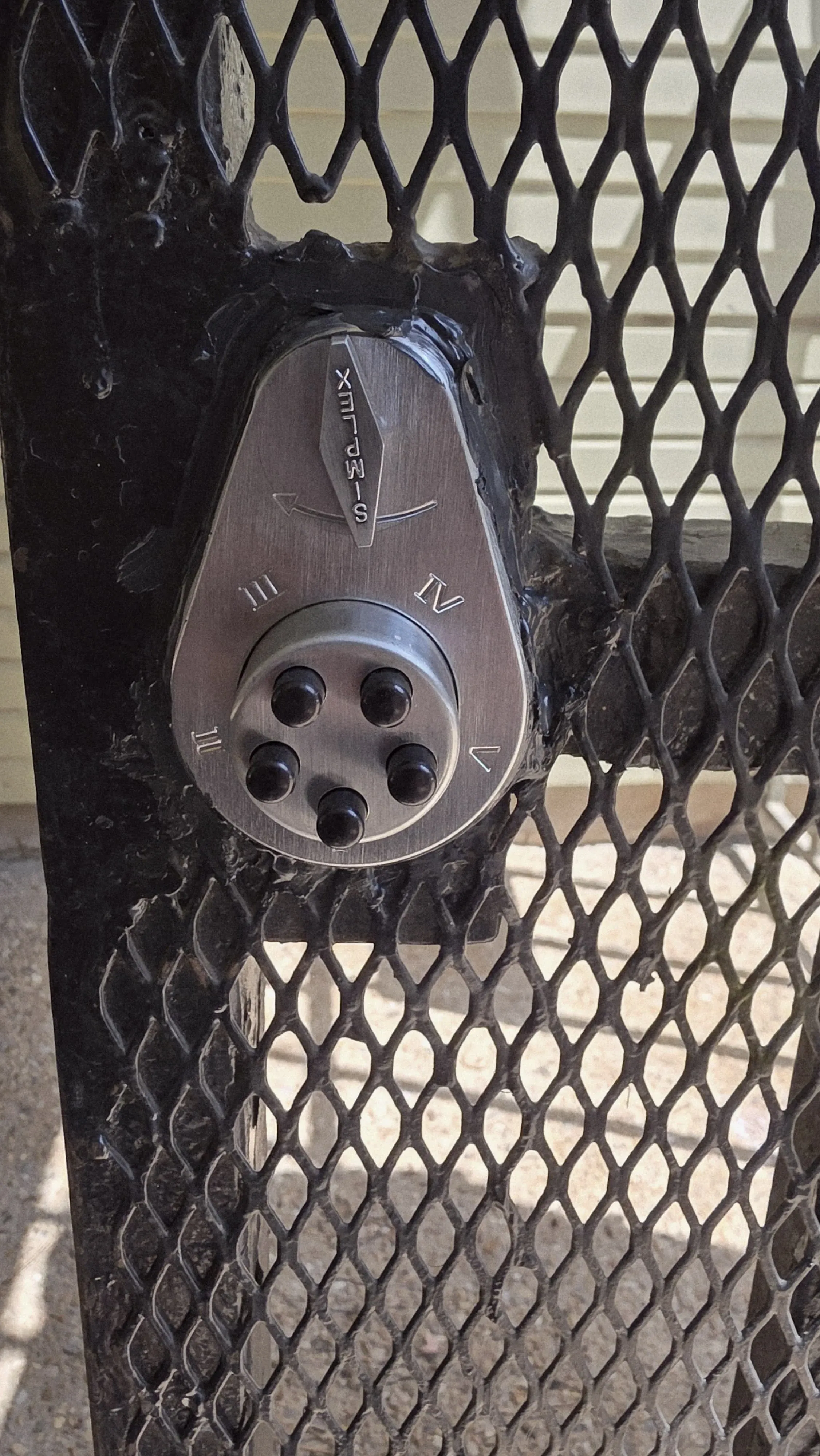
4. Install Keypad Deadbolt (No WiFi) ($80-$150)
If smart home features are not your preference, a keypad deadbolt gives you the main benefit - no physical key required - without the app, WiFi, or subscription. You enter a 4-8 digit code to unlock, and the lock runs on batteries so it keeps working during power outages.
Good options in this category:
- Kwikset SmartCode 913 ($80-$120) - Simple keypad, no smart features
- Schlage Camelot Keypad Deadbolt ($100-$150) - Premium keypad, auto-lock
- Yale Real Living Keyless Deadbolt ($120-$180) - Touchscreen, weather-resistant
You gain keyless entry and reliability without complexity. You give up remote access, activity logs, and the ability to share temporary codes digitally. For many Texas homeowners who want simplicity, keypad deadbolts are the better fit.
Cost: $80-$150 one-time, battery replacement every 6-12 months ($5-$10)
5. Develop a "Key Check" Habit (Free)
The cheapest lockout prevention is a consistent habit practiced every time you leave the house. Most lockouts happen in a moment of distraction, especially when you are carrying something, talking on the phone, or rushing. A physical check takes two seconds.
Before closing the door:
- Pat pocket to feel keys
- Look at keys in hand
- Say out loud "I have my keys"
- Never lock knob when leaving (use deadbolt only from outside with key)
When leaving the house:
- Use deadbolt (requires key to lock from outside, prevents accidental lockout)
- Don't use interior thumb-turn lock when stepping outside briefly
- Install door closer that prevents door from slamming shut while you're outside
When taking trash out:
- Prop door open with doorstop
- Put keys in pocket BEFORE going outside
- Use side/back door without deadbolt (can re-enter if locked out)
Lockout Insurance and Home Warranty Coverage
Most Texas homeowners assume their homeowner's policy covers a standard lockout, but that is generally not the case. Standard homeowner's insurance covers lock replacement after a break-in or burglary but does not cover lockouts caused by lost or forgotten keys. A few other options often go overlooked:
- Some home warranties include locksmith coverage ($0-$50 service fee)
- AAA membership includes residential locksmith service (members get discount)
- Some credit cards offer locksmith reimbursement (Amex Platinum, Chase Sapphire Reserve)
Check all three before your next lockout rather than discovering them after you have already paid out of pocket.
Emergency Locksmith Services in Texas
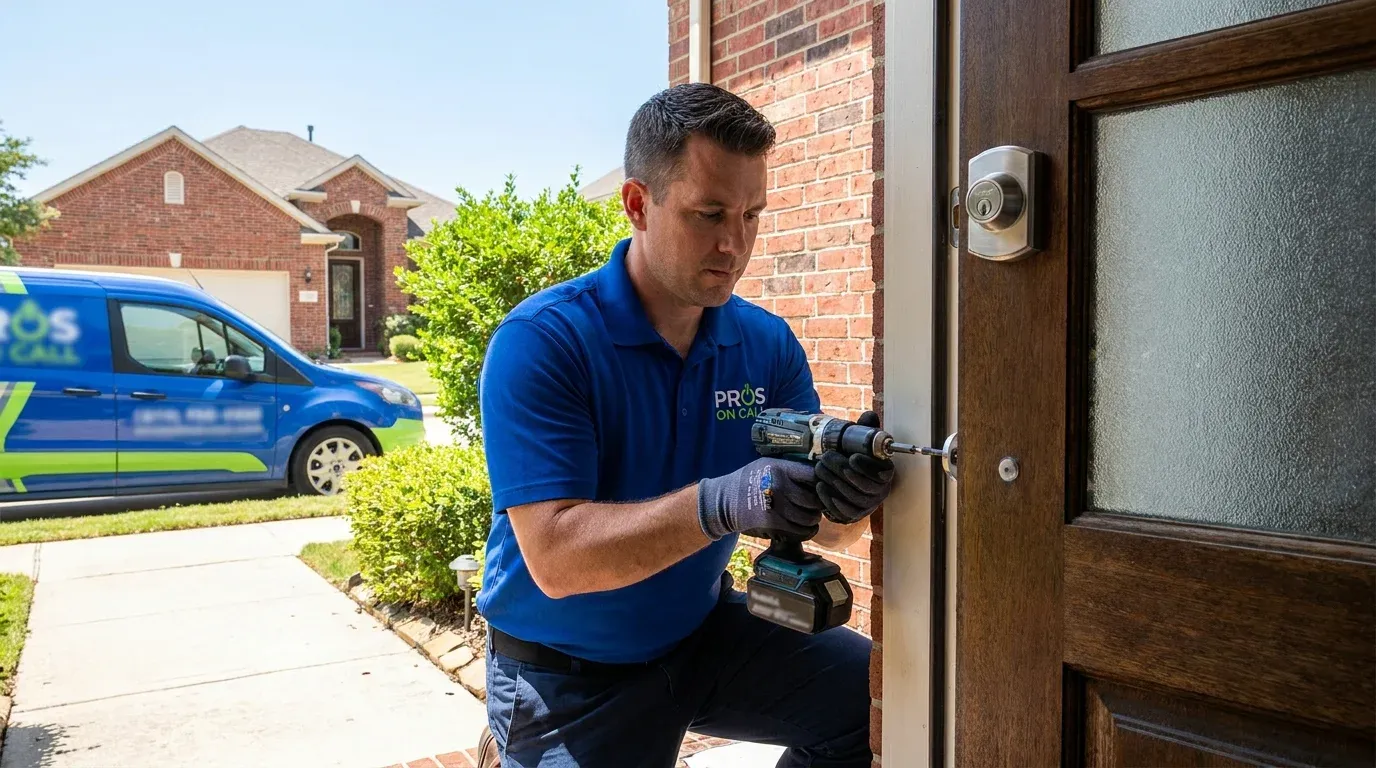
Pros On Call provides 24/7 residential lockout services across Texas, including Austin, San Antonio, McAllen, and surrounding communities. We are fully licensed under Texas DPS License #B19847 and arrive in marked vehicles with upfront pricing before any work begins.
Every job includes:
- House lockouts (front door, back door, garage, all entry points)
- Non-destructive entry (lock picking, bumping, specialized tools)
- Lock replacement if drilling required
- Spare key creation (up to 5 keys)
- Smart lock installation
- Lockbox installation
When we arrive, our technician presents a Texas DPS locksmith license and photo ID, confirms the price agreed on the phone, and explains the entry plan before touching the lock. No surprise charges. No pressure to upgrade. A detailed receipt is provided for every job.
Response times across Texas:
- Metro areas (Houston, Dallas, Austin, San Antonio): 15-30 minutes
- Suburban areas: 30-45 minutes
- Rural areas: 45-90 minutes
- After-hours/weekends: Add 15-30 minutes
Pricing is flat-rate, not hourly, with upfront estimates before work begins. Receipts are provided for insurance claims.
Service areas: Austin, San Antonio, Houston, Dallas, Fort Worth, El Paso, Arlington, Corpus Christi, Plano, Lubbock, Irving, Laredo, Garland, Frisco, McKinney, and all major Texas metro areas.
Call (888) 601-6005 for immediate residential lockout service in Texas. Available 24/7/365.
Last updated: December 2025 | Based on Texas Department of Public Safety locksmith licensing requirements and 15+ years of residential locksmith experience. GSC data: 0 clicks and 6,768 impressions over 16 months.