Hiring a locksmith when you're locked out or need security upgrades should be straightforward. Unfortunately, the locksmith industry has its share of scammers who prey on people in vulnerable situations. From bait-and-switch pricing to unnecessary lock replacements, locksmith scams cost Texans real money every year.
This guide will help you identify legitimate locksmiths, spot common scam tactics, and protect yourself from fraudulent services.
Common Locksmith Scams
Understanding how scams work is your first line of defense. Scammers exploit the stress and urgency of a lockout - you're standing outside your home or car, it's late, and you just want someone to show up fast. That urgency is exactly what bad actors count on. Here are the most common tactics used by dishonest locksmiths and what they look like in practice.
1. Bait-and-Switch Pricing
The bait-and-switch is the oldest trick in the locksmith scam playbook. A company advertises an impossibly low price to get you on the phone, then the technician arrives and suddenly "discovers" complications that weren't mentioned before. By that point you're already committed, often with no easy way to send them away, and they know it. The operation typically runs like this: a listing advertises $15-$25 to answer the phone, the technician arrives and labels your lock "high-security" or "unusually complex," and the final bill lands at 3-10 times the quoted price. Cash only, of course. If you hesitate, they remind you that you're still locked out and they can simply leave.
Example:
"We quoted $25 on the phone, but your lock is actually a high-security model. The real price is $350. Cash only."
Reality check: Legitimate emergency locksmith service costs $75-$200. If someone quotes $15-$25, it's definitely a scam.
Legitimate emergency locksmith service costs $75-$200. If someone quotes $15-$25, it's definitely a scam.
2. Unnecessary Lock Replacement
A trained locksmith can open or rekey the overwhelming majority of residential locks without touching a drill. Drilling destroys the lock cylinder and forces you to buy a new one - which the scammer conveniently has on the truck at a marked-up price. When a technician reaches for the drill before making any attempt to pick the lock, that's not a technical limitation. It's a business model. The scammer declares your lock unpickable or too damaged to rekey, drills it out, and charges $300-$800 to install a cheap replacement lock they bought wholesale. In some cases they deliberately damage the lock first, just to make the "need" for replacement impossible to dispute.
Example:
"This lock is too damaged to pick. We'll have to drill it out and install a new one for $450."
Reality check: Experienced locksmiths can pick or rekey the vast majority of residential locks. Drilling should be a last resort, not the first option.
3. Fake Business Listings
Search engines make it easy for scammers to flood results with fake local listings. A single operation in another city can create dozens of listings with Austin, San Antonio, or McAllen phone numbers, then dispatch whoever is available from wherever they happen to be. The technician who shows up has no idea what business name you called and no connection to anyone local. The local phone numbers forward to a central call center somewhere else entirely, the "nearby" office exists only as a listing, and the vehicle that pulls up has no company markings because there is no company - just an individual dispatched from a clearinghouse. When you search "locksmith near me" and see a business with a local address and local number, that combination used to mean something. Now it requires verification. See how fake near me listings route to one call center for how four different "best locksmith near me" results can lead back to the same dispatcher, and the 30 second license check that gives it away.
Example:
You search "locksmith near me" and find "ABC Locksmith - Austin, TX" but the technician comes from 100 miles away and has never heard of "ABC Locksmith."
Reality check: Legitimate locksmiths have verified Google Business profiles, physical addresses, and marked company vehicles.
The technician who shows up has no idea what business name you called and no connection to anyone local.
4. No-License, No-Insurance Scams
Operating without a license is illegal in Texas, but enforcement depends on someone reporting a problem. Unlicensed operators have no accountability - no board to complain to, no bond to claim against, and often no traceable business address. If they damage your door frame, your lock, or your property and then disappear, your only option is small claims court against someone you can't locate. Without insurance, any property damage they cause comes out of your pocket. Without a license, there is no state board to file a complaint with and no bond to make a claim against. The work itself may be shoddy - incorrect installation, compromised security, or door hardware that fails - and you have no warranty to enforce and no one to call back.
Example:
Locksmith damages your door frame during service. When you request compensation, they disappear - no business license, no insurance, no way to contact them.
Reality check: In Texas, locksmith companies must be licensed through DPS Private Security and should carry liability insurance.
Red Flags: Warning Signs of Locksmith Scams
Spotting a scammer before they arrive is far easier than dealing with one once they're at your door. The signals appear at every stage of the interaction, and knowing what to look for puts you in control. Pay attention during the phone call, when they pull up, and throughout the job itself.
Before They Arrive
These warning signs show up on the phone call and in the online listing before anyone sets foot at your property. If you catch two or more of these, hang up and call someone else.
Can't or won't provide a business name - Just says "locksmith service" Refuses to give license number - Legitimate companies provide this readily Extremely low advertised prices - "$15 lockout" is always a scam Vague phone quotes - Won't commit to price range No website or very basic website - Listing-only online presence Many different business names - One company, ten different listings Asks for payment over the phone - Before even seeing the lock
WARNING SIGNS DURING SERVICE
Unnecessary Damage
Damages lock unnecessarily - to justify replacement.
Cheap Materials
Uses cheap, unbranded locks - for high-security prices.
Rushed Work
Rushes through the job - poor quality, incomplete work.
When They Arrive
First impressions tell you a lot. A professional technician shows up in a marked vehicle, wears a uniform, and hands over a business card or badge without being asked. Someone rolling up in an unmarked car wearing street clothes, unwilling to show ID, is not a professional - regardless of what they say on the phone.
Unmarked vehicle - No company name, logo, or contact info Can't show ID or credentials - No business card, no license Immediately suggests drilling - Without attempting to pick Changes price significantly - From phone quote to on-site quote Pressures you to pay immediately - Before explaining the work Only accepts cash - No credit cards, checks, or traceable payment Unprofessional appearance - No uniform, no company shirt
During Service
Watch what they actually do. A real locksmith works methodically, talks you through the process if you ask, and treats your property with care. If they seem to be making the problem worse, or if they can't answer a basic question about the lock type they're supposedly working on, stop the job and call someone else.
Damages lock unnecessarily - To "justify" replacement Uses cheap, unbranded locks - For "high-security" prices Rushes through the job - Poor quality, incomplete work Can't answer basic questions - About lock types, security, etc. Threatens to leave you locked out - If you don't pay inflated price
How to Find a Legitimate Locksmith
The best time to find a trustworthy locksmith is before you need one. When you're locked out in a parking garage in San Antonio at 11 p.m., you don't have time to verify credentials or read reviews. Taking fifteen minutes right now to locate a licensed, insured company and save the number puts you in a much stronger position when something actually goes wrong. Follow these steps to make sure you're hiring a reputable, licensed professional.
WARNING SIGNS WHEN THEY ARRIVE
No Company Markings
Unmarked vehicle - no company name, logo, or contact info.
No Proof of Identity
Can't show ID or credentials - no business card, no license.
Price Jumps On-Site
Changes price significantly - from phone quote to on-site quote.
1. Research Before You Need One
Emergencies create pressure, and pressure creates mistakes. Finding a reputable locksmith before you're in a bind means you can take your time, read reviews carefully, and call during business hours when it's easy to ask questions and verify answers. Neighborhoods in Austin like Hyde Park, Bouldin Creek, and South Congress each have local Facebook groups and Nextdoor communities where neighbors openly recommend trades they trust - those firsthand referrals carry real weight.
Do not wait for an emergency. Find reputable locksmiths in your area now, save contact information in your phone, and read reviews and check credentials at a time when you are calm and not rushed. Note which companies are licensed and insured. The most reliable sources for vetting a locksmith are Google Maps (look for a review history that spans multiple years, not a sudden burst from last month), the Better Business Bureau at BBB.org, Angie's List or Home Advisor for contractor ratings, and local community groups on Facebook or Nextdoor where neighbors share firsthand experiences.
2. Verify Credentials
Credentials are not just paperwork - they are your protection if something goes wrong. A license tells you the technician has passed a background check and met state training standards. Insurance means that if they scratch your floor or crack your door frame, someone other than you pays for it. Bonding adds another layer by guaranteeing the quality of their workmanship. Ask for all three before anyone starts working.
License Number:
Texas locksmiths are regulated by the Texas Department of Public Safety (DPS) Private Security Bureau. You can search the Texas DPS licensing portal by license number or company name to confirm the license is current and in good standing. Most states require licensing for commercial locksmith work at minimum.
Insurance:
Ask specifically for liability insurance (which covers your property), workers' compensation if the company employs multiple technicians, and bonding, which guarantees workmanship.
Business Registration:
A legitimate company has a registered business name, a physical address that is not just a PO box, and has been operating long enough to have a real review history.
3. Check Online Presence
The online footprint of a real local locksmith looks different from a scam operation. Real companies have a consistent name across Google, Yelp, Facebook, and their own website. They have photos of their actual technicians and vehicles, and their review history spans months or years. Fake listings often appeared recently, use stock photos, and have a burst of five-star reviews from accounts with no other activity.
A legitimate company's online presence holds up under scrutiny. Look for a professional website that lists services, pricing, and credentials. Check that the Google Business profile has a verified physical address and a review history that stretches back at least a year. The business name should match across every platform - Google, Yelp, Facebook, and their own site. Photos should show real technicians and real vehicles, not stock images.
Professional website with services, pricing, credentials Verified Google Business profile with real address Consistent business name across all platforms Real customer reviews (not just 5-star reviews from last week) Social media presence showing actual work and team Company vehicles visible in photos
Scam operations leave a different trail. A newly registered domain, inconsistent business names across listings, no photos of actual technicians or vehicles, and a cluster of reviews all posted within the same short window are all warning signs worth acting on:
- Website created recently (check domain age)
- Inconsistent business names
- No photos of actual locksmiths or vehicles
- All reviews from same time period
4. Get Everything in Writing
A written estimate is not bureaucratic overhead - it is a binding record of what was agreed. If the technician refuses to put the price in writing before they start, treat that refusal as a serious warning sign. Legitimate companies do not hesitate to confirm their quotes on paper, because they intend to honor them.
The online footprint of a real local locksmith looks different from a scam operation.
Before service begins, get written confirmation of the total cost including service call, labor, and materials; the specific services to be performed; the company name, license number, and technician name; the payment methods accepted; and any guarantee or warranty on the work.
Here is what a proper written estimate looks like from a legitimate company:
Company: Pros On Call (License #B19847)
Service: Residential lockout
Service call: $75
Labor: $50
Total: $125
Payment: Cash, credit card, check accepted
Guarantee: 30-day workmanship guarantee
Technician: John SmithQuestions to Ask When Calling a Locksmith
The phone call is your first screening opportunity. A scammer can hold up under casual questions but typically stumbles when you ask for specific, verifiable information. Ask these questions before they arrive, and pay attention not just to what they say but how quickly and confidently they say it.
Essential Questions
1. "What is your business name and license number?"
A legitimate company answers this immediately and volunteers the license number without hesitation. Vague answers, deflections, or "we're licensed" without an actual number are red flags.
2. "What's the total cost for this type of service?"
A real locksmith can give you a price range over the phone for a standard lockout - something like "$100-$150 for a standard residential lockout." Any technician who refuses to give even a ballpark before seeing the lock is setting up a bait-and-switch.
3. "How long until you can arrive?"
Realistic arrival times for most Texas cities run 30-90 minutes depending on traffic and distance. "We're just around the corner" from a company whose number forwarded through a call center is almost never true.
4. "Do you have insurance?"
The answer should be immediate and specific: full liability insurance and bonding. A vague or evasive answer means if they damage your property, you're on your own.
SIGNS OF A SCAM OPERATION ONLINE
Domain Age
Website created recently (check domain age).
All Reviews, Same Window
All reviews from same time period.
Stock-Photo Team
No photos of actual locksmiths or vehicles.
5. "Will you need to drill my lock?"
No professional can answer that definitively over the phone before seeing the lock - but the right answer is "we'll try non-destructive methods first and drilling is a last resort." Anyone who says "yes, definitely" before laying eyes on your lock is planning to drill regardless of whether it's necessary.
6. "What payment methods do you accept?"
Legitimate companies accept credit cards, checks, and cash. "Cash only" is a scam signal, because cash transactions leave no record and cannot be disputed.
7. "Can you provide a written estimate?"
The answer should be an easy yes. If the technician gets defensive or says verbal is enough, end the call.
What to Do If You're Being Scammed
Sometimes the warning signs don't appear until the technician is already at your door. If that happens, keep your head, document what you can, and remember that you are never legally obligated to pay a price that was not quoted and agreed upon.
While They're There
Stay calm and methodical. Do not pay based on threats alone, and do not let urgency override your judgment.
1. Don't pay if you feel unsafe. Trust your instincts. If the technician is threatening or aggressive, call police rather than escalating. You are not obligated to pay an inflated price under pressure.
2. Document everything. Take photos of their vehicle and license plate, photograph any work done, and record the interaction if you're in a one-party consent state (Texas allows this). Get their name and the company name they claim to represent.
3. Request an itemized invoice. Ask for a written breakdown of every charge before handing over any money. Compare it to the phone quote.
4. Negotiate if possible. Point out the discrepancy directly: "You quoted $X on the phone and you're asking for $Y now." Offer to pay the original quoted amount. If they refuse and you need to pay to end the situation, use a credit card so you can dispute the charge afterward.
After They Leave
Once you're safe and the technician is gone, take action quickly. The documentation you gathered is most useful while the details are fresh.
1. File complaints. Report to the Better Business Bureau (BBB.org), the Texas the Texas DPS Private Security Bureau, the State Attorney General's Office, the Consumer Financial Protection Bureau, and the Federal Trade Commission (FTC.gov/complaint). Each report makes it harder for the same operation to scam someone else.
2. Dispute charges. If you paid by credit card, contact your bank and dispute the charge. Provide photos, any written estimates, and notes from the interaction. Banks frequently side with consumers in clear bait-and-switch situations.
3. Leave reviews. Post factual, specific accounts on Google, Yelp, and Facebook to warn other homeowners. Stick to what happened - price quoted, price charged, what the technician said - rather than general complaints.
4. Report to police. File a police report for fraud, especially if the technician damaged your property. The report creates documentation you can use for insurance claims and gives law enforcement a record in case the same scammer surfaces again.
How Pros On Call Protects You From Scams
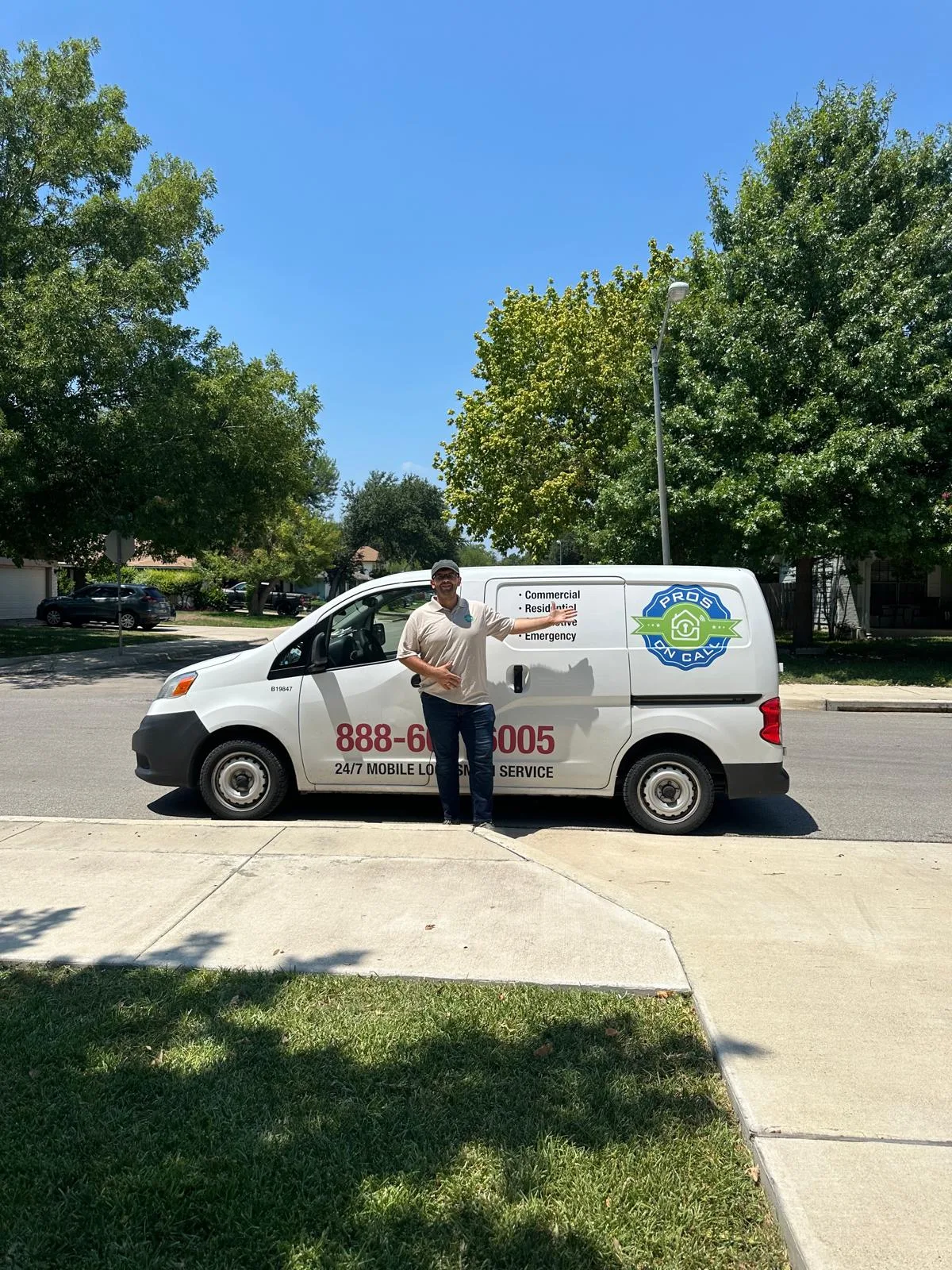
When you call Pros On Call at (888) 601-6005, you get a licensed Texas company - License #B19847, verifiable at the Texas DPS licensing portal - with fully insured and bonded technicians who have passed background checks. Every quote is given upfront before work begins, put in writing on request, and honored without hidden fees or last-minute additions. Our technicians arrive in marked vehicles, wear uniforms with ID badges, and carry professional tools. We prioritize non-destructive entry and use quality hardware. We've operated in Texas since 2010 with a physical business location, real customer reviews built over years, and a 30-day workmanship guarantee on everything we do. Multiple payment options - cash, credit, and check - are always accepted.
Preventing Future Scams
The best protection is a relationship with a company you already trust. Use a locksmith for a non-emergency job first - a rekeying, a deadbolt upgrade, or a spare key - and you'll know exactly who to call when something urgent happens. Keep their number saved. Know the typical price range for common services so that an absurdly low quote registers as a warning rather than a bargain.
Practical preparation also reduces how often you need a locksmith at all. Leaving a spare key with a trusted neighbor is free. Many of our customers in Austin and McAllen have moved to smart locks, which eliminate the physical key entirely and cut lockout risk dramatically. Roadside assistance plans from AAA or your auto insurance often include lockout service and can save you from the frantic search for a technician at midnight.
The broader point is simple: information is your shield. Know what legitimate service costs, know what questions to ask, and know who you're calling before you ever need to.
WHAT A LEGITIMATE ONLINE PRESENCE LOOKS LIKE
Professional Website
Professional website with services, pricing, credentials.
Verified Google Business Profile
Verified Google Business profile with real address.
Consistent Business Name
Consistent business name across all platforms.
Don't Be a Victim - Know Your Rights
Texas consumers have real legal protections, and knowing them changes the dynamic entirely when a scammer tries to pressure you. You are never obligated to accept a price change that wasn't disclosed upfront, and you always have the right to walk away, dispute charges, and file formal complaints with state regulators.
Ask for credentials and licensing before service Receive a written estimate before work begins Refuse service if the price changes dramatically Choose the locksmith you want (not who property managers or landlords suggest) Request non-destructive methods before drilling File complaints with state licensing boards Dispute fraudulent charges with your credit card company
Need a Trustworthy Locksmith in Texas?
Don't risk hiring a scammer when you need locksmith services. Pros On Call provides licensed, professional service with transparent pricing and guaranteed work.
Trusted Locksmith Service Across Texas:
Call: (888) 601-6005
Licensed - Texas License #B19847 Insured & Bonded - Full liability coverage Transparent Pricing - Upfront quotes, no hidden fees Professional - Marked vehicles, uniformed technicians Guaranteed Work - 30-day workmanship guarantee Multiple Payment Options - Cash, credit, checks accepted
Serving Austin, Houston, Dallas, San Antonio, and all major Texas cities.
Available 24/7 - Emergency service when you need it most.
Pros On Call (24 Service LLC DBA Pros On Call) - Licensed, trustworthy locksmith service since 2010. Protecting Texas families and businesses from scams and substandard service.