Move into a new place in San Marcos or New Braunfels, and the locks that came with it deserve five minutes before the boxes ever come off the truck. Renters get a real legal protection here. Homeowners get none, and the decision sits with them alone. This post walks through both paths: what Texas law already requires, what falls on you, and the checks worth running with your own hands in the first week.
Renter or Homeowner? That Answer Decides Your Whole Move-In Lock Checklist
Whether you have a legal right to a rekey or just a smart move to make comes down to one question: are you renting or did you buy. Texas Property Code Chapter 92 covers rental homes only. A homeowner gets no landlord and no Chapter 92 protection, so rekeying after closing is a choice, not a right.
I run this same split with every job I take in San Antonio, New Braunfels, and San Marcos. It changes what I tell a customer on the phone before I ever pick up a tool. A renter in a San Marcos duplex near campus is covered by statute the moment they get their keys. A homeowner closing on a New Braunfels resale that same week is covered by nothing but their own good sense. Neither situation is worse than the other. They just call for different first moves, which is why this checklist splits early instead of treating everybody the same. A good share of that San Antonio caseload is PCS orders into JBSA on a report date nobody in the household picked, and that timeline squeeze gets its own walkthrough in my PCS move to San Antonio rekey guide.
If you're renting and want the full security picture past the front door, our apartment security tips guide covers windows, package theft, and the rest of the unit once the lock question is settled.
A renter is covered by statute. A homeowner is covered by nothing but their own good sense.
What Texas Law Already Requires Your New Landlord to Do
Section 92.156 of the Texas Property Code makes your landlord rekey or change every exterior lock operated by a key, card, or code within seven days of your move in date, paid out of their own pocket, not yours. Section 92.153 separately requires a latch on every exterior window, plus a doorknob lock or keyed deadbolt and a keyless bolting device on every exterior door, before you ever get a key.
That seven day window applies to the turnover rekey specifically, the one triggered by you moving in after a prior tenant moved out. It doesn't cover interior doors, only exterior ones. And it doesn't stop there. Section 92.156 also lets you ask for additional rekeying later, as many times as you want, though those extra requests come out of your own pocket instead of your landlord's. If the front door hardware still feels sketchy a month in, you're allowed to pay for a second pass yourself.
For the full statute by statute breakdown, our Texas Property Code locks guide walks through every section a renter or landlord can point to. And if you're waiting on that rekey to actually happen and need a plan for the gap before it does, our locked out of your house guide covers what to do if you get stuck in the meantime. You can read the exact statutory language yourself at the Texas Property Code, Chapter 92, Subchapter D.
Bought a Home in San Marcos or New Braunfels? You Have No Legal Rekey Right, So Do This Instead
Buying a house gets you no Chapter 92 protection and no legal right to a rekey from the seller. That decision sits on you alone. The Associated Locksmiths of America recommends rekeying as soon as you take possession, since it's rare every key gets handed over, and that includes brand new construction, where crews often share one construction key during the build.
That decision sits on you alone.
That last part surprises people the most. A brand new house feels like a clean slate, but it usually isn't one. Builders run a shared construction key through the whole build so every sub, from framers to the guy hanging cabinets, can get in without a hundred separate keys floating around the job site. Nobody tracks who still has a copy once the house closes. The Associated Locksmiths of America's own guidance on rekeying after a purchase says plainly that rekeying is the only real way to know your home is secure against a former key holder, new build or resale.
I've rekeyed plenty of homes in New Braunfels that were less than a year old for exactly this reason. The buyer wasn't worried about a bad neighborhood. They just wanted to be the only ones with a working key, which is a fair thing to want on day one. The same goes east of I-35, and our Bastrop and Lockhart lock and door guide walks through rekeying a new build or rental in those towns.
The Five-Minute Exterior Door Walkthrough for Move-In Day
A move-in day door check covers four things on every exterior door: the deadbolt throws at least an inch into the frame, the strike plate is anchored with screws long enough to bite the stud behind it, the hardware reads as Grade 2 or better, and the door and frame show no damage that would undercut new hardware anyway.
None of these checks need tools you don't already own. A tape measure and a flashlight get you through all four in under five minutes per door.
THE FOUR-POINT DOOR CHECK
Check the deadbolt throw
Extend the bolt fully and measure it against the frame. It should reach at least an inch in. A short throw is easier to force.
Check the strike plate screws
Pull the plate slightly and look at the screws. Short screws that only bite the door trim, not the framing stud behind it, are a weak point.
Check the hardware grade
Look for an ANSI/BHMA Grade 2 or better stamp or spec. Most residential hardware runs Grade 2 or 3, and that's normal.
Check the door and frame for damage
Look for cracks, gouges, or old repair patches near the strike plate and hinges before you invest in anything new.
The grade stamp matters more than most buyers expect. ANSI and the Builders Hardware Manufacturers Association test residential deadbolts on a graded scale, and a Grade 1 deadbolt is rated to 250,000 open and close cycles, well past what a Grade 2 or 3 lock is built to survive. That's not marketing language. It's a published cycle test.
Rekey or Replace? How to Decide What Your New Locks Actually Need
Rekeying makes sense when the hardware you've got is at least Grade 2, works smooth, and hasn't been drilled out for a different lock. Replacing is the right call when you want a grade upgrade, want smart-lock features, or the hardware's already been altered. A mechanical Kwikset SmartKey lock rekeys itself with the tool in the box, no truck required.
| Factor | Rekey | Replace |
|---|---|---|
| Hardware condition | Grade 2 or 3, working smoothly, no visible damage | Drilled out, altered, or physically damaged |
| What you want out of it | Keep the existing mechanism, just control the key | Upgrade grade or add smart-lock functionality |
| Cost | Lower, the mechanism stays as-is | Higher, new hardware throughout |
| Best fit for a move-in | Good hardware with an unknown key history | Older, outdated, or already-altered hardware |
If your new place already has Kwikset SmartKey hardware, the mechanical version, not the app-connected smart lock, you can rekey it yourself with the tool that ships in the box. Our step by step Kwikset rekey guide walks through both the SmartKey and the traditional pin and tumbler versions if you want to do it yourself.
Cost is usually the deciding factor once the hardware condition checks out. Our average locksmith prices guide breaks down what a rekey versus a full replacement runs by service type across Texas, so you're not guessing at the number before you call anyone.
And if the walkthrough turned up damage in the door or frame itself, not just the lock, that's a different problem than a rekey solves. Our lock repair versus replacement guide covers what to do when the lock is fine and the door underneath it isn't. That guide runs a full diagnostic on a malfunctioning lock. This checklist is narrower: deciding what to do with hardware whose key history you simply don't know yet. Two different questions, same starting point.
You can rekey your new home's locks the same day you move in if the hardware checks out.
Smart Locks and Keypad Deadbolts: A New Key Does Not Erase Old Access Codes
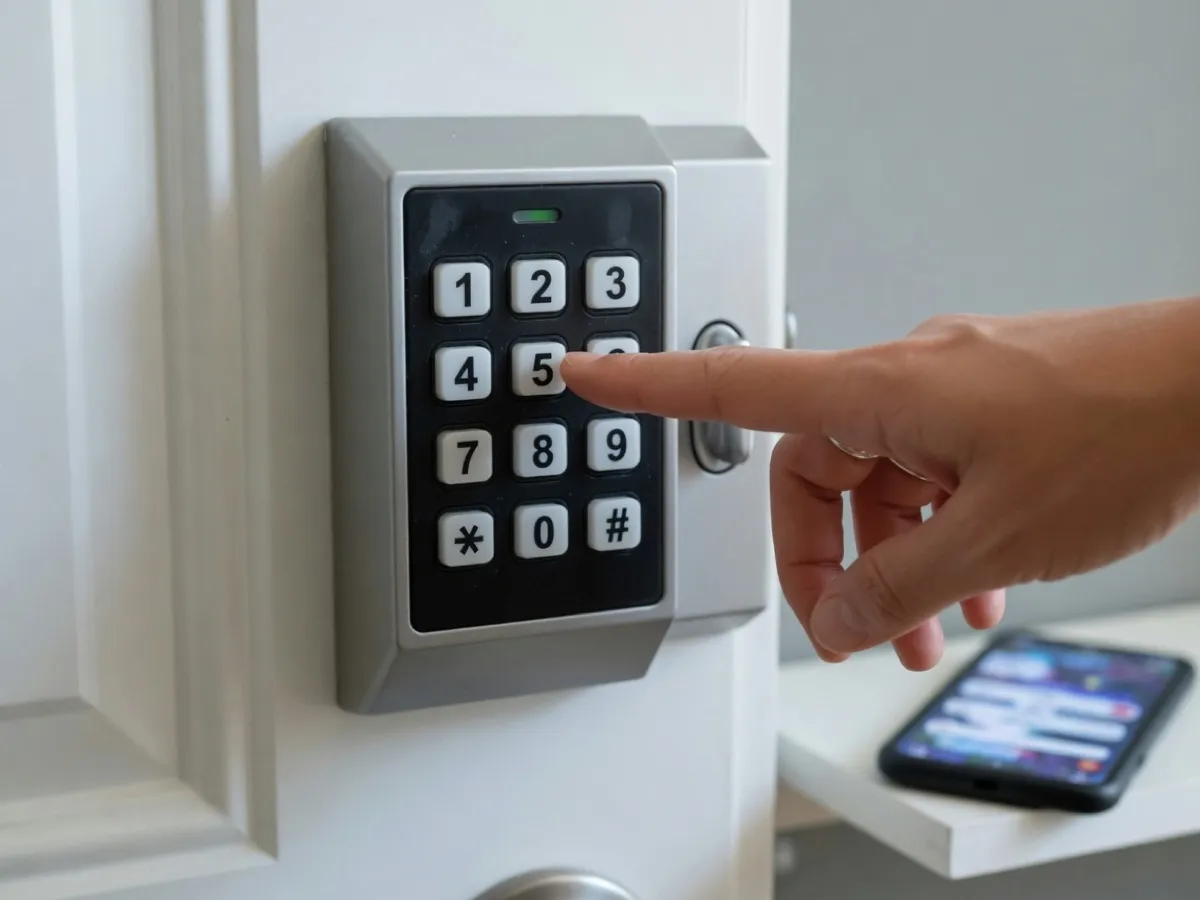
Access codes on a keypad or smart lock live in the lock's memory or a cloud account, not in the key itself. Rekeying the cylinder does nothing to erase a code the last tenant, a contractor, or an old roommate already knows. A full factory reset, wiping every stored code and paired device in one shot, is the real first move on any home with electronic locks already installed.
The key changes. The code doesn't, not without a factory reset.
I see this one trip people up constantly. Someone rekeys the mechanical cylinder on move-in day and feels done, not realizing the four-digit code the previous tenant's dog walker used every week still works fine, because that code was never stored in the part that got rekeyed.
Kwikset's own support documentation is direct about this. On Kwikset's connected models, a factory reset clears every Bluetooth pairing, Wi-Fi setting, user code, and event history in one action, and Kwikset recommends running it specifically when the lock owner is changing. That's the exact situation a move-in creates. Delete the lock from the app, forget the Bluetooth device on your phone, then run the physical reset before you trust the keypad.
Garage Door Openers and Remotes: Resetting Access When You Move In
A garage opener's Wi-Fi or myQ pairing should get a factory reset and a fresh account, with every remote and keypad reprogrammed after that. Rolling-code remotes generate a new code every press, so one that's fallen out of sync gets fixed by holding it close to the motor and pressing the button a few times, not by transferring any account.
Same logic as the smart lock section above. Old access sticks around until somebody clears it out. A rolling-code remote that was already paired to your new opener before closing keeps working after the sale unless you reset the opener's memory yourself, and any old keypad code stays live the same way. If you're not sure whether the opener's app account is still tied to the prior owner, confirming it's unlinked and re-adding it under your own account is worth the ten minutes it takes.
THE GARAGE OPENER RESET, STEP BY STEP
Delete the opener from the old account
Open the app and disconnect the opener from whatever account managed it before you owned the place.
Run the opener's own factory reset
This is the step that actually clears every paired remote, keypad, and stored code in one shot.
Reprogram each remote you actually have
Pair only the remotes and keypads that are physically in your hands. Anything you don't hold stays unpaired.
Set a new exterior keypad PIN
Old codes get wiped in the reset. Pick a new PIN before you rely on the keypad again.
Confirm the rolling code is synced
Press a paired remote once and watch the door respond. If it lags, hold the remote close to the motor and press again a few times.
Your Mailbox Key Matters Too: Cluster Box Units in New San Marcos and New Braunfels Subdivisions
Newer subdivisions across San Marcos and New Braunfels usually run on USPS cluster box units, locked mail banks that come with three keys per compartment from the builder or property owner. USPS keeps a separate master key for the carrier only. Got a property manager? Start there. No manager, no problem, the servicing local Post Office handles a standalone box instead.
It's an easy one to forget in the middle of a move, and it's also an easy one to fix. USPS's own guidance on lost or missing centralized mailbox keys directs residents to their building owner, manager, or superintendent first, and separately warns that prying open a locked box is against the law even if it's technically yours now. Skip the crowbar and make a phone call instead.
San Marcos Move-In Season: Texas State's Fall Move-In and What It Means for Your Rental Search
Texas State's Fall 2026 move-in for San Marcos runs Friday, August 14 through Sunday, August 16, landing right inside the early-August window when San Marcos leases commonly turn over. The university reported more than 63,000 freshman applications this year, up 17 percent, and that kind of incoming volume drives a real wave of rental turnover across the city every August.
That overlap is exactly why the renter path in this checklist matters so much in San Marcos specifically. A big share of the rentals turning over this month are turning over for the first time to a first time renter, someone who has never dealt with a Texas landlord's rekey obligation before and doesn't know to check for it. Texas State's own Fall 2026 move-in schedule and its reported enrollment growth for the year both point the same direction: a lot of new keys changing hands in a short window. For a multi-bedroom rental splitting several unrelated roommates onto one lease, our rental property lock guide for San Marcos and New Braunfels covers the lease-turnover and master-key decisions that come with that kind of student housing.
The City of San Marcos's own population figures put the city at just over 91,000 residents as of early 2026, a planning estimate, with steady growth projected for the next decade. If you're settling into a San Marcos rental this month, you're one of a lot of people doing the exact same thing at the exact same time. Our San Marcos locksmith service page covers what we handle locally if you need a hand with any of it.
New Braunfels Is Growing Fast: What That Means for a New Homeowner's Security Checklist
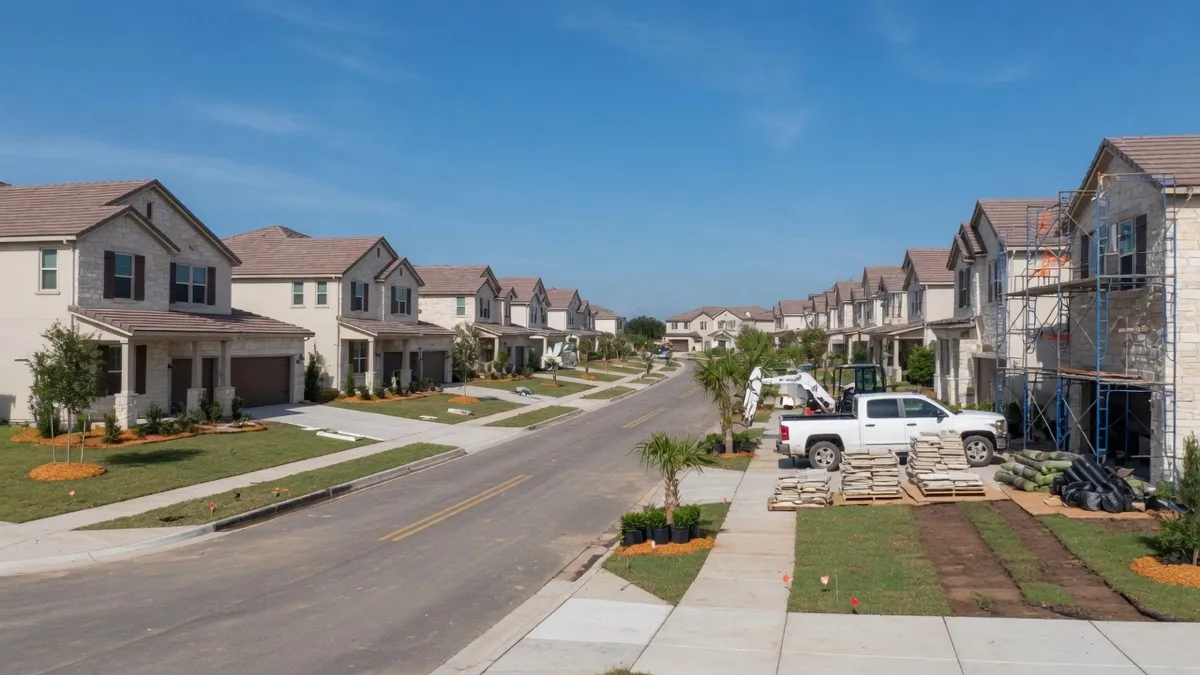
New Braunfels says its own population has grown almost 30 percent since 2020, putting it among the fastest growing cities in the country, with more than 1,000 new Texans arriving every single day statewide. Moving into that kind of growth means a lot of the housing stock around you is new or recently sold, so a rekey or a full walkthrough is worth doing even in a home that looks well kept.
I work New Braunfels often enough to see this pattern play out block by block. A subdivision that was mostly empty lots a few years back is now full, and half the homes on a given street have changed hands at least once since they were built. New Braunfels's own public statement on its recent growth puts real numbers behind what's obvious on any drive through a newer part of town. New construction doesn't mean nobody else has held a key. It usually means the opposite.
Our New Braunfels locksmith service page has the local details if you're settling into one of these newer neighborhoods and want a hand with the walkthrough.
How to Verify Your Locksmith Is Actually Licensed in Texas Before You Call Anyone
Texas locksmiths answer to the Department of Public Safety's Private Security Bureau under Occupations Code Chapter 1702. There's no separate locksmith board. Every individual and company license is searchable for free through the Texas Online Private Security system at tops.portal.texas.gov, using Search Licensees, so you can confirm the license type and status match whatever you were told on the phone before anyone touches your door.
This isn't a small-print detail. DPS's Private Security Bureau overview confirms it's the sole licensing authority for the trade statewide, and the full text of Occupations Code Chapter 1702 spells out exactly who counts as a locksmith for licensing purposes. Pros On Call runs under DPS Class B license #B19847. I'd rather you check that number yourself at tops.portal.texas.gov than take my word for it, and the same goes for anyone else you're considering calling. If you need a licensed hand for anything past a rekey, our emergency locksmith services are available across San Antonio, New Braunfels, and San Marcos.
Your Move-In Lock Security Checklist: What to Do From Day One to Day Seven
A full move-in lock sequence runs across the first week: nail down whether you're renting or bought on day one, walk every exterior door and rekey or replace as needed, factory reset any smart lock or keypad, reset the garage opener and remotes, sort out mailbox key access, and check any locksmith's license before they show up. Every step stands on its own, so you can run them in whatever order fits your move.
None of these steps depends on finishing the others first. Do the door walkthrough before you unpack the kitchen if that's what fits your first day. Handle the smart lock reset on day three if that's when you actually have time to sit with the app. The only real rule is finishing the whole list before you stop thinking about it.
Frequently Asked Questions
Do I have to rekey my new home in San Marcos or New Braunfels?
No. Texas Property Code Chapter 92 covers rental homes only, so a homebuyer gets no legal rekey right or duty. It's still the right move. The Associated Locksmiths of America recommends rekeying as soon as you take possession, since it's rare that every key gets handed over, brand new construction included.
How long does my new landlord have to rekey a rental before I move in?
Under Texas Property Code Section 92.156, a landlord has to rekey or change every exterior lock operated by a key, card, or code no later than the seventh day after your turnover date, at their own expense. You can request extra rekeying anytime after that too, though those extra requests come out of your pocket, not theirs.
Does rekeying my new lock remove old codes from a smart lock or keypad deadbolt?
No. Access codes live in the lock's onboard memory or a cloud account, not in the key. Swapping the cylinder pins does nothing to that stored code. You need a full factory reset, which wipes every code, paired device, and app association in one action, before you trust the lock.
What do I do if I lost the key to my subdivision's cluster mailbox?
Ask your property manager first if your subdivision has one, since builders hand out three keys per compartment. No manager, no problem: visit the servicing local Post Office with photo ID. USPS keeps a separate carrier master key and directs residents to their building owner or manager for replacements first.
VERIFY A TEXAS LOCKSMITH LICENSE IN THREE STEPS
Go to tops.portal.texas.gov
Free, public, no account needed.
Choose Search Licensees
Then pick Individuals or Companies depending on what name you have.
Confirm the type and status match
What you see on the portal should match what you were told on the phone.
How do I check if a locksmith in San Marcos or New Braunfels is actually licensed?
Go to tops.portal.texas.gov and choose Search Licensees. Pick Individuals or Companies, enter the name or license number you were given, and confirm the license type and status shown match what you heard on the phone. Texas locksmiths fall under DPS's Private Security Bureau, and the lookup is free.
Is it cheaper to rekey or replace the locks on a new home?
Rekeying almost always costs less, since you keep the hardware and only the pins change. It's the right call when your existing lock is Grade 2 or better and undamaged. Replacement costs more but makes sense if you want a grade upgrade or smart-lock features. Our pricing and repair-versus-replace guides break down real numbers by service type.
Five minutes at each door, a factory reset on anything electronic, and one thirty second license check before you call anyone. That's the whole list, and none of it waits on anything else. If you're settling into a new place in San Antonio, New Braunfels, or San Marcos and want a hand with any part of it, call Pros On Call at (888) 601-6005. Ask for me by name if you're in the San Antonio area, and ask for the license number while you're at it: DPS Class B #B19847. You should be checking it the same way you'd check anyone else's.
Content strategy and SEO by Optymizer