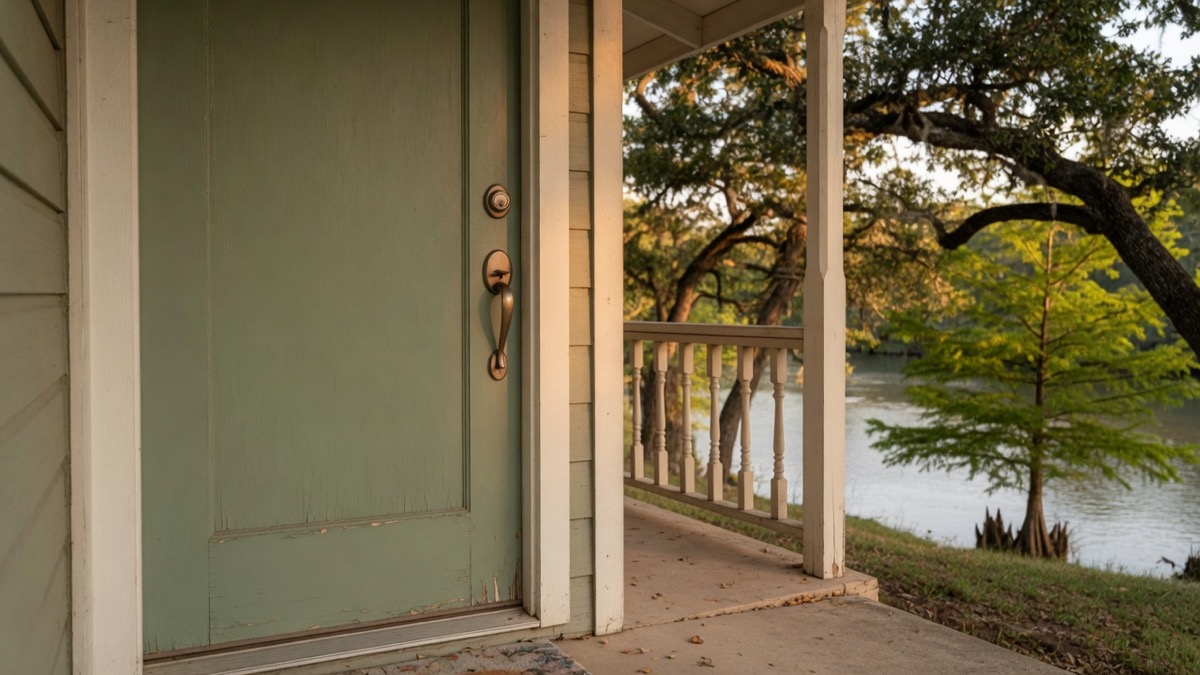
San Marcos and New Braunfels get one lock story told about them: move in, rekey, done. That story covers a homeowner. It doesn't cover a river home booked out most weekends, a five-bedroom rental cycling through Texas State students every August, or a gate at the end of a mile of Hill Country caliche. Those properties need a different plan, and this guide is that plan.
What This Guide Covers: Rentals, River Homes, and Hill Country Properties Near San Marcos and New Braunfels
This guide is written for three property owners working the San Marcos and New Braunfels corridor: short-term rental hosts along the Comal and Guadalupe rivers and near Gruene, landlords managing lease turnover in multi-tenant rentals near Texas State University, and Hill Country property owners in Wimberley and Dripping Springs securing gates and outbuildings on rural land.
If you're the single owner who just bought a place and unpacked the truck, our move-in lock checklist for San Marcos and New Braunfels already covers that one-time walkthrough. This guide picks up where that one stops: the ongoing work of running a property somebody else stays in, again and again, whether that's a weekend guest, a rotating cast of student tenants, or nobody driving past a rural gate for weeks at a stretch.
Ready to book service instead of reading through all of it? Our San Marcos and New Braunfels location pages are where we handle that.
Short-Term Rental Rules Are Not the Same in New Braunfels, San Marcos, Canyon Lake, and Wimberley
New Braunfels, San Marcos, unincorporated Comal County around Canyon Lake, and Wimberley each regulate short-term rentals under their own separate rules. A property just outside one city's limits can fall under a completely different permit process than the one three streets over. A host or owner working this corridor needs to check the rules for their exact parcel, not assume one countywide standard applies everywhere.
| City / Area | STR Permit Required? | Zoning / Key Restriction |
|---|---|---|
| New Braunfels | Yes, non-residential zones only | Not allowed in any residential zoning district |
| San Marcos | Yes, annual permit plus safety inspection | Zoning-based distance and notification rules apply in residential zones |
| Canyon Lake / Comal County | Varies by exact parcel | County, and possibly WORD, permit; check every applicable layer |
| Wimberley | Yes, Conditional Use Permit | STR2 eliminated in R-3; STR1 allowed in ADUs in R-2 with a CUP, by right in commercial zones |
None of that patchwork is a locksmith rule. It's zoning and permitting. But every one of those permits touches who is allowed to stay on your property and under what conditions, which is exactly the question a guest-code or rekeying plan has to answer too.
New Braunfels Short-Term Rental Permits, Fees, and Zoning
New Braunfels does not allow short-term rentals in any residential zoning district. A permit is only obtainable in specific non-residential zones. Where it's allowed, the city charges a $206 initial permit fee covering the first annual fire and life-safety inspection, plus a $128 annual renewal fee, and requires a minimum $500,000 per-occurrence liability policy, a posted emergency-contact decal, and one off-street parking space per sleeping area.
On top of the permit itself, New Braunfels levies a 7 percent city hotel occupancy tax on gross STR receipts, on top of the state's 6 percent hotel occupancy tax, and operators register and file monthly. All of that comes straight from the City of New Braunfels's own short-term rental page, which is worth reading in full before you list anything in the city limits.
San Marcos Short-Term Rental Permits and the Safety Checklist That Touches Your Locks
San Marcos requires a current short-term rental permit, issued only after a Code Compliance safety inspection and renewed annually. The application asks for a floor and fire plan showing exit paths from every bedroom, a parking plan, emergency contact information for a person within 60 minutes of San Marcos, and a written evacuation plan, all of which touch directly on who can get in or out and how.
San Marcos's short-term rental safety inspection touches directly on who can get in or out, and how.
Residential-zone STRs in San Marcos also face distance and neighbor-notification rules under the city's own zoning classification system, though the exact figures live in the city's ordinance. The city's own hotel occupancy tax registration is required too, and the current rate is on the city's own page. Check the City of San Marcos's short-term rental page directly for both numbers before you file anything.
Canyon Lake and the Water Oriented Recreation District: Why One Property Can Answer to Three Authorities
Much of the Canyon Lake area sits in unincorporated Comal County rather than inside any city, and some of those properties also fall inside the Comal County Water Oriented Recreation District, known as WORD, a special district that requires its own separate permit for any short-term lodging under 30 days. A Canyon Lake host may need to satisfy the county, WORD, and a nearby city's rules depending on the exact parcel.
I'm not going to tell you a Canyon Lake property answers to one clean authority, because that's not honest. It's genuinely split. Read WORD's own FAQ page for business owners before you assume county rules alone cover you, and check with a nearby city if your parcel sits close enough to matter.
Wimberley's Conditional Use Permit for Short-Term Rentals
Wimberley requires a Conditional Use Permit for any short-term rental, since a short-term rental is not a permitted use by right in residential districts. The city separates STR1, where the owner lives on site, from STR2, where the owner does not. As of August 20, 2026, STR2 permits were eliminated in the city's R-3 district, while STR1 remains allowed in accessory dwelling units in R-2 with a CUP and by right in commercial zones.
An approved Wimberley STR permit currently carries no renewal requirement and stays with the property indefinitely once granted, though the state's 6 percent and the city's own 7 percent hotel occupancy taxes still apply every stay. Full detail lives on the City of Wimberley's short-term rental page.
Building a Guest Code System That Actually Locks Out the Last Guest
A guest code system that actually protects the next booking needs three parts: a guest-specific code instead of a shared master code, an automatic expiration tied to checkout instead of a manual delete, and an auto-lock delay so a forgetful guest doesn't leave the door open behind them. Schlage recommends the last four digits of a guest's phone number as a memorable, unique code, and never sharing the lock's own programming code.
Kwikset's own support documentation backs that up. On a Kwikset smart lock, a factory reset clears every Bluetooth pairing, Wi-Fi setting, user code, and event history in one action. Old access codes live in the lock's memory or a linked account, not the key. A mechanical rekey alone does not erase them.
A mechanical rekey alone does not erase a stored code.
A GUEST CODE SYSTEM THAT ACTUALLY WORKS
Issue a guest-specific code
Never hand out the lock's own programming code. Anyone who has it can delete every other user code and let themselves back in later.
Schedule expiration at checkout
Tie the code to the booking's checkout time instead of relying on yourself to remember to delete it after every turnover.
Set the auto-lock delay
Schlage's own smart locks offer a delay from 15 seconds to four minutes, a safeguard for the guest who forgets to lock up behind themselves.
Run a full factory reset on structural change
A change in ownership or property management calls for a reset, not just a mechanical rekey, since only a reset clears stored codes and paired devices.
That system matters most right before the corridor's biggest annual crowd draw. Late September sits between the tail end of Comal River tubing season and Wurstfest, the 65th annual celebration, which runs November 6 through 15 on the Wurstfest Grounds in Landa Park near the Comal River. It's a natural point on the calendar for a host along the Gruene or Comal River corridor to review a guest-code system before the crowds show up.
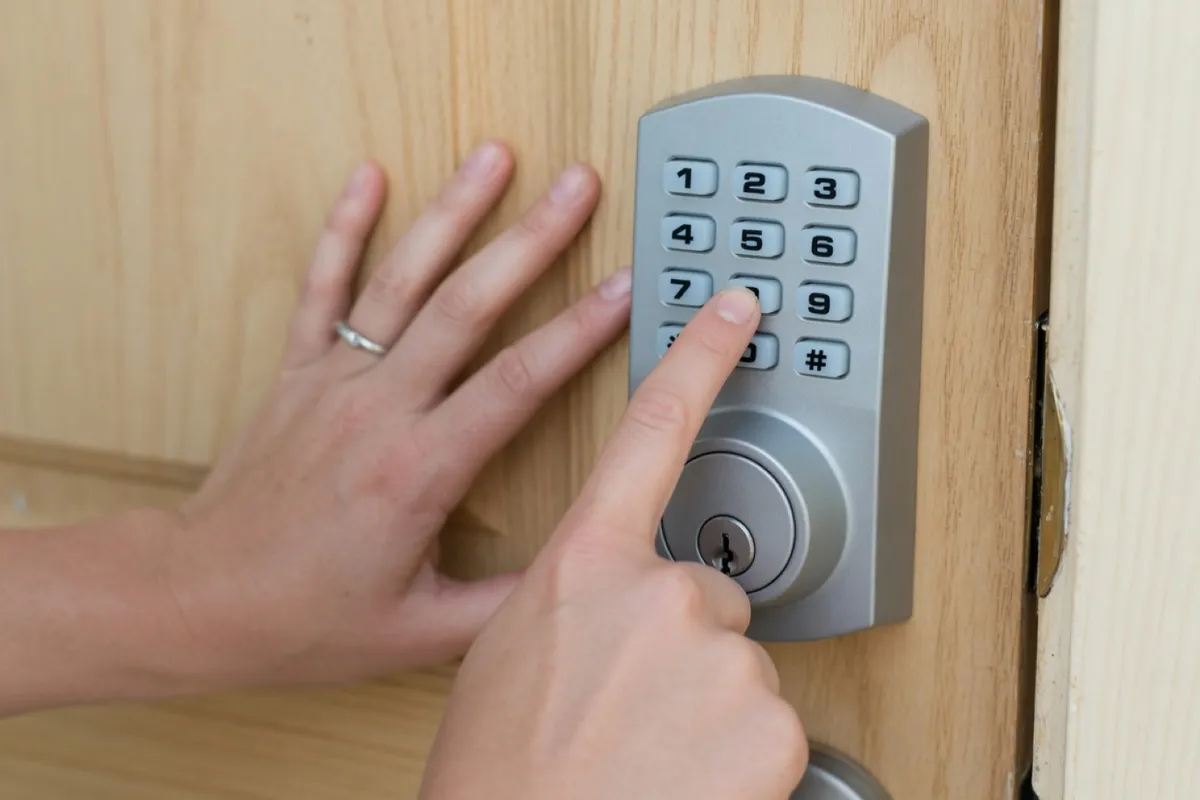
Our smart lock and keypad entry pages cover the hardware side if you're setting up a new rental from scratch. And Kwikset's own short-term-rental host guidance covers sending codes to guests remotely from a phone or computer, without stating an exact rotation cadence, so treat a fresh code per booking as the safer default rather than a fixed schedule.
What Texas Law Requires When You Rekey Between Tenants
Texas Property Code Section 92.156 requires a landlord to rekey or change every exterior security device no later than the seventh day after a new tenant's turnover date, at the landlord's own expense. A tenant can request additional rekeys anytime after that, at their own cost. That duty applies to landlord-tenant relationships specifically. A homebuyer with no landlord has no Chapter 92 rekey right and should rekey on their own initiative instead.
A landlord must rekey or change every exterior security device no later than the seventh day after a new tenant's turnover date, at the landlord's own expense.
Section 92.153 separately requires a latch on every exterior window plus a doorknob lock or keyed deadbolt and a keyless bolting device on every exterior door, in place before a tenant ever gets a key. Read the Texas Property Code, Chapter 92 yourself for the full statutory language, or our Texas Property Code locks guide for the section-by-section breakdown.
A homebuyer closing on a river house near Gruene gets none of this. No landlord means no Chapter 92 protection, so the decision sits with the buyer alone. The Associated Locksmiths of America recommends rekeying as soon as you take possession, new construction included, since it's rare that every key actually gets handed over.
Our residential locksmith services cover the full rekey, from a single door to every unit in a multi-tenant property, including plain rekeying when that's all a job needs.
Master Keying vs. Individual Keys for a Multi-Bedroom Student Rental Near Texas State
A multi-bedroom rental with several unrelated tenants, increasingly common near Texas State University's record Fall 2026 enrollment of 47,513 students, forces a real choice: individually-keyed bedroom doors with one shared exterior key, or a master key system where a property manager holds one key that opens everything while each tenant's key only opens their own door.
Texas State's own enrollment announcement put this year's preliminary census-day count at 47,513 students, roughly 7 percent above the prior Fall 2025 record. That kind of growth means more San Marcos houses splitting into individually-leased bedrooms every year, not fewer, and each one of those houses needs an answer to the master-key-or-not question before the first lease signs.
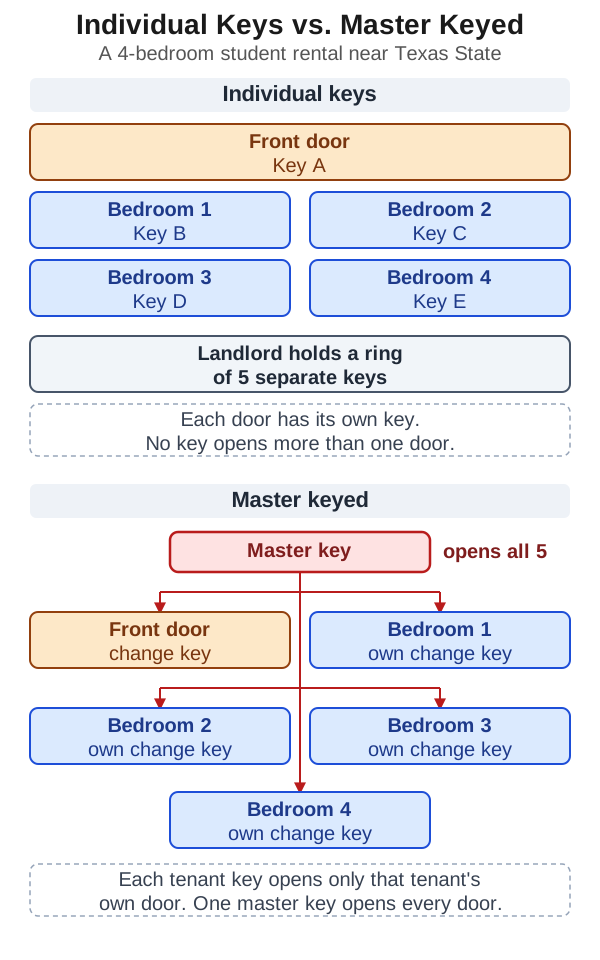
Our master key system guide covers how that hierarchy actually works, the security levels involved, and statewide 2025 costs. A landlord running one four-bedroom rental near campus is usually fine with individual keys. A commercial operation running several buildings, with staff and vendors needing different levels of access, is the case where access control or a full master key system earns its cost.
What Grade of Deadbolt Actually Holds Up to Guest and Tenant Turnover
Residential deadbolts are graded under ANSI/BHMA A156.40 across durability, strength and security, and finish, tested independently rather than self-rated by the manufacturer. As one concrete durability bar, a Grade A residential dead latch must survive 400,000 open-close cycles, and the strength testing includes loading the door against the deadbolt with 1,350 pounds of force. A property that turns over every few days wears through that cycle count faster than a single-family home.
That's not a reason to avoid a short-term or student rental. It's a reason to buy hardware rated for the job and check it more often than you'd check a lock in a house where the same two people use the same key every day. BHMA's own A156.40 hardware highlights page has the specific test figures if you want to see the standard behind the grade stamp.
Securing Gates, Outbuildings, and Long Driveways on Hill Country Property
Rural gate and fence responsibility in the Texas Hill Country is a documented legal topic in its own right, covered by Texas A&M AgriLife Extension's fence-law and rural-property-access programming, separate from ordinary residential lock questions. On the hardware side, manufacturers treat it as its own category too: Medeco markets padlocks built specifically for outdoor fencing, critical infrastructure, and unmanned sites, the same use case as a Wimberley or Dripping Springs gate or outbuilding.
Texas A&M AgriLife Extension runs dedicated courses on Texas fence law, covering open range versus closed range status and who has to build, replace, or maintain a fence, and on access to rural property, covering easements and the line between criminal and civil trespass. Neither of those is a locksmith question. Both are worth knowing before you assume your gate answers to the same rules as a subdivision fence.
A legal question about fence or gate liability goes to an attorney or AgriLife, not to a locksmith. The hardware question is ours to answer. Medeco markets a padlock line built for outdoor fencing, critical infrastructure, and unmanned sites, the exact use case for a Wimberley or Dripping Springs gate nobody drives past for days at a stretch.
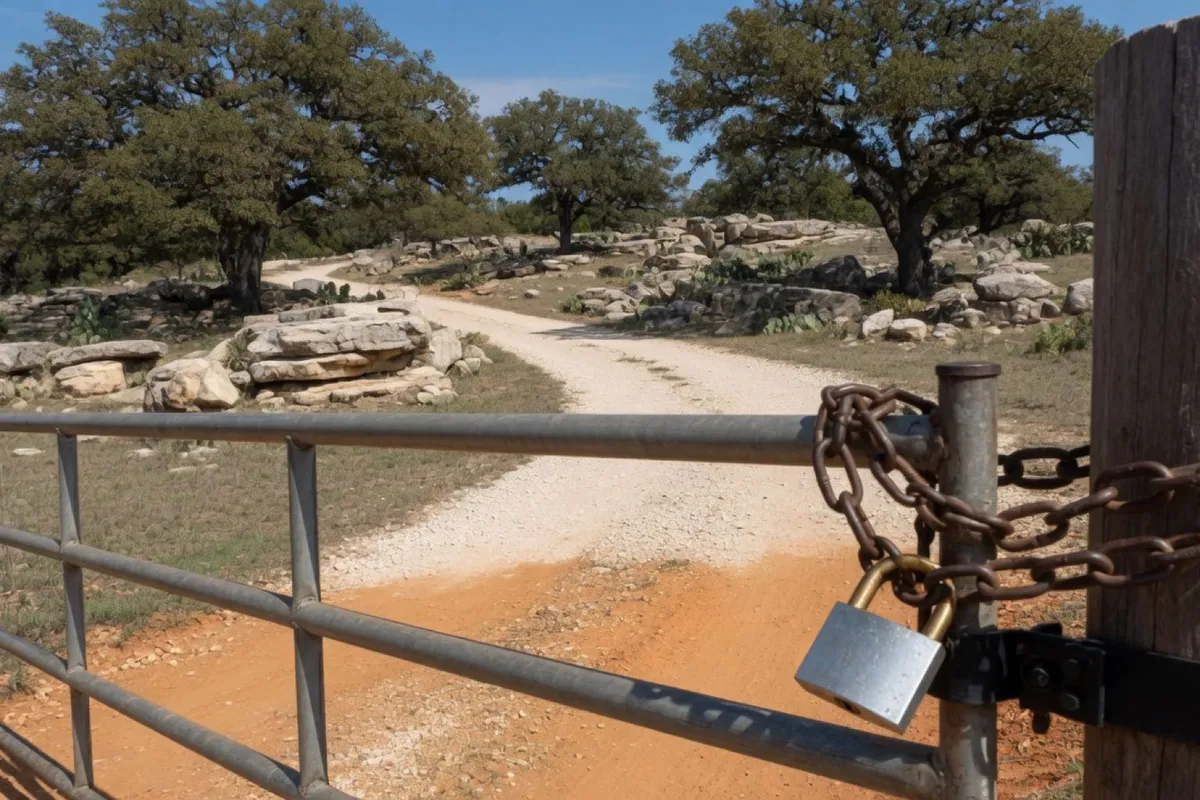
If the gate itself is the problem, motor, sensor, or hinge, our residential gate repair guide covers hands-on troubleshooting. If you're wondering whether a gate fob or building credential can actually be cloned, our key duplication guide answers that directly. Our gates page covers the service side of all of it. Owner-occupied Hill Country homes have their own gate and lock questions, covered in our Dripping Springs and Wimberley home lock and gate guide.
Verifying Your Locksmith Is Actually Licensed Before You Call Anyone
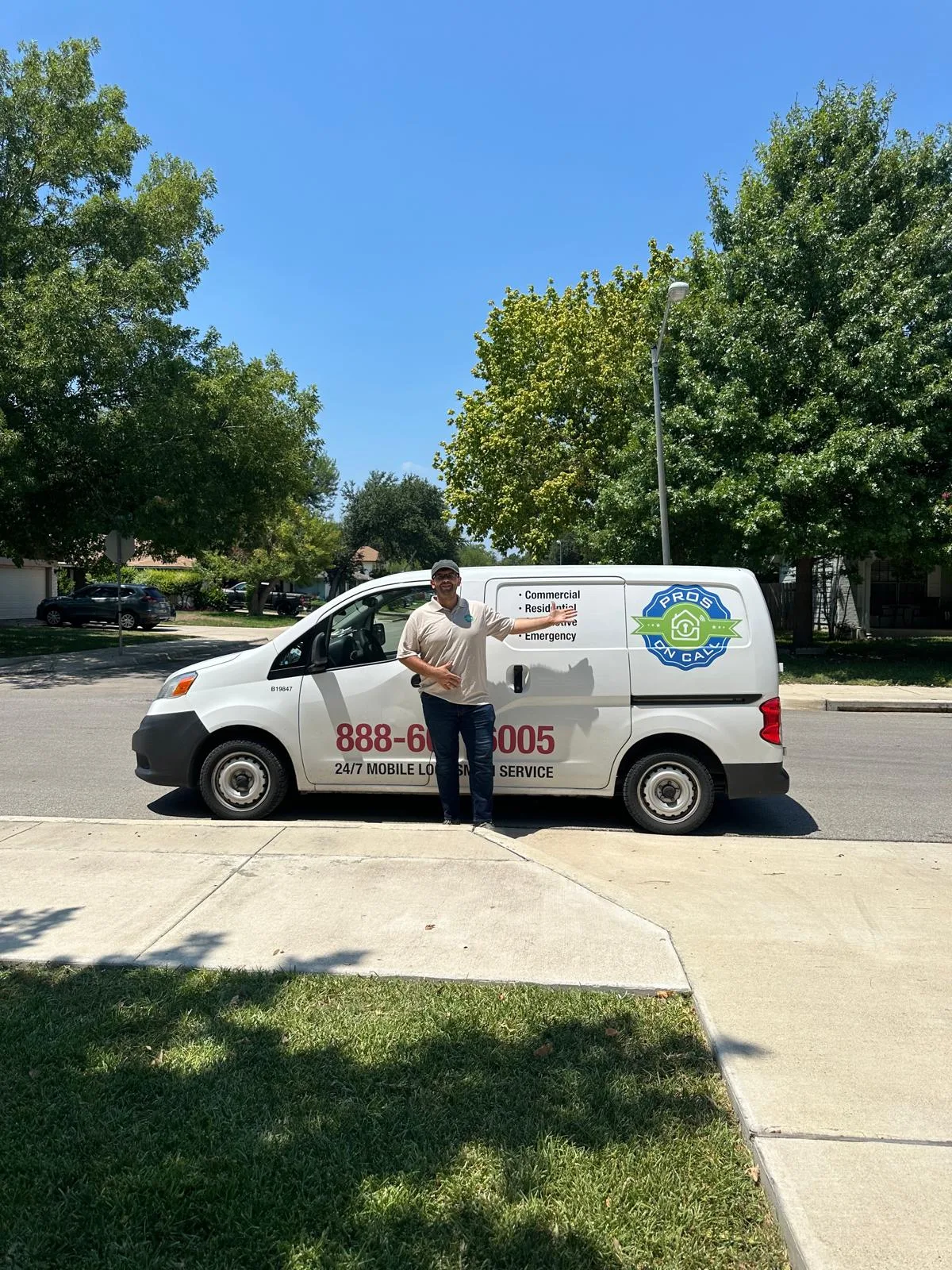
Any locksmith operating in Texas, including across the San Marcos and New Braunfels corridor, must hold a Texas DPS Private Security Bureau license under Occupations Code Chapter 1702. You can check a company's license number yourself at the free TOPS portal before agreeing to any work. Pros On Call holds Texas DPS Private Security license number B19847, which you can verify the same way as any other company's.
Verify it yourself at the TOPS portal, and read DPS's Private Security Bureau overview if you want to see how the licensing program is administered. There's no separate locksmith board in Texas. DPS runs the whole program.
What to Expect When You Call a Locksmith for a Rental or Rural Property
Locksmith pricing for rekeying, master key installs, and gate hardware in this corridor follows the same statewide cost structure covered in our full pricing guide: a service call plus labor plus parts. Travel is a bigger factor on a spread-out rural property than in a dense subdivision. Pros On Call serves San Marcos, New Braunfels, and the Hill Country around them, so have your address handy when you call.
Our average locksmith prices guide carries the full statewide tables by service type. The one thing worth adding for a rural Hill Country property specifically is travel: a gate at the end of a long caliche road is a different quote than a front door in town, and a straight answer about that up front beats a surprise later. Call (888) 601-6005 with your address handy and the travel factor goes into the quote up front.
Frequently Asked Questions
Six questions property owners in this corridor ask most.
Do New Braunfels, San Marcos, Canyon Lake, and Wimberley all use the same short-term rental rules?
No. Each city and district sets its own short-term rental rules. New Braunfels bars STRs from residential zones, San Marcos requires an annual permit and safety inspection, Canyon Lake properties may answer to the county and the Water Oriented Recreation District, and Wimberley requires a Conditional Use Permit. Check your exact parcel before assuming one rule applies.
If I rekey a smart lock's mechanical cylinder, does that erase a past guest's or tenant's access code?
No. Access codes live in the lock's onboard memory or a linked account, not the physical key, so a mechanical rekey alone doesn't erase them. A full factory reset clears every stored code, paired device, and event history in one action. Run that reset, not just a mechanical rekey, whenever a property's ownership or management structurally changes.
Does Texas law require a landlord to rekey between tenants?
Yes. Texas Property Code Section 92.156 requires a landlord to rekey or change every exterior security device no later than the seventh day after a new tenant's turnover date, at the landlord's own expense. A tenant can request extra rekeys anytime after that, at their own cost. Interior locks aren't covered.
Does a multi-bedroom student rental need a master key system?
It depends on the ownership and access structure. A property manager who needs to enter every unit benefits from a master key hierarchy, one key that opens everything, with each tenant's key opening only their own door. A landlord happy to individually key each bedroom with a single shared exterior key can skip it.
Who governs short-term rental rules for a property near Canyon Lake?
It depends on the exact parcel, and it's genuinely fragmented. Much of the Canyon Lake area sits in unincorporated Comal County, and some properties also fall inside the Water Oriented Recreation District, which requires its own permit for short-term lodging under 30 days. Check the county, WORD, and any nearby city rather than assuming one authority governs.
How do I verify a locksmith's Texas license before hiring one for a rental or rural property?
Go to the TOPS portal at tops.portal.texas.gov and choose Search Licensees. Pick Individuals or Companies, enter the name or license number you were given, and confirm the type and status match what you were told. Texas locksmiths fall under DPS's Private Security Bureau, and the lookup is free.
VERIFY A LOCKSMITH'S TEXAS LICENSE
Open the TOPS portal
Go to tops.portal.texas.gov, the Texas Department of Public Safety's free Private Security license lookup.
Choose Search Licensees
Select Individuals or Companies depending on whether you were given a person's name or a company name.
Enter the name or license number
Type in exactly what the locksmith or company gave you.
Confirm type and status match
Check that the license type and active status line up with what you were told, before anyone starts work.
That's the corridor rundown: rentals, river homes, and Hill Country gates. If you're running a listing, managing a lease near campus, or trying to figure out what a rural gate actually needs, call Pros On Call at (888) 601-6005. Ask for me by name when you call, and check the license while you're at it: DPS Class B #B19847.
Content strategy and SEO by Optymizer