A lock needs repair when it is sound but sticky or misaligned, needs replacement when it is Grade 3, over twenty years old, or was damaged in a break-in, and needs rekeying instead of either one when the hardware works but you do not trust who holds a key. That is the whole decision in one breath. Getting it wrong means paying twice: once for a repair that was never going to hold, and again for the replacement you needed from the start. I have done locksmith work in Texas for twenty-one years, and the call I get most is not "is my lock broken." It is "why did my lock break again three months after we fixed it." Most of the time, the lock was never the problem.
Repair, Replace, or Rekey? The Short Answer
Repair fixes a mechanical fault in hardware that is otherwise sound. Replacement installs new hardware because the old unit is worn out, undersized for the door, or was damaged during a break-in. Rekeying changes which key operates an existing lock without touching the mechanism at all. All three solve different problems, and a locksmith should tell you which one applies before quoting a price.
What each job actually fixes
Repair means the locksmith opens the mechanism, cleans it, replaces a worn pin, spring, or cam, and puts it back together working like new. Replacement means the whole unit comes off the door, usually because the internal parts are too worn, too outdated, or too damaged to trust. When replacement is the right call, professional lock installation is a same-day job across most of our Texas service area. Rekeying means changing the pin stack inside an existing lock so a different key operates it, while every other part stays exactly as it was. None of these three touch the door itself, a distinction we get to in a few sections.
Why the three get confused
Most people call a locksmith and describe a symptom, not a diagnosis. "The lock is acting up" could mean a worn cylinder, a misaligned strike, or nothing wrong with the lock at all. A tenant moving out sometimes asks for a full replacement when a rekey would have solved the actual concern, changing who has a working key, for a third of the cost. A homeowner with a sticky deadbolt sometimes assumes it needs replacing when a five-minute lubrication and adjustment fixes it completely. A good residential door technician diagnoses the failure before recommending any of the three.
Signs Your Lock Can Still Be Repaired
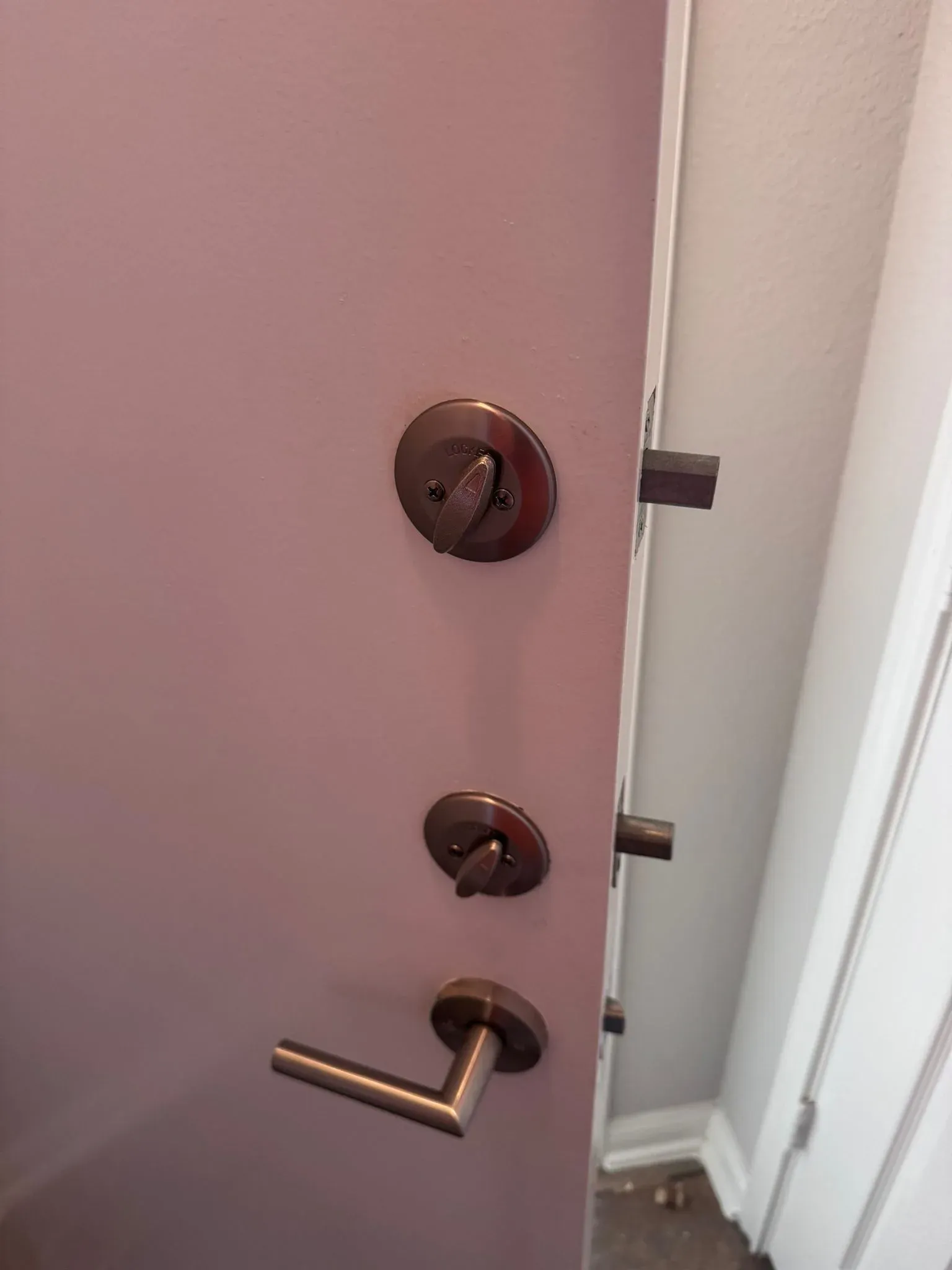
A lock is usually still repairable when the key turns with resistance instead of refusing outright, when the deadbolt extends but not all the way, when the trouble started recently rather than building for years, and when nothing about the door or frame around it has shifted. These signs point to a mechanical fault inside otherwise sound hardware, the kind of problem a repair actually fixes.
SIGNS A LOCK IS STILL REPAIRABLE
The key
The key turns with resistance instead of refusing outright.
The deadbolt
The deadbolt extends but not all the way.
The timeline
The trouble started recently rather than building for years.
The door and frame
Nothing about the door or frame around it has shifted.
Sticky or hard-to-turn keys
A key that needs extra pressure, has to be lifted, wiggled, or worked in stages to turn the cylinder is telling you something specific: the pins inside are dirty, worn, or slightly out of position. Graphite lubricant, a pin adjustment, or a cylinder rebuild usually clears this up for well under the cost of a new lock. It does not mean the lock is failing structurally. A sticky key on an otherwise sound Grade 1 or Grade 2 deadbolt is close to the textbook case for repair over replacement.
A deadbolt that does not fully extend
Watch the bolt itself, not just how the key feels. A one-inch throw deadbolt that only extends three-quarters of the way is either binding on worn internal parts or is not lined up with the strike plate hole. Both are repairable: a locksmith can clean and adjust the mechanism, or shim and reset the strike plate, without replacing the lock body. The exception is a bolt with visible damage, a bent shaft, chewed metal, or one that will not retract at all. That crosses into replacement territory, covered next.
Minor misalignment you can still force shut
If the door closes and locks with a little extra push, a slight lift, or by pulling the handle toward the hinge side, the lock is usually fine and the alignment is the problem. That is a repair job for the frame or the strike, not the lock, and it is one of the cheapest fixes on this whole list. That is exactly the kind of borderline case where professional door repair and lock repair get quoted together. The warning sign to watch for is misalignment that gets worse month over month. That pattern usually means the frame is moving, which is a different diagnosis covered later in this guide.
Signs the Lock Is Past Repair
A lock is past repair when its ANSI grade and age line up against it, when internal parts show real wear rather than simple dirt or misalignment, or when it was attacked during a break-in attempt. Grade matters more than a flat age cutoff: Grade 1 hardware often runs 20 to 25-plus years, Grade 2 runs 10 to 20, and Grade 3 builder-grade hardware runs only 5 to 7 before it is worn out.
Age and grade together, not age alone
Two guides on this exact question land on two different ages: one says ten years, the other says twenty. Age alone was always the wrong variable.
Ask what grade is on the lock before you accept an age-based verdict from anyone, including us.
A Grade 1 deadbolt that has been lubricated and adjusted twice in fifteen years still has years of service left in it. A Grade 3 builder-grade lock that came with new construction is often at the edge of its useful life by year seven, regardless of how it looks from the outside. Ask what grade is on the lock before you accept an age-based verdict from anyone, including us. If security, not just function, is the goal, ask about security doors built around a reinforced frame rather than a retrofit deadbolt alone, and see our security door repair guide for how multi-point lock and frame issues get diagnosed once that door is in place.
Worn or damaged internals
Once a cylinder has visible play, the bolt has chewed or bent metal, or a technician finds pins or springs worn past spec, repair stops making financial sense. You are not fixing a temporary fault, you are patching a mechanism failing structurally, and it will likely fail again within months. At that point, installing a new lock costs about the same as the rebuild and comes with a warranty the rebuild does not.
You are not fixing a temporary fault, you are patching a mechanism failing structurally, and it will likely fail again within months.
It survived a break-in attempt
A lock that was drilled, pried, picked, or bumped during an attempted break-in needs to be replaced, not just relocked, even if the key still turns afterward. The cylinder and bolt absorbed real stress, and a compromised lock is measurably weaker than it looks. This is also the moment to check whether the door and frame held up their end, since a forced-entry attempt tests all three at once. We cover frame damage specifically in the break-in section below.
Run through this quick check. If any of these apply, stop planning a repair and start planning a replacement.
- Lock is Grade 3 and over seven years old
- Lock is Grade 2 and over twenty years old
- Cylinder has visible play or worn pins
- Bolt shows bent or chewed metal
- Lock was drilled, pried, or picked during a break-in
- Action: Install a new lock rather than rebuilding this one
The Six-Point Diagnostic I Run Before I Quote Anything
Before I quote repair or replacement, I run the same six checks every time: the key and cylinder, the bolt throw, the strike alignment, the frame and jamb, the hinges and door sag, and the lock's grade and age. Each check rules something in or out. Skipping any one of them means guessing at a price instead of diagnosing the actual failure.
Here is what each step checks, in the order I run them on a service call.
THE SIX-POINT LOCK DIAGNOSTIC
Check the key and cylinder
Insert the customer's key and feel for grinding, binding, or a key that has to be lifted or jiggled to turn.
Test the bolt throw
Extend and retract the deadbolt by hand with the door open, checking that it moves fully and squarely into the strike hole.
Check strike alignment
Close the door and watch whether the bolt lines up with the strike plate hole without lifting, pushing, or slamming the door.
Inspect the frame and jamb
Press on the jamb near the strike plate, checking for soft wood, hairline cracks, or screws that spin instead of biting.
Check hinges and door sag
Open the door halfway and let go. A door that swings on its own or drops at the corner means the frame geometry has shifted.
Confirm grade and age
Identify the lock's ANSI grade and manufacture date and weigh that against everything found in steps one through five.
Why I check in this order
The key and cylinder come first because they take thirty seconds and rule out the simplest explanation. The bolt and strike come next because misalignment is the most common false alarm I see, a lock that looks broken but is actually fighting a door that shifted. Frame, jamb, and hinges take longer to inspect properly. Grade and age come last on purpose. They inform the decision. They do not make it.
What the results tell you
If the first three checks come back clean and only the frame or hinges show a problem, you do not need a new lock at all, the exact scenario the next section covers. If the cylinder or bolt shows real wear on top of a frame issue, you need both a repair-or-replace decision and a frame fix, quoted as two separate line items.
When the Lock Is Fine and the Door Is the Problem
A lock in good mechanical condition can still fail to secure a door when the strike plate has drifted out of alignment, the hinges have sagged under years of use, the slab has swollen from moisture, or the jamb has worn past the point where screws bite into anything solid. In every one of these cases, replacing the lock fixes nothing, because the lock was never what broke.
This is the single most common misdiagnosis I run into, and it is the whole reason this guide exists. The lock only has to survive normal use. The door has to survive the house settling around it for years.
The lock only has to survive normal use. The door has to survive the house settling around it for years.
Temperature swings expand and contract wood and steel, and every slam, gust, and forced-shut push takes its toll. Our guide to what an Austin heat wave does to a deadbolt covers exactly how that summer expansion moves the door and frame until the bolt no longer lines up with the strike hole. When the door loses that fight, the lock gets blamed for a failure that started somewhere else.
The misaligned strike plate
A strike plate that has shifted even an eighth of an inch out of position will make a perfectly good deadbolt bind, stick, or refuse to fully extend. This happens gradually as a house settles, and it is the single most common reason a homeowner calls about a "broken lock" that turns out to have nothing wrong with it mechanically. The fix is to loosen the strike plate, shift it to match where the bolt is actually landing, and resecure it, sometimes with a slightly enlarged screw hole or a shim behind the plate. When reseating it will not hold, a professional door repair addresses the jamb wood at the same time. A locksmith who is paying attention checks this before touching the cylinder at all, because replacing a lock against a misaligned strike just buys you the same complaint with new hardware in six months.
Sagging hinges and a shifting frame
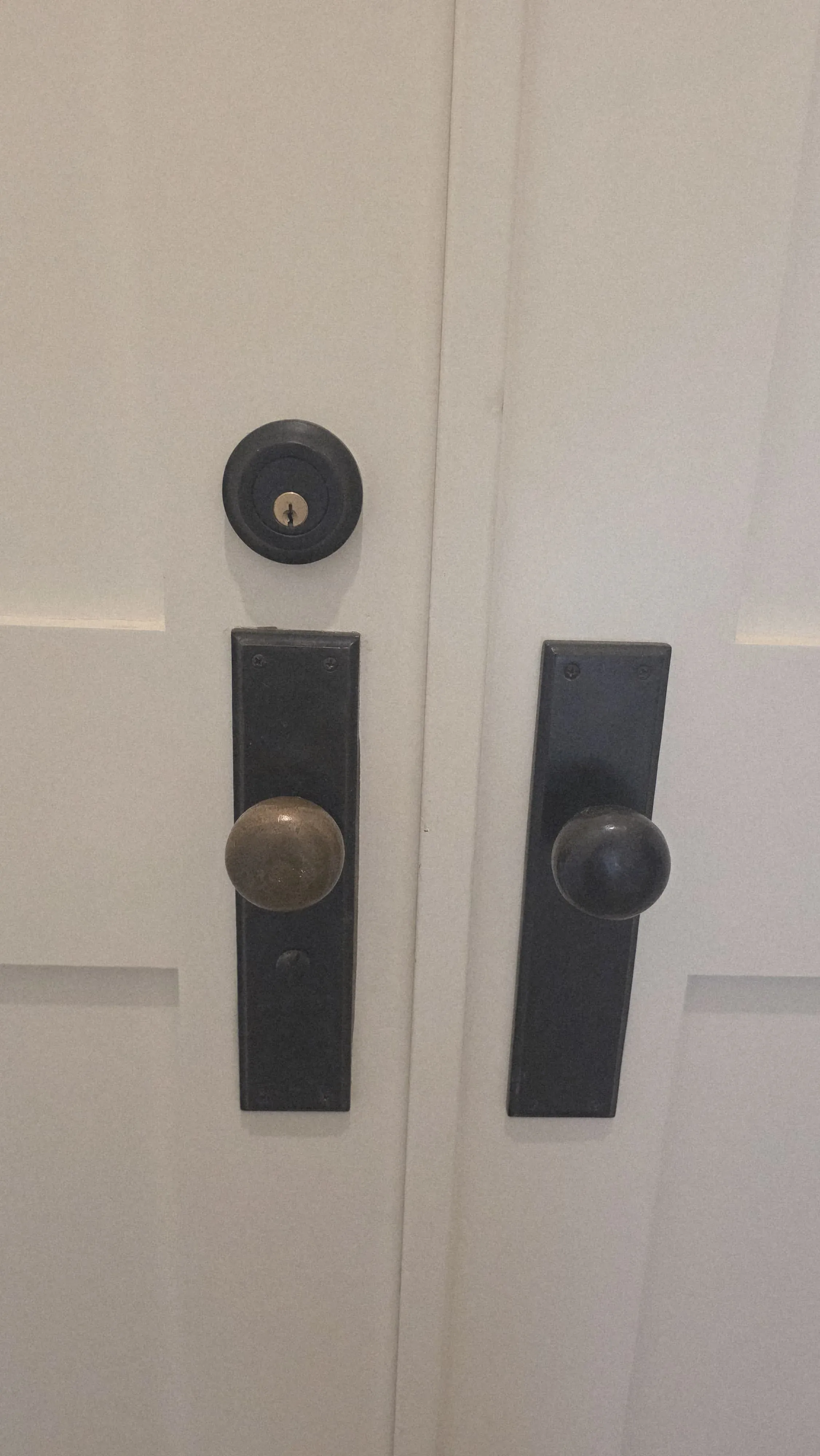
Hinges carry the full weight of a door, and over years that weight pulls screws loose in the jamb, especially in older homes with softer original wood. A sagging door drops slightly at the outer corner, which changes exactly where the bolt lines up with the strike, even though nothing about the lock itself has changed. Test this yourself: open the door halfway and let go. If it swings further on its own, or drops at the far corner, the frame geometry has shifted. Tightening or replacing hinge screws with longer ones that reach the framing stud, not just the thin jamb trim, is frequently a fifteen-minute fix for what looked like a lock problem.
A swollen slab or a worn jamb
Texas humidity swings hard enough that a solid wood door slab can swell during wet months and shrink back during dry ones, changing how it sits in the frame twice a year. A door that only sticks in summer is telling you it is a moisture problem, not a hardware problem. A worn jamb is related but separate: repeated screw removal, or years of a door forced shut against a misaligned strike, eventually strips the wood around the screw holes until they no longer hold anything tight. The ANSI/BHMA A156.36 deadbolt standard's own installation guidance acknowledges this, noting that stock screws are sometimes inadequate for wood frames and should reach the structural stud behind the jamb trim, not just the trim itself. Once the jamb is too worn to hold a screw anywhere along its length, a full door replacement becomes the more honest recommendation than another repair attempt.
Emergency vs. Can-Wait
A lock problem is an emergency when the door will not lock at all, when a break-in attempt damaged the hardware, when you cannot secure a business or rental unit overnight, or when a key breaks off inside the cylinder. It can wait for a scheduled appointment when the door still locks reliably and the symptom is a minor stiffness, squeak, or cosmetic wear that has not changed in weeks.
Call today
Treat any of these as same-day, and call an emergency locksmith rather than waiting for a scheduled slot, or reach us directly at (888) 601-6005. Each one combines a real security gap with a mechanical failure that will not get better on its own.
- The door will not latch or lock at all
- A break-in attempt damaged the cylinder or bolt
- A key snapped off inside the lock
- A business cannot be left unsecured overnight
TREAT THESE AS SAME-DAY
Door will not lock
The door will not latch or lock at all.
Break-in damage
A break-in attempt damaged the cylinder or bolt.
Snapped key
A key snapped off inside the lock.
Unsecured business
A business cannot be left unsecured overnight.
What can wait for a scheduled visit
These symptoms are not urgent, and they are exactly the kind worth booking as a normal appointment rather than an emergency call. Diagnosing them properly, running the six checks above, and quoting the right fix takes time a rushed emergency visit does not always allow.
- The key has been slightly stiff for weeks with no change
- The lock squeaks but still fully engages
- The issue is cosmetic wear on the finish only
Scheduling ahead also costs less than an after-hours dispatch, since evening and late-night rates carry their own surcharge, covered below.
When a Break-In Damaged the Lock or the Door
A break-in changes the calculus entirely: a lock that survived an attack is weaker than it looks even if the key still turns, and the door and frame need the same scrutiny as the hardware. Replace a compromised lock rather than resecuring it, document the damage for insurance, and have both the lock and frame inspected before calling the job finished.
What we check first
After forced entry, the checklist runs the same six points from earlier, plus a close look at the strike area and jamb, since that is almost always where a pry attempt concentrates its force. A door and frame that took a pry bar to the gap between them often need more than a lock swap, even when the lock still functions. For a property targeted more than once, upgrading to a reinforced security door addresses the frame and slab at the same time as the lock.
Insurance and documentation
Photograph the damaged lock, door, and frame before any repair work begins, and keep the invoice once the job is done. Many homeowners and renters insurance policies cover forced-entry damage, and an adjuster will want to see the condition of the hardware and frame, not just a description of what happened. A licensed locksmith's invoice, itemized between lock replacement and any frame repair, gives you exactly what a claim needs.
What Repair vs. Replacement Costs in Texas
Texas 2026 pricing for lock work breaks into two clear bands. Repair for a sticky, misaligned, or minor mechanical fault typically runs $75 to $150. Replacement of a full deadbolt, including the trip fee, labor, and hardware, typically runs $175 to $525 depending on the grade you choose. A service call fee of $50 to $100 applies to most residential visits regardless of the work performed.
Repair costs
Minor repair, the sticky-key and misalignment category covered earlier, runs $75 to $150 in Texas as of 2026. A major repair, worn internal components or a mortise mechanism needing a real rebuild, runs $150 to $300. Repair after a break-in attempt, where the technician assesses whether the stressed hardware is still trustworthy, runs $200 to $500. All three are labor plus parts, before any trip fee, and assume the door and frame are sound.
Replacement costs, all in
A Grade 2 deadbolt replacement, trip fee, labor, and hardware included, runs $175 to $350. A Grade 1 deadbolt, the upgrade most homeowners actually want, runs $225 to $525 all in. Strike plate reinforcement installed as its own line item runs $30 to $75. Jamb repair after real frame damage runs $75 to $200, a separate and pricier job than reinforcing a strike on an intact frame.
What changes the price
A daytime service call fee runs $50 to $100. Evening calls typically add 20 to 50 percent, and late-night or holiday calls add 50 to 100 percent, with the total never exceeding twice the daytime rate at a business that prices fairly. None of these figures include a bare door slab or a prehung unit, since that pricing depends on the door and supplier a locksmith should quote once they see the damage in person.
| Service | Texas 2026 Range | When It Applies |
|---|---|---|
| Minor repair (sticky, misaligned) | $75 to $150 | Lubrication or adjustment fixes it |
| Major repair (worn internals, mortise) | $150 to $300 | Rebuild of an otherwise sound lock |
| Repair after a break-in attempt | $200 to $500 | Hardware survived but needs assessment |
| Replacement, Grade 2 deadbolt (all in) | $175 to $350 | Standard residential upgrade |
| Replacement, Grade 1 deadbolt (all in) | $225 to $525 | Higher security grade |
| Strike plate reinforcement, installed | $30 to $75 | Intact frame, upgrade only |
| Jamb repair after frame damage | $75 to $200 | Frame itself was damaged |
| Rekey, first lock (labor only) | $40 to $75 | Same hardware, new key control |
| Rekey, each additional lock | $15 to $30 | Matching multiple locks to one key |
| Service call fee (daytime baseline) | $50 to $100 | Applies to most residential visits |
Rekeying: The Option Most People Skip
Rekeying changes which key operates an existing lock without replacing any hardware, and it solves a specific problem: you no longer trust who holds a working key, but the lock itself works fine. Movers into a new home, landlords between tenants, and anyone who lost a key without knowing where it ended up are the most common candidates for this fix.
When rekeying solves the actual problem
If the lock passes all six diagnostic checks and the only real concern is who has a copy of the key, rekeying is the right call, not replacement. This covers moving into a home with an unknown key history, a roommate or former partner situation where you want their access gone, or a lost key you cannot rule out being found by the wrong person. The lock keeps its grade, finish, and mechanical history. Only the pin stack changes, a fast job for a technician carrying the right blanks and pinning kit.
What it costs
Rekeying the first lock runs $40 to $75 in labor, with the trip fee priced separately at the standard $50 to $100 range. Each additional lock matched to the same new key runs $15 to $30, which makes rekeying a full house, front door, back door, and any side entry, meaningfully cheaper than replacing that same set of hardware.
Renters and Landlords
Texas law creates specific repair and rekeying obligations between landlords and tenants, and who pays depends on the reason the lock needs attention: ordinary wear versus tenant-caused damage versus a security concern after a break-in. Do not assume either party automatically covers the cost. Verify current requirements before a dispute over a bill turns into something bigger than the lock itself.
Who typically pays for what
Ordinary wear on hardware that was already there when the tenant moved in typically falls to the landlord as routine maintenance. Damage the tenant caused, a forced key, a broken cylinder from misuse, typically falls to the tenant. A rekey between tenants is standard practice most landlords already budget for. These are general patterns, not a substitute for the actual current statute, which the linked guide covers in full.
When to call a locksmith directly instead of waiting on a decision
A security concern does not wait for a landlord-tenant conversation to resolve. If a lock was damaged during a break-in, a former tenant may still have a working key, or the door will not securely lock at all, call a locksmith the same day and sort out who pays afterward. Most licensed locksmiths will do the work first and provide an itemized invoice you can use to settle the cost with a landlord, property manager, or insurer after the fact.
When It Is a Commercial Door
Commercial doors change the diagnostic in one important way: the hardware is rated for far heavier daily cycles, so a fault that would be a simple repair on a home deadbolt often needs a technician who works commercial hardware, panic bars, electric strikes, and high-cycle closers included. If your business needs that level of repair, commercial door hardware covers the code requirements this residential-focused guide does not.
What to Have Ready When You Call
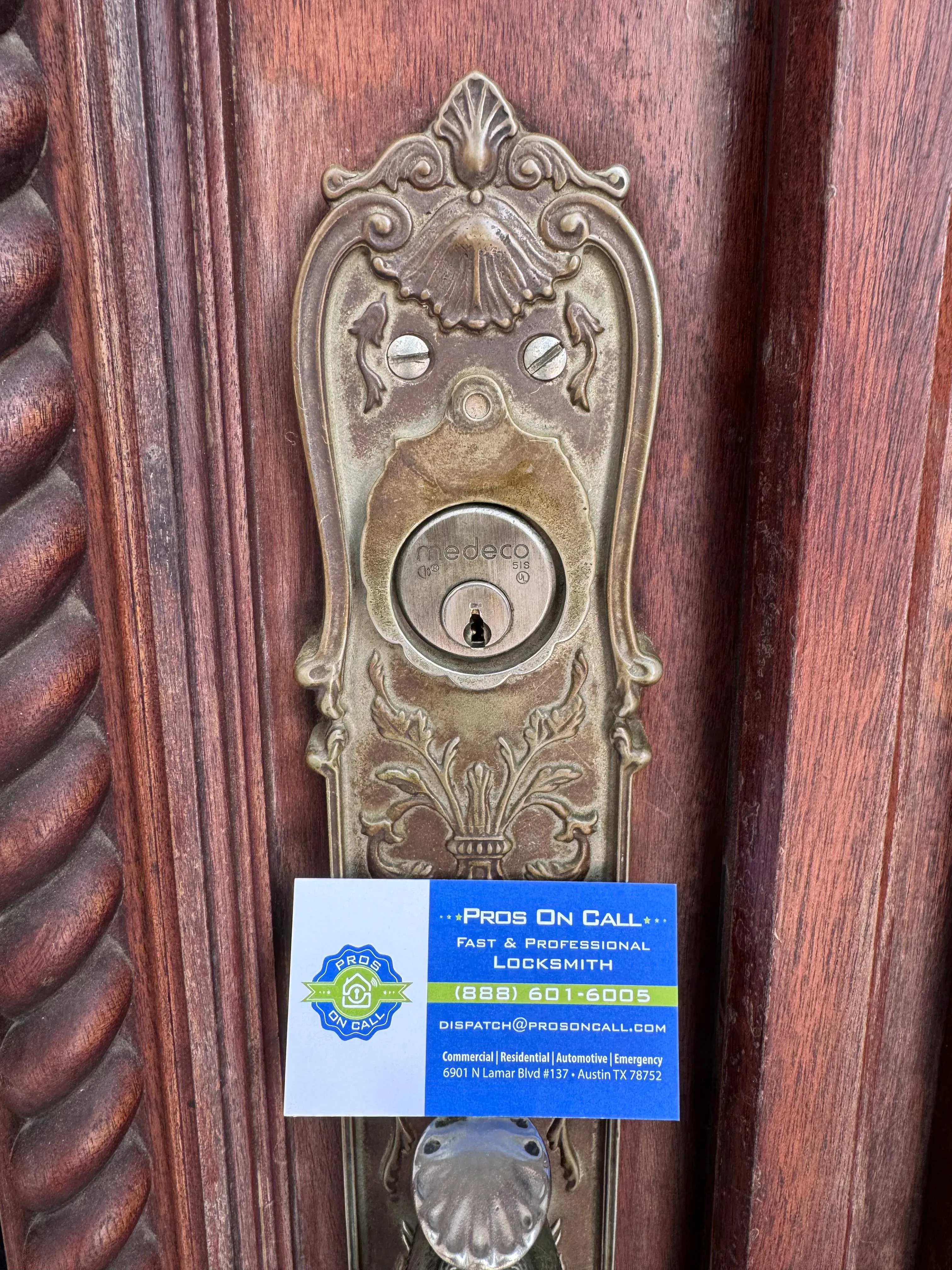
Having the lock's brand and rough age, a description of exactly what it is doing, sticking, not extending, misaligned, and whether the door sags or drags lets a locksmith give an accurate phone estimate instead of a wide guess that changes on arrival. A photo of the lock and strike area helps even more, especially for anything unusual like decorative or antique hardware.
WHO TYPICALLY PAYS FOR WHAT
Ordinary wear
Hardware that was already there when the tenant moved in typically falls to the landlord as routine maintenance.
Tenant-caused damage
A forced key, a broken cylinder from misuse, typically falls to the tenant.
Rekey between tenants
Standard practice most landlords already budget for.
Information about the lock
Brand and model if you can find it, stamped on the edge of the bolt or the interior faceplate, how long it has been on the door, and exactly what it is doing wrong. "It sticks" is less useful than "the key turns fine but the bolt only extends halfway." The more specific the symptom, the closer the phone estimate lands to the final invoice.
Information about the door and frame
Whether the door has ever been forced, whether it sags or drags on the floor, and whether the trouble is worse in summer heat or humid weeks all point toward a frame or door problem rather than a lock problem. If the strike plate looks loose, or screws seem to spin instead of tightening, mention it. That single detail is what lets a locksmith bring the right parts on the first visit. Our residential door technicians carry the tools for all three jobs, repair, replacement, and rekeying, on the truck.
Frequently Asked Questions
These are the six questions we get most often once someone understands the repair versus replace decision but still has one specific situation they want answered directly. Each answer below stands on its own, so skip to whichever question matches what is actually happening at your door right now.
Can I repair a lock myself?
Basic lubrication with graphite powder and tightening loose screws are safe DIY tasks on any lock. Disassembling the cylinder, adjusting pin stacks, or replacing a bolt needs the right blanks, tools, and hardware knowledge, and a mistake there can turn a simple repair into a full replacement.
- Use graphite powder, not household oil, which attracts grit over time.
- A loose strike plate screw is safe to tighten yourself.
- Anything involving the cylinder, pin stacks, or a sidebar mechanism is technician work.
DIY OR CALL A TECHNICIAN
Safe to DIY
Use graphite powder, not household oil, which attracts grit over time.
Safe to DIY
A loose strike plate screw is safe to tighten yourself.
Technician work
Anything involving the cylinder, pin stacks, or a sidebar mechanism is technician work.
How long does a professional lock repair take?
Most sticky-key or misalignment repairs take a technician 15 to 30 minutes on site, since the diagnostic is fast and the fix is usually lubrication, a pin adjustment, or a strike plate reset. A major rebuild involving worn internal components runs closer to 30 to 60 minutes.
- Add travel time and the trip fee on top of the repair window itself.
- Frame or jamb repair, if that turns out to be the actual issue, adds separate time beyond the lock repair.
- A same-day appointment is usually available outside of true emergencies.
Should I repair or replace after a break-in?
Replace it. A lock that absorbed a forced-entry attempt, drilling, prying, picking, or bumping, is measurably weaker than it looks even when the key still turns, and the cost gap between repairing compromised hardware and replacing it outright is usually small enough that replacement is the safer call.
- Document the damage with photos before any work begins.
- Have the frame inspected at the same time, since forced entry often stresses both.
- If the situation feels unsafe or the door will not secure at all, treat it as an emergency locksmith call, not a scheduled one.
Does rekeying fix a broken lock?
No. Rekeying changes which key operates a lock that already works correctly. It does not repair a bolt that will not extend, a sticky cylinder, or any other mechanical fault. If the lock has a real mechanical problem, it needs a repair or replacement first, and rekeying afterward if key control is also a concern.
- A technician can often do both in the same visit.
- Rekeying alone will not resolve a symptom that showed up before you decided to rekey.
- Ask specifically which service you are booking if both concerns apply.
REKEYING VS REPAIR
Both in one visit
A technician can often do both in the same visit.
Rekeying alone is not a fix
Rekeying alone will not resolve a symptom that showed up before you decided to rekey.
Ask which service applies
Ask specifically which service you are booking if both concerns apply.
What if the door will not close right after the lock is fixed?
That almost always means the door, not the repaired lock, still has an alignment or frame problem the repair did not address. A locksmith who fixed the lock but skipped the strike plate, hinges, and jamb has only solved half the issue, and the fix belongs in a follow-up visit focused on the door itself.
- Ask the technician to recheck strike alignment before they leave.
- A door that sags at one corner needs hinge or frame attention separately from the lock.
- This is exactly the scenario the six-point diagnostic above is built to catch.
How much should a Texas locksmith charge for a home service call?
Expect a baseline trip fee of $50 to $100 for a daytime residential call, with evening work adding 20 to 50 percent and late-night or holiday work adding 50 to 100 percent. The total should never run past twice the daytime rate at a locksmith who prices fairly.
- Ask for the trip fee and the work estimate as two separate numbers before anyone drives out.
- A quote that changes significantly on arrival without a clear reason is worth questioning.
- Compare the after-hours surcharge specifically if you are calling outside business hours.
A lock that keeps acting up after you have already paid to fix it is not bad luck. It is a diagnosis that missed the door. Call Pros On Call at (888) 601-6005 and we will run the full six-point check before we recommend anything: repair, replacement, or a strike adjustment that costs nowhere near what a new lock does.
Content strategy and SEO by Optymizer