Austin's August heat wave causes lock binding and key fob failures by physically moving door frames out of alignment and by accelerating heat damage to fob batteries and circuit boards over weeks of sustained exposure, not because the hardware itself wore out.
If your deadbolt suddenly needs muscle to turn, or your car fob stopped working the way it used to, you are not imagining it, and your hardware probably is not broken. Austin just spent weeks near or above 100 degrees, and that kind of heat moves wood, metal, and electronics in ways a mild spring never does. I get calls about both every August, usually from people convinced they need a whole new lock or a brand new fob. Most of the time, they need neither. This post walks through what is actually happening, a two-minute check you can run yourself, and what to do about it either way.
Why Austin's Heat Makes a Deadbolt Bind (It's Not the Lock)
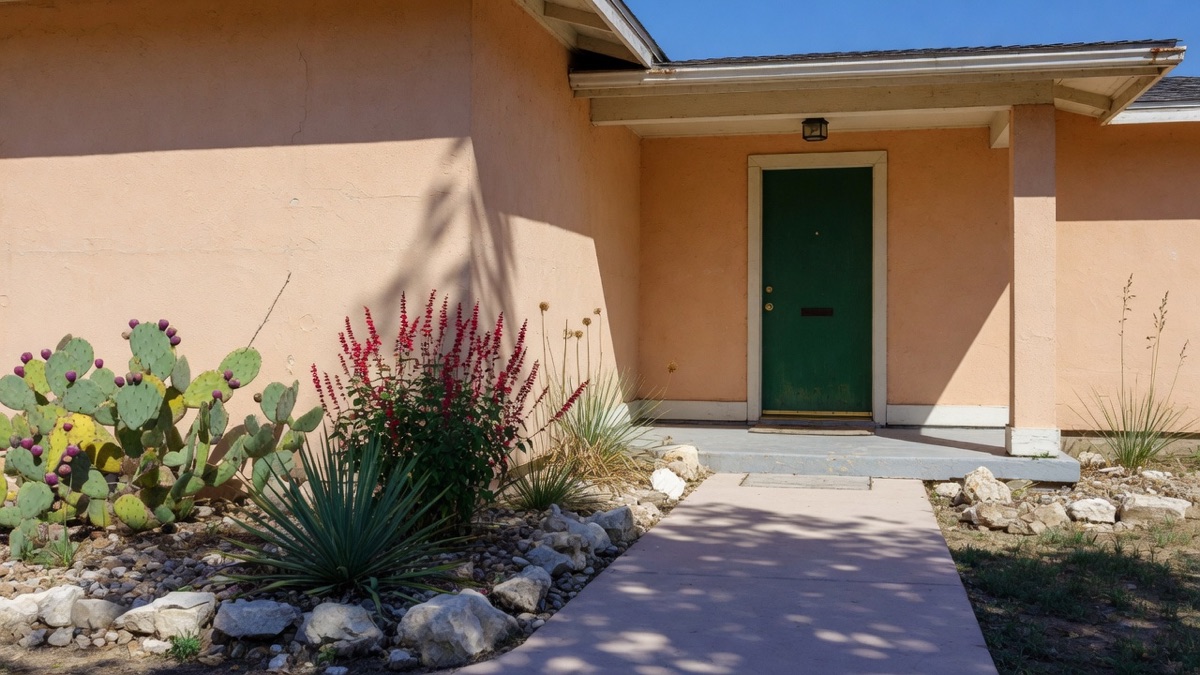
A deadbolt that binds in August heat is almost never a worn-out lock. It is the door, frame, or strike plate shifting a fraction of an inch as wood swells with humidity and metal expands with heat, so the bolt no longer lines up cleanly with the strike hole. The lock still works. The opening it has to hit just moved.
I hear the same story every summer. Someone calls convinced their deadbolt is failing because the key that turned easily in June now needs real effort in August, and they usually ask for a replacement lock before I have even looked at the door. Most of the time the cylinder inside that lock has not changed at all. What changed is the tiny gap it has to hit every time you turn the key, and that gap moves with the weather more than most homeowners realize.
The lock still works. The opening it has to hit just moved.
How Much Hotter Does Austin Actually Get in August?
Austin's August is close to a full month of 90-plus-degree days. NOAA's 30-year climate normal puts the average August high at 97 degrees, with roughly 29 of the month's 31 days reaching 90 degrees or hotter. In 2023, the city's hottest year on record, August averaged a 90.2 degree daily mean, well above prior decades, and that kind of sustained heat stresses hardware and electronics alike.
You can look up the underlying NOAA climate normals data yourself if you want the full station-level detail behind those figures. Locally, the summer of 2023 also produced a stretch of 45 consecutive days at or above 100 degrees, according to National Weather Service data as reported at the time by Central Texas news outlets. Whether this exact August matches that record or not, the pattern is the same one that shapes what our Austin service page covers year after year: a lot of triggering heat, packed into a short stretch of the calendar.
What's Physically Happening Inside Your Door Frame
Heat and humidity move building materials, and a door frame is no exception. Steel door manufacturers document a phenomenon called thermal bow, where a temperature difference between a door's inside and outside face causes it to bow slightly, and wood is hygroscopic, meaning it swells as it absorbs summer humidity and shrinks again in drier months. A door and frame that fit perfectly in a mild spring can be a different shape by August.
That thermal bow effect is well documented in the steel door industry's own troubleshooting guidance, which points to out-of-square, twisted, or toed-in frames as the mechanical causes behind a lock that suddenly binds in its strike. A typical door and frame is installed with only a small clearance gap to begin with, so it does not take much movement to throw that gap off. Wood-framed openings move for a related but different reason. Wood absorbs moisture from summer humidity and swells, then shrinks back down once the air dries out in cooler months, and a door that was hung during a drier season can be a noticeably tighter fit by the middle of a wet, hot August.
None of this means your door was installed wrong. It means wood and metal are doing exactly what wood and metal do under sustained heat and humidity, and a deadbolt sitting in the middle of that movement is the part you actually notice, because it is the part you touch every single day.
The Cylinder Isn't Broken. Here's the Test That Proves It.
A healthy deadbolt cylinder is engineered to turn under very little force. ANSI/BHMA A156.5, the standard covering lock cylinders, sets a Grade 1 cylinder's benchmark at no more than 3 pounds of force to insert or turn a key, tested across 40,000 operating cycles. When a key that used to turn easily now needs real muscle, the cylinder usually has not changed. Something around it has.
That standard is worth understanding because it explains exactly why the frame, not the lock, is the more likely suspect. A cylinder that passes 40,000 cycles at that light a force is not the kind of part that quietly wears out over one hot summer. You can read BHMA's own hardware standard summary if you want the underlying spec for yourself.
The Two-Minute Check: Is It Your Lock or Your Frame?
Four quick checks tell you which one you are dealing with, and none of them need tools. Open the door and try the deadbolt: if it throws smoothly with the door open, the lock itself is fine. Then check whether the door needs to be lifted, pushed, or pulled to get the bolt to turn, look for fresh scrape marks on the strike plate, and note whether the problem is worse on the hottest days.
THE TWO-MINUTE SELF-CHECK
Test the throw with the door open
Open the door and try the deadbolt. If it throws smoothly, the lock itself is fine and the problem is alignment, not the hardware.
Check for lift, push, or pull
See if the door needs to be lifted, pushed, or pulled to get the deadbolt to turn. That is a classic sign of frame or hinge movement.
Look at the strike plate for scrapes
Fresh scrape marks where the bolt catches the edge instead of sliding in cleanly are a visible sign of misalignment.
Note the pattern: hot days versus cool days
If it is worse on the hottest, most humid days and eases up after a cool snap, that points to thermal and moisture movement, not a mechanical defect.
Run all four checks and you will usually know within a minute or two which category you are in. A lock that throws fine with the door open but fights you the moment the door closes under summer heat is a frame problem almost every time, and that is good news, because it usually means the deadbolt itself does not need to be replaced. If a heat-warped deadbolt has already locked you out and you cannot get back in tonight, our home lockout service is available the same day, no need to wait until the self-check tells you anything more.
When Frame Binding Means Repair, and When It Means Replace
A binding deadbolt caused by frame movement usually needs the strike plate adjusted or the frame corrected, not a new lock, but repeated heat cycles can eventually damage hardware enough that replacement is the better call. The right answer depends on the lock's condition, not just the symptom you are seeing right now, which is exactly the diagnostic our full repair versus replacement guide walks through in detail.
A strike plate that is only slightly out of position is usually a quick adjustment. A frame that has genuinely warped over several summers, or hardware that has been forced or damaged trying to work around the binding, is a different conversation, and that is where a real inspection matters more than a guess. If your deadbolt has been fought with for a full season and the throw itself feels sloppy even on a cool morning, it may be time to talk about a deadbolt installation rather than another adjustment. Either way, the fix should match what the door is actually telling you, not just the calendar.
Locked Out Right Now? Do This First
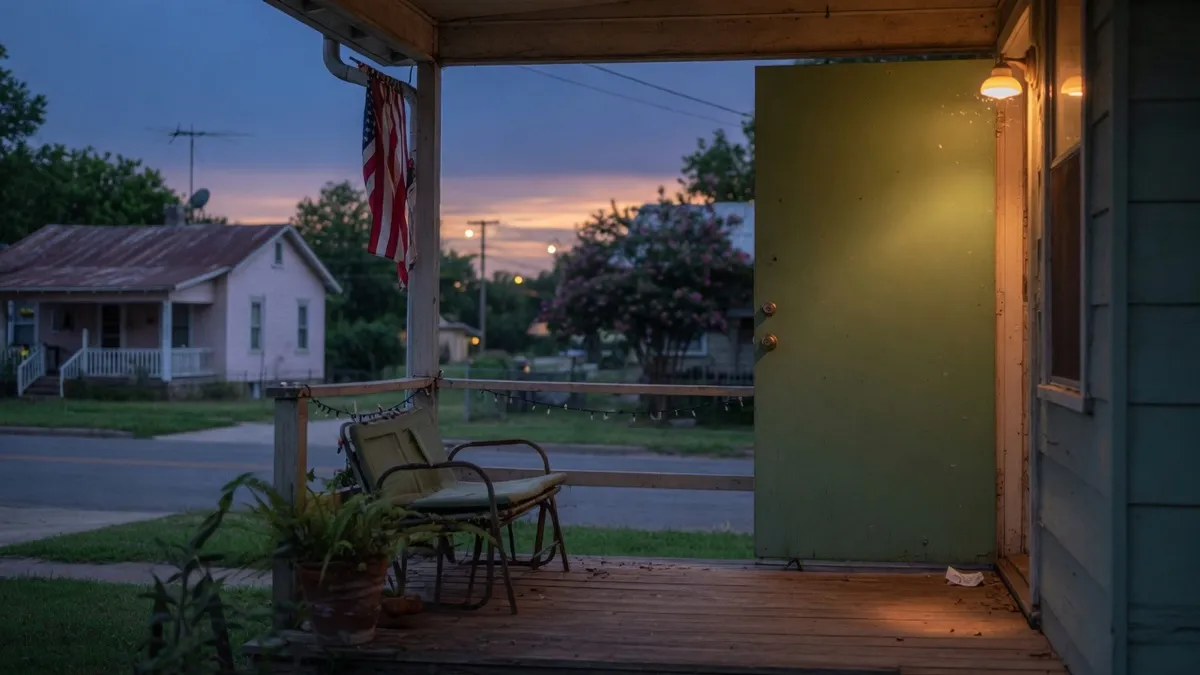
If a heat-warped deadbolt has actually locked you out, the fix for right now is different from the fix for the underlying cause. Do not force the key or the door, since that can snap a key off in a hardened cylinder. Our locked-out-of-house guide covers the seven safe steps to try before anyone arrives, and same-day home lockout service is available if you would rather have a technician handle it.
The one thing that makes a heat-warped lockout worse is forcing it. A key that will not turn under normal pressure is not going to turn under extra pressure either, it is just going to snap or bend, and now you have two problems instead of one. Ease off, try the door with a light lift or push the way the self-check describes, and if nothing gives after a minute or two, that is the moment to call rather than keep pushing.
Does Texas Heat Actually Kill a Key Fob Battery?
Not from a single hot day. Coin-cell fob batteries are rated to operate well above typical Texas summer temperatures, and short-term data even shows some cells performing as well at high heat as at room temperature. What heat actually does is cumulative: a fob left in a hot car for weeks accelerates the battery's self-discharge and shortens its working life over a season, not in one afternoon.
A fob does not die from one hot afternoon. It wears down from a whole summer of them.
That distinction matters because it changes what you should actually do about it. If a single hot commute killed a fob battery, there would be nothing to protect against. Since it is a slow, cumulative process instead, a fob's fate mostly comes down to where it spends its idle time all summer long, which is a question worth asking before you assume the battery itself is defective.
How Hot Does a Parked Car Actually Get in Austin?
Fast, and not just on the hottest days. Stanford research found a parked car's interior can climb about 40 degrees within one hour regardless of the outside temperature, with 80 percent of that rise happening in the first 30 minutes, and Texas's own Department of State Health Services cites a 20-degree rise in as little as 10 minutes. Cracking a window barely slows any of it down.
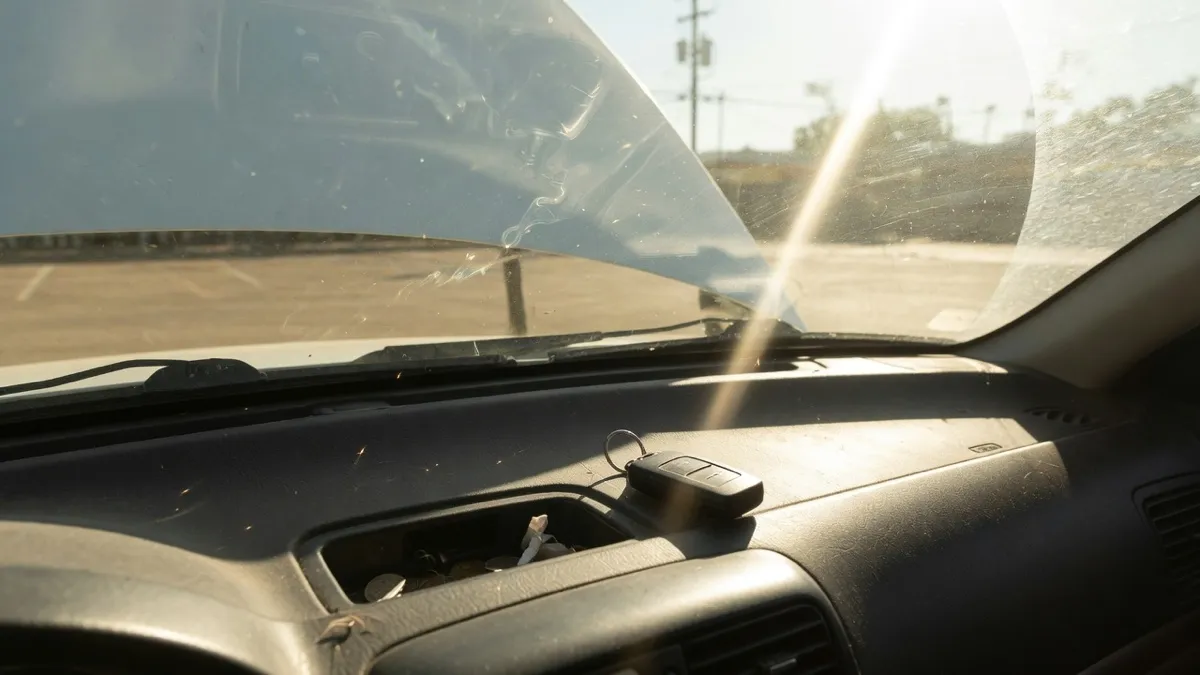
You can read the full Stanford study coverage or the Texas DSHS hyperthermia data for the full figures behind those numbers. Both sources agree on the same basic point: a parked car interior heats up faster than most people expect, and the dashboard and console area, exactly where a spare fob usually ends up, run hotter than the general cabin air the whole time the car sits in the sun.
What Actually Happens Inside a Coin-Cell Fob Battery
A CR2032 coin cell is built to handle a wide temperature range, so a single Austin afternoon will not disable it. The real story is what happens over a whole summer: manufacturer testing shows heat accelerates a coin cell's long-term self-discharge, and sustained cabin temperatures can push a fob's soldered circuit board toward stress it was never designed for. Battery chemistry and circuit-board heat stress are two separate failure paths, not one.
That second failure path, the circuit board itself, is easy to overlook because most people only think about the battery. A fob that has spent an entire summer baking on a dashboard is putting real, sustained heat stress on the soldered components as well as the battery inside it, and either one can be the reason a fob that used to work fine suddenly gets unreliable in late August.
| Signal | Frame or Strike Binding (mechanical) | Fob or Electronics (hot car) |
|---|---|---|
| Where it happens | The door, frame, or strike plate | Inside a parked car, on a dashboard or console |
| What triggers it | Wood swelling and metal expansion from heat and humidity | Weeks of sustained heat exposure to the battery and circuit board |
| How it feels | The key turns hard or the bolt only partially throws | The fob is slow to respond or stops working |
| What fixes it | Strike plate adjustment or frame correction, sometimes hardware replacement | A fresh battery, and keeping the spare out of a hot car |
How to Protect a Spare Fob From an Austin Summer
The single best protection costs nothing: do not store a spare key fob in a hot car for the whole summer, whether that is a glovebox, a center console, or a cupholder. If a fob has been living in a hot vehicle for months and the battery finally dies, that is not bad luck, it is the cumulative heat catching up with it.
If a fob has already stopped responding and you need to get into the car right now, our car lockout guide covers what to do next, and automotive lockout service is available if you would rather have someone come open it and sort out the fob afterward.
Is This Really an August Problem, or Something Actually Broken?
Most binding deadbolts and sluggish fobs in Austin's peak heat are a seasonal, physical response to weather, not a sign anything is failing. The difference is timing and pattern: a lock that eases up after the first cool snap, or a fob that was merely slow rather than dead, points to heat. A lock or fob that stays broken once temperatures drop points to something that actually needs fixing.
If you are still sorting out who to call once the weather cools off and you are ready to deal with either problem for good, our guide to mobile locksmith service in Austin covers the broader case for a mobile visit, and our guide to finding a trusted Austin locksmith walks through how to vet whoever you end up calling.
Frequently Asked Questions
Why does my deadbolt only stick in summer?
Heat and humidity move your door frame in ways a mild season does not, so a lock that turned fine in April can bind in August. Wood swells with humidity, metal expands with heat, and the strike plate stops lining up cleanly with the bolt. The lock itself usually has not changed at all.
Will my lock go back to normal once it cools down?
Often, yes. If the binding is purely a heat and humidity issue, the door and frame typically ease back toward their original position once temperatures and moisture levels drop. If it stays stubborn well into a cooler month, repeated heat cycles may have caused real wear, and it is worth having a technician check the strike plate and frame.
Does Texas heat really kill key fob batteries?
Not in one hot day. Coin-cell fob batteries are rated to handle temperatures well above a typical Texas summer. What actually happens is cumulative: weeks of a fob sitting in a hot car accelerate the battery's self-discharge and shorten its working life over a season, which is a slower story than most people expect.
How do I know if it's my door or my lock?
Open the door and try the deadbolt with it open. If it throws smoothly, your lock is fine and the problem is alignment. If you have to lift, push, or pull the door to get the bolt to turn, or you see fresh scrapes on the strike plate, that points to the frame, not the hardware.
Can I fix a heat-warped strike plate myself?
A minor adjustment, like loosening and repositioning the strike plate slightly, is sometimes within reach for a comfortable do-it-yourselfer. But if the frame itself has shifted, or the fix needs the plate moved more than a small amount, a licensed technician can correct it properly without weakening the door's forced-entry resistance.
How do I find a licensed locksmith in Austin?
Texas locksmiths are licensed through the Department of Public Safety's Private Security Bureau under Occupations Code Chapter 1702. Pros On Call operates under License #B19847, and every technician on our team works under that same license across the Austin metro.
Five minutes with the two-minute check tells you almost everything you need to know about a binding deadbolt, and a hot car sitting still for a few months explains almost everything about a struggling fob. If your lock is still fighting you after a cool morning, or your fob needs replacing instead of just protecting from now on, call Pros On Call at (888) 601-6005. We handle deadbolt repair, rekeys, and automotive lockouts across Austin, with same-day availability.
Content strategy and SEO by Optymizer