Austin's rapid growth brings opportunities - and challenges. Among them: a flood of locksmith services, from legitimate professionals to outright scammers. When you need a locksmith in Austin, you need someone you can trust - with your security, your property, and your hard-earned money.
The difference between a trusted locksmith and a scammer can mean the difference between $150 professional service and a $600 price-gouging nightmare. Between secure locks and damaged property. Between peace of mind and violated trust.
The difference between a trusted locksmith and a scammer can mean the difference between $150 professional service and a $600 price-gouging nightmare.
Why Finding a Trusted Locksmith in Austin Is Critical
Austin's Unique Locksmith Challenges
Austin's metro population grew from 1.7 million in 2010 to more than 2.4 million by 2024 - a 41% jump in fourteen years. That kind of growth is good for the city, but it creates real problems for anyone trying to hire a locksmith. High demand attracts more players, and not all of them belong here. Out-of-state companies set up virtual "Austin" offices with a local-sounding name and a mailbox address, then route calls to subcontractors from San Antonio, Houston, or out of state entirely. Lead generation sites pretend to be local businesses. Scam operations thrive precisely because in a fast-growing market, it's harder for consumers to sort established shops from overnight opportunists.
Three scenarios play out regularly in Austin. In the first, you search "Austin locksmith," call the top result, and a dispatcher quotes you $50-$75. A technician arrives 90 minutes later from San Marcos, claims your ordinary deadbolt is "high security," and demands $400-$625 - threatening to leave you locked out if you don't pay cash. In the second, an ad promises a "$15 service call," then the fine print evaporates at the door and the price climbs through invented fees. In the third - the drilling scam - the technician immediately destroys your lock rather than picking it, charges $200+ for a low-quality replacement, and drives away. All three are preventable if you know what to look for before you call.
The best time is a quiet Tuesday afternoon when you need spare keys made.
The financial gap is real. Scam charges typically run $400-$800 for a service a licensed professional would complete for $100-$200. Add damaged locks and door frames - easily another $500-$1,000 - and a single bad call can cost you well over $1,000 in losses. Beyond money, there's the stress, the lost hours, and the knowledge that someone with no accountability just had their hands on your property's security hardware.
The value of finding the right locksmith ahead of time is hard to overstate. When you have a trusted number already saved, you skip the panicked Google search, the pressure decisions, and the vulnerability that comes with being locked out at midnight in Mueller.
Step 1: Verify Texas Locksmith License
Texas Locksmith Licensing Requirements
Texas is one of the more rigorous states for locksmith regulation. Under Texas Occupations Code Chapter 1702, the Texas Department of Public Safety (DPS) Private Security Bureau requires every locksmith company to hold a company license and every individual technician to carry their own license. Getting licensed means passing a background check, carrying insurance and a bond, and completing continuing education. Unlicensed operation carries a civil penalty of $1,000 per violation and an administrative penalty of up to $5,000 per violation, and it is a Class A misdemeanor. For you as a customer, that framework matters: a licensed locksmith is accountable to a state agency, and you have a formal avenue to file a complaint if something goes wrong. An unlicensed one has no accountability to anyone.
Verifying a license takes about two minutes. When you call, ask directly: "What's your Texas locksmith license number?" A legitimate shop gives you the number immediately - it's displayed on their website, truck, and business cards - and encourages you to check it. A scammer hedges, changes the subject, says it's not required (it is), or gives a number that doesn't match their business name. Once you have the number, go to the Texas DPS licensing portal, search by company name or license number, and review the result. The status should read "Active," the license should cover "Locksmith," and the expiration date should be in the future. If you see "Expired," "Suspended," or no results at all, stop right there. If you're searching in Spanish, know that the DPS lookup page you land on is in English; our Spanish language guide to hiring a cerrajero in Austin walks through the exact vocabulary for that check.
A few common license scams are worth knowing. Some unlicensed operators give you a real license number that belongs to a different company - always verify that the business name in the DPS records matches the name they gave you on the phone. Others give an old number for a license that has since expired. Out-of-state licenses don't count; Texas requires a Texas license. And "license pending" or "applied for" means they cannot legally operate - often they never actually applied.
Step 2: Look for Established Austin Presence
Physical Location and Local Knowledge
A real Austin locksmith has a real Austin address - not a PO box, a mailbox service, or a virtual office. Check Google Maps: search the business name, look at the address listed, and click Street View. If the address is an empty lot, a UPS store, or a residential home with no business signage, that tells you everything. True Austin presence means a ZIP code in the 78701-78799 range, a shop that's been at that location for years, and technicians who actually live and work in the city they serve.
Years in business are another reliable signal. A locksmith that has survived Austin's growth cycles and economic swings has a reputation to protect - they can't scam customers and disappear when they're a known presence in the community. Check the Google Business listing for the "in business since" date, look at how far back the oldest reviews go, and cross-reference the website domain age if you want to be thorough. Red flags: a company claiming to have been around since the early 2000s with a six-month-old domain, or "family business since 1980" paired with a business license from last year.
Local knowledge is a fast informal test you can run on the phone. Ask where they're located in Austin and how long it would take to reach your neighborhood. A genuine Austin tech knows that Mueller is east of I-35, that Mopac backs up badly at rush hour (they say "Mopac," not "Mopac Expressway" - locals drop the last word), and that a quote of 15 minutes from Round Rock to South Austin is physically impossible in afternoon traffic. Vague answers, unrealistic times, and unfamiliarity with neighborhood names are signs the person you're talking to is nowhere near Austin.
THREE THINGS TO CHECK ON ARRIVAL
First, look at the vehicle
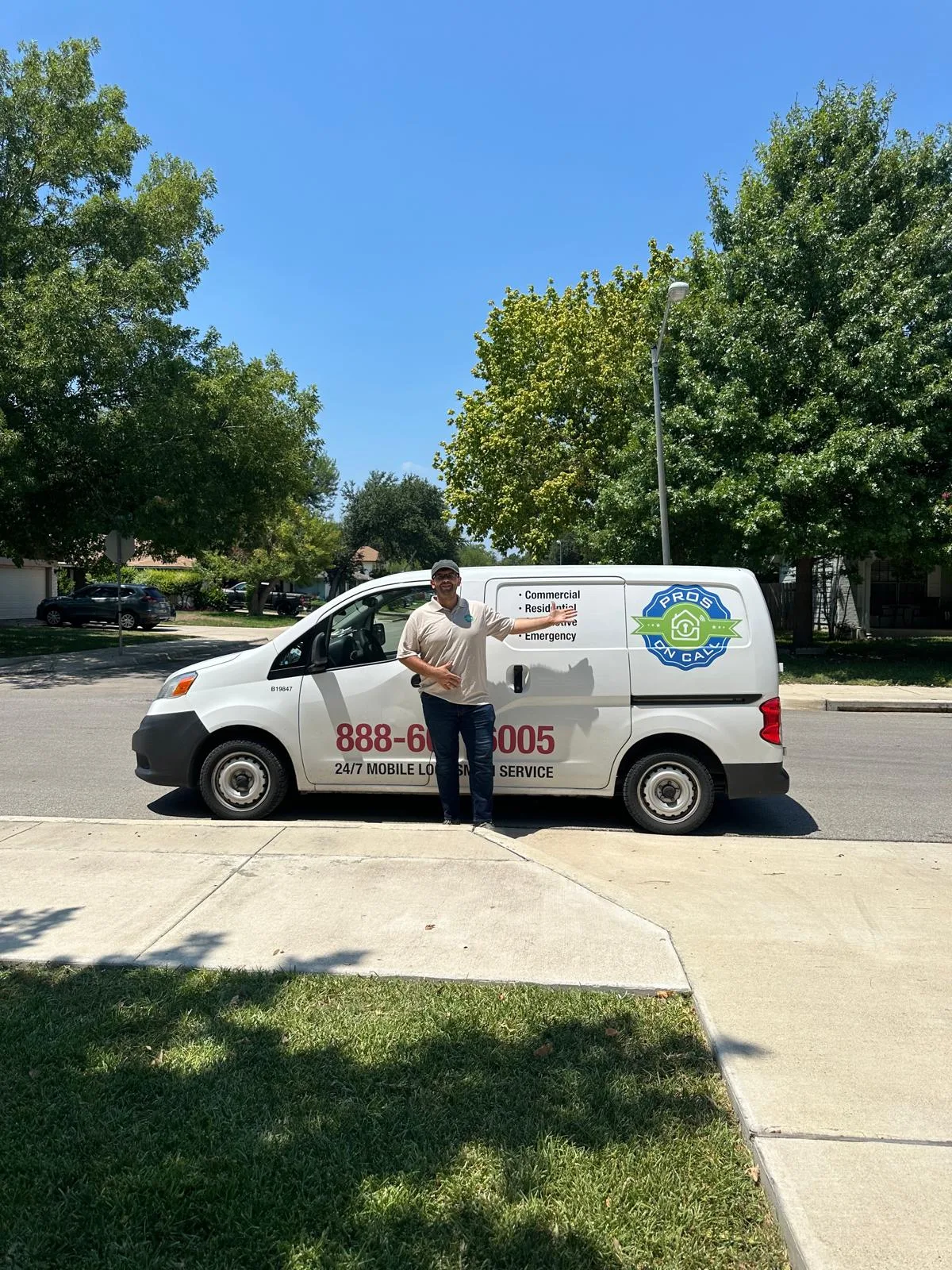
A professional locksmith arrives in a marked company van or truck with the business name, phone number, and license number visible.
Second, ask for photo ID and license
A professional shows both willingly; they're required to carry them.
Third, reconfirm the price
Say the quoted amount and ask if that's still the total. The answer should be a simple yes.
Response times are honest indicators too. From a shop in central Austin, you should realistically expect 20-30 minutes to reach most of the city. From North Austin to South Lamar during I-35 congestion, 35-50 minutes is honest. Anyone quoting 15 minutes from the other side of town doesn't know Austin and is setting you up for a bait-and-switch on arrival time and price.
Step 3: Read and Understand Reviews
Where to Find Reliable Reviews
Google Reviews are the hardest to fake and the most useful: they show reviewer history, verified purchase badges, and the business's response patterns. The Better Business Bureau adds complaint history and resolution records. Yelp and Facebook both use real-identity accounts, which makes fabrication harder. Ignore the testimonials on the locksmith's own website - those are curated. Ignore screenshots of reviews, which can be edited. Ignore obscure review aggregators you've never heard of.
When you read reviews, go past the star rating. A healthy profile has mostly 5-star reviews, some 4-star, and the occasional critical review that the business responds to professionally. All 5-star reviews with no variation is suspicious. A burst of reviews from a single week followed by silence is a classic fake-review pattern. Under ten reviews is not enough data to draw conclusions.
Look for specificity. Real customers name the technician, the service type ("rekeyed 3 locks," "programmed my Honda transponder key"), the neighborhood ("came to my office in the Domain"), and the outcome. Generic "Great service! Very professional!" with no details could be copied from any city's review - and sometimes is. Austin-specific mentions of South Congress, Hyde Park, Mueller, the UT campus area, or traffic on Mopac are good signs you're reading genuine local feedback.
Certain patterns in reviews are hard red flags. Repeated complaints about prices that doubled on arrival, technicians drilling locks immediately without attempting to pick them, unmarked vans, different company names than the one you called, and aggressive or intimidating behavior when customers ask questions - any one of these should end your search for that company. Green flags are the opposite: named technicians, prices that matched the phone quote exactly, written estimates before work began, and follow-up calls to confirm satisfaction.
Step 4: Verify Pricing and Get Written Quotes
Understanding Fair Austin Locksmith Pricing
Austin market rates in 2024 run $100-$150 for a residential lockout during regular hours (9 AM - 6 PM) and $125-$200 after hours. Car lockouts typically run $75-$125 during the day and $100-$175 after hours, with complex or European vehicles at the higher end. Rekeying costs $75-$125 for the first lock (which includes the service call) and $15-$30 for each additional lock - a whole house with six locks usually lands at $150-$300. Lock installation ranges from $100-$200 for a standard deadbolt to $250-$400 for a smart lock including setup. Transponder key programming runs $150-$300; key fob replacement $150-$400 depending on the vehicle.
Prices below half the market rate are not deals - they are bait. No legitimate business makes money at "$15 service call" or "$19 lockout." Those numbers exist to get you to call, and they disappear the moment a technician arrives. The tell is a quote that covers only the service call but won't commit to a total, or language like "depends on the situation" or "we'll see when we get there." You should be able to get a total cost on the phone before anyone drives out.
| Service | Price Range |
|---|---|
| Residential lockout, regular hours | $100-$150 |
| Residential lockout, after hours | $125-$200 |
| Car lockout, during the day | $75-$125 |
| Car lockout, after hours | $100-$175 |
| Rekeying, first lock | $75-$125 |
| Standard deadbolt installation | $100-$200 |
| Smart lock including setup | $250-$400 |
| Transponder key programming | $150-$300 |
To get an accurate quote, give the dispatcher complete information. For a lockout: the lock type if you know it, the door material, and whether the lock is broken or just locked. For lock work: how many locks, what type of service, and the current brand. For car keys: year, make, model, and whether you've lost all keys or just need a spare. Then ask five questions directly: What's the total cost? What does that include? Are there any additional fees (after-hours, distance, downtown parking)? Will the price change when you arrive? Can you text or email that quote?
A legitimate locksmith will text or email a confirmation without hesitation. A scammer refuses, says they don't have email capability, or is reluctant to commit anything in writing. Screenshot text quotes, save emails, and write down the phone conversation details including the time, the business name, the license number, and the price. That paper trail protects you if the number changes at the door.
Step 5: Confirm Credentials Upon Arrival
What to Check Before Work Begins
Before you allow any work to start, take 90 seconds to verify three things. First, look at the vehicle. A professional locksmith arrives in a marked company van or truck with the business name, phone number, and license number visible. An unmarked white van, a personal car, or a rental with out-of-state plates from an "Austin" company is a signal to proceed very carefully. Second, ask the technician for photo ID and their individual locksmith license. A professional shows both willingly; they're required to carry them. Hesitation, defensiveness, or trying to start work immediately without letting you check are red flags. Third, reconfirm the price before a single tool comes out of the bag. Say the quoted amount and ask if that's still the total. The answer should be a simple yes.
THREE COMMON AUSTIN SCAMS
The Bait-and-Switch Quote
A technician arrives 90 minutes later from San Marcos, claims your ordinary deadbolt is "high security," and demands $400-$625.
The Vanishing Fine Print
An ad promises a "$15 service call," then the fine print evaporates at the door and the price climbs through invented fees.
The Drilling Scam
The technician immediately destroys your lock rather than picking it, charges $200+ for a low-quality replacement, and drives away.
If the price at the door is dramatically different from the phone quote, do not let work begin. Walk away. You owe nothing to someone who misrepresented their pricing. The same applies if the technician goes straight for a drill without attempting to pick the lock first - most residential locks can be picked, and drilling is a last resort, not an opening move. Pressure tactics ("pay cash for a discount," "price goes up if you don't decide now") and refusal to let you call someone for a second opinion are also immediate stop signals.
If you need to end the service, be direct: stop the work, ask them to leave, and document everything. If they won't leave or if there's any threat, call 911. File a complaint with the Texas DPS Private Security Bureau at the Texas DPS licensing portal and leave a Google review warning other Austin residents. If the technician completed work but charged well beyond the quoted amount, pay only the original quoted price, get a receipt if possible, and file the complaint immediately.
Step 6: Build the Relationship Before You Need It
The worst time to search for a locksmith is at 11 PM when you're standing outside your car on South Congress. The best time is a quiet Tuesday afternoon when you need spare keys made. Use a non-emergency service first - duplicate keys ($20-$50), a rekey after moving into a new place ($100-$300 depending on lock count), or a smart lock installation - and you get to evaluate the company's professionalism, pricing, and communication with zero urgency. If the experience is good, you've found your locksmith for the next decade.
That paper trail protects you if the number changes at the door.
Save the number in multiple places: your phone contacts (labeled something obvious like "Trusted Locksmith - Austin"), a business card in your wallet, one in the glove box, and a note in your family's emergency contact list. Make sure your spouse, anyone who drives, and elderly family members have it too. When an emergency does happen, the last thing you want is to be running a panicked Google search and making decisions under pressure.
Repeat customers tend to get faster service - the dispatcher recognizes the number, the technician may already know your property and your lock setup - and you avoid starting from scratch every time a security need comes up.
Trusted Austin Locksmith: Pros On Call
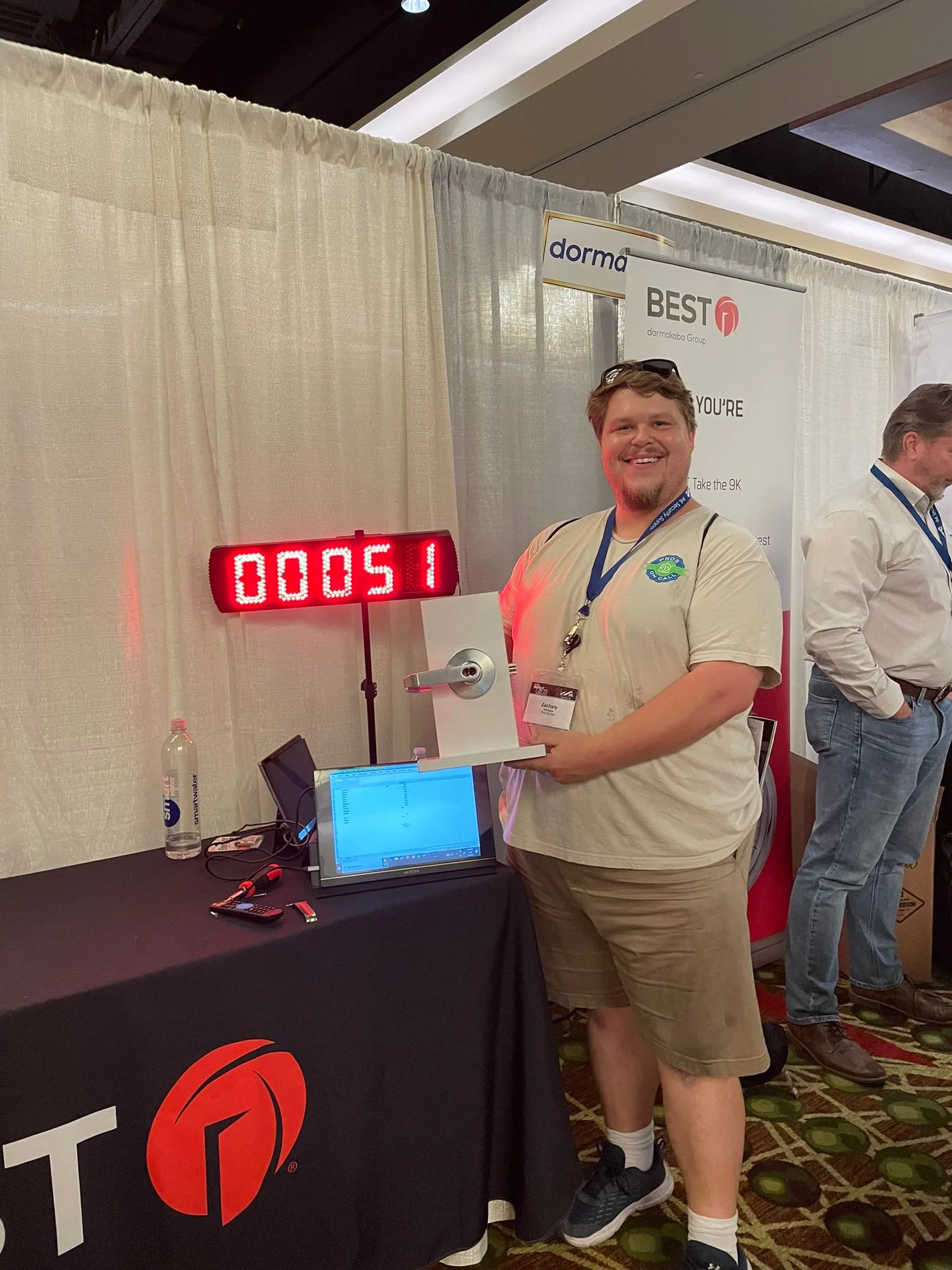
Pros On Call has served Austin since 2010, which means we've been here through the domain boom, the tech influx, and every round of I-35 construction. We know Mueller, Hyde Park, Tarrytown, South Congress, and the Domain. We know that traffic on Mopac at 5:30 PM means 40 minutes to Westlake, not 20. We're a real Austin presence with background-checked technicians, marked vehicles, and Texas License #B19847 - verified any time at the Texas DPS licensing portal.
Our pricing is quoted in full on the phone before anyone drives. The price you hear is the price on the receipt. We handle the full range of locksmith work: residential lockouts and rekeying, car key replacement and transponder programming, commercial access control and high-security lock installation, smart lock setup, and safe service. We're available 24 hours a day including weekends and holidays, with an average Austin response time of about 30 minutes.
A few customer experiences that reflect what we do:
"Called Pros On Call when locked out of my Mueller apartment at midnight. Technician arrived in 25 minutes, picked my lock professionally, charged exactly what was quoted on the phone. Will use again." - Sarah K., Mueller
"Needed transponder key programmed for my Honda. Tried the dealer first - $450 and 3-day wait. Pros On Call came to my office in the Domain, programmed it on-site for $220. Same day service, professional technician." - Mike T., Domain
"Moving into new house in Hyde Park, wanted locks rekeyed. Pros On Call came same day, rekeyed 5 locks in 40 minutes, explained everything, fair price. Great experience." - Jennifer L., Hyde Park
Your Austin Locksmith Checklist
Before you call any Austin locksmith, run through these basics. Verify their Texas license at the Texas DPS licensing portal and confirm it's current and active. Check that they have a real Austin address visible in Google Maps Street View. Read enough Google reviews to see a genuine pattern over time - look for Austin neighborhood mentions and specific service details, not generic praise. Ask for a total-cost quote on the phone and confirm it in writing before anyone arrives. When the technician shows up, check the vehicle markings and ask to see their ID before work begins.
Red flags that mean you should call someone else: no Texas license number, prices that seem impossibly low, refusal to give a total cost, no physical Austin location, unmarked vehicle on arrival, price that jumps dramatically at the door, or immediate drilling without any attempt to pick the lock first.
Get Trusted Locksmith Service in Austin
Don't wait for an emergency to find a locksmith you can trust. Save this number now.
Call Now: (888) 601-6005
Texas License #B19847 - verify at the Texas DPS licensing portal. Serving Austin and the surrounding metro area 24/7, including Central Austin, North Austin, South Austin, East Austin, West Austin, Round Rock, Cedar Park, Westlake, Lakeway, and all Austin metro neighborhoods.
Pros On Call (24 Service LLC DBA Pros On Call) - Licensed, trusted locksmith serving Austin since 2010.
Content strategy and SEO by Optymizer