When you need a locksmith, finding the right one online can feel overwhelming. A simple Google search returns dozens of results, but how do you know which locksmiths are legitimate, licensed professionals versus unlicensed scammers? The stakes are real: you are trusting someone with access to your home or business.
This guide shows you exactly how to find, vet, and hire the best locksmith services online with confidence.
Why Finding a Good Locksmith Online Matters
The locksmith industry carries more fraud risk than most trades because the barrier to faking an online presence is low. A scammer can spin up a Google listing, buy a few ads, and be taking calls in a day. Texas has seen this pattern repeatedly, from fake listings in Austin to pop-up operations advertising statewide coverage they cannot actually provide. Unlicensed operators cause real harm: they overcharge, damage locks or door frames, and leave you with no legal recourse. The good news is that legitimate, professional locksmiths are absolutely online. You just need to know what to look for.
The risks of picking the wrong locksmith go beyond a bad experience. Hidden fees can turn a quoted $95 service call into a $400 bill. Substandard work can leave your deadbolt or rekeyed lock easier to bypass than when you started. And in Texas, hiring an unlicensed locksmith company is itself a legal problem. So the few minutes you spend vetting a company upfront are worth every second.
Legitimate, professional locksmiths ARE online - you just need to know how to find them.
Step 1: Start With the Right Search
Use Specific, Local Searches
The words you type into Google shape which businesses appear, so specificity matters. Generic terms like "locksmith" return national aggregator sites and lead-generation services that resell your contact information to whoever pays them. Tighter, local searches surface actual businesses with verified addresses near you. Google's map pack rewards proximity and verified listings, so local intent in your query pulls forward the companies most likely to show up and do the work.
For most situations, start with search terms like these:
- "licensed locksmith Austin TX"
- "locksmith near me" (uses your device location)
- "24 hour locksmith San Antonio"
- "residential locksmith McAllen TX"
- "emergency car locksmith Houston"
Avoid Generic Searches
Some search terms consistently underperform. "Cheap locksmith" filters for price instead of quality, and the businesses that optimize for that term are not always the ones you want at your door. A bare "locksmith" search with no city name tends to surface aggregators and directories before actual local companies. "Locksmith services" lands in similar territory. Start specific and you will save yourself the work of sorting through irrelevant results.
Step 2: Evaluate Google Search Results
Google Maps Results (Local 3-Pack)
The map section at the top of local search results is your first stop because Google requires businesses to verify their physical location before they appear there. That alone filters out a layer of fly-by-night operators. What you are looking for is a business with a real address, real photos, and a review history that spans more than a week. The "Google Guaranteed" badge, when present, adds another layer of vetting.
Look for businesses in the map section with:
- Physical address shown (not just "service area")
- Verified "Google Guaranteed" badge (extra trust signal)
- Consistent business name across listings
- Responses to customer reviews
- Photos of actual team members and vehicles
Watch for red flags in map results that suggest a fake or low-quality listing:
- No address, only a phone number
- Generic business name like "Austin Locksmith"
- Zero reviews or a sudden burst of five-star reviews from this week
- Multiple listings sharing the same phone number
That last pattern deserves a closer look: our guide to spotting a fake listing before you call shows how four different "near me" results can all route back to one call center, exposed with a 30 second license check.
Organic Search Results
Below the map pack, the website listings tell their own story. A legitimate locksmith company invests in a real web presence: a proper "About" page, named technicians, a listed physical address, and service pages that describe what they actually do. A scam operation typically has thin content, no team information, and stock photos standing in for real employees. The license number is an especially telling signal. A licensed Texas locksmith should display it plainly, because they are proud of it.
Good signs on website listings:
- Established business with founding year on the "About" page
- Services clearly listed with descriptions, not just a name
- DPS license number displayed prominently
- Physical office address, not a P.O. box
- Team photos showing real people, not stock images
- Service area stated clearly by city or county
Warning signs to watch:
- No "About Us" page or no team information
- Stock photos only, with no real employees shown
- Pricing that looks unrealistically low
- Aggressive pop-ups demanding your contact details immediately
Sponsored Ads (Proceed with Caution)
Paid ads at the top of search results are not automatically a red flag. Many legitimate businesses advertise, including Pros On Call. The problem is that scammers also buy ads because appearing first converts well, and they only need to fool enough people before the listing gets flagged. Treat an ad the same way you would any other result: verify the credentials before you pick up the phone. Ad placement tells you nothing about license status or quality of work.
A legitimate locksmith company invests in a real web presence: a proper "About" page, named technicians, a listed physical address, and service pages that describe what they actually do.
Step 3: Verify Credentials and Legitimacy
Check Licensing (Critical Step)
Texas requires locksmith companies to hold a license from the Texas Department of Public Safety (DPS) Private Security Bureau. This is not optional, and it is not just a formality. The DPS license means the company has met the state's requirements for training, background checks, and accountability. You can verify any company's license directly at the Texas DPS licensing portal. Any locksmith operating in Texas who refuses to give you their license number or tells you licensing is not required is giving you a clear reason to hang up.
For Texas work, the relevant checks are:
- DPS license for locksmith work (required by state law)
- License number displayed on the company website
- Online verification at the Texas DPS licensing portal before hiring
If you are in another state, look for that state's licensing board website. Licensing requirements vary: some states require all locksmiths to be licensed, others only apply the requirement to commercial or institutional work.
Verify Business Registration
Licensing is only one layer of verification. A company that has been operating legitimately in Texas for years will have a paper trail across multiple platforms. On the BBB, look past the letter grade and read the complaint history: how many complaints, what were they about, and did the company resolve them? On the Google Business Profile, click through to the website and confirm the name matches, then check whether the address is a real office or a virtual mailbox. For deeper confirmation, the Texas SOS Business Search lets you verify that the DBA name matches what the company is advertising. Checking more than one source takes five minutes and gives you a much clearer picture than any single listing.
Insurance Verification
A licensed, professional locksmith carries insurance. This protects you if something goes wrong during the job: a scratch on your door, a broken lock cylinder, an injury on your property. General liability and bonding are standard for any reputable operation. Asking for proof of insurance is not rude; it is the same thing a contractor, electrician, or plumber would expect you to ask. A legitimate company will provide it without hesitation. If a company gets evasive or defensive about this question, that tells you something important.
Step 4: Read Reviews Strategically
Where to Find Trustworthy Reviews
Not all review platforms are equally reliable. The ones that require verified accounts or location data are harder to game than open comment sections. Google Reviews are the most useful starting point because they are tied to a Google account and often carry location signals. The Better Business Bureau tracks formal complaints with resolution outcomes, not just star counts. Yelp uses automated filters to flag suspicious reviews. Nextdoor surfaces what your actual neighbors think, which matters when you are hiring someone to come to your home. Facebook and website testimonials are the least reliable: both are easy to curate or fake.
The most reliable sources, ranked:
- Google Reviews - Location-verified, hardest to fake at scale
- Better Business Bureau - Formal complaints with documented resolutions
- Yelp - Automated filters remove many suspicious reviews
- Angi (Angie's List) - Verified customer reviews with service confirmation
- Nextdoor - Local neighbor recommendations from real community members
QUESTIONS THAT MATTER MOST
What is your full business name and license number?
Should answer without hesitation. Write it down and verify it online.
What is the total cost for this service?
Should give you a firm quote or a clear range.
Are you insured and bonded?
Should answer yes immediately and offer to provide proof if you want it.
What payment methods do you accept?
Multiple options signal a legitimate business. Cash-only is a red flag.
How to Read Reviews Critically
A star rating without context is nearly meaningless. What matters is the pattern of reviews over time and the specific details people mention. A genuine review names the technician, gives an actual price or time estimate, and describes a specific situation. A fake review tends to be vague and enthusiastic with no details. A company with 200 reviews from the past three years and a mix of four-star and five-star ratings is more trustworthy than a company with 50 reviews, all from new accounts, all posted last month.
Good patterns to look for:
- Mix of four-star and five-star reviews (all fives can indicate padding)
- Specific details: technician name, price paid, time to arrive
- Responses to negative reviews showing professionalism
- Review history spanning months or years, not just one week
Red flag patterns:
- Reviews all posted within a short window
- Generic language with no specific details about the service
- Suspiciously similar writing style across multiple accounts
- All reviews from accounts with no other review history
Example of a trustworthy review:
"Called Pros On Call after locking my keys in the car at the grocery store. Dispatcher was friendly, gave me upfront pricing of $95. Technician Mike showed up in 30 minutes, had my door open in 5 minutes without damage. Provided receipt with license #B19847. Will use again!"
Negative Reviews: What Actually Matters
Every business that operates at any volume gets negative reviews. The question is not whether they exist but how the company handled them. A business that responds professionally, acknowledges a problem, and offers a resolution is showing you how they operate when things go wrong. That is actually useful information. What you should not ignore: complaints about bait-and-switch pricing, reports of property damage, any mention of unlicensed technicians, or aggressive behavior. Those patterns in reviews describe a company's standard operating procedure, not a one-off bad day.
Step 5: Evaluate the Website
Signs of a Professional Locksmith Website
A professional locksmith's website does not need to be a design showpiece. It needs to be honest. The fundamentals are a real address, a real license number, named services with actual descriptions, and photos of the people who will show up at your door. These things cost nothing to put on a website. A company that does not include them is either too new to have them or hoping you will not ask.
What a legitimate site includes:
- Specific services listed (not just "locksmith services")
- License number displayed prominently
- Physical address and defined service area
- About page with history, team photos, and years in business
- Pricing information or typical ranges
- Industry association memberships (ALOA, SAVTA) and certifications
- HTTPS security and working contact forms
Red Flags on Websites
Some website patterns are consistent warning signs. A company that lists no physical address is either virtual or hiding. A site using only stock photos has no actual team to show you. A company claiming to cover all of Texas from a single location almost certainly operates by dispatching unvetted subcontractors, not its own trained technicians. And prices that look too good to be true always are.
Warning signs to avoid:
- No physical address (only a phone number)
- Stock photos only, no real team pictures
- Claims to serve the entire state with no local presence
- Prices that seem unrealistically low
- Poor design or a site that looks thrown together quickly
- Aggressive pop-ups and spam tactics
- No license information displayed
- Multiple phone numbers with no clear main contact
- Generic content that reads as if it was copied from another site
TRUSTED PLATFORMS TO CHECK
Associated Locksmiths of America (ALOA)
Find-a-Locksmith tool connects you to trained members.
Better Business Bureau
Accredited locksmiths have gone through a verification process.
Angi (formerly Angie's List)
Verified service providers with background checks.
Thumbtack
Local service marketplace with quote comparison.
Step 6: Contact and Evaluate
What to Ask When You Call
The phone call is your fastest screening tool. A legitimate company answers with its business name and handles questions about licensing, pricing, and timing without hesitation. A scam operation tends to be vague on details, cagey about credentials, and pushy about getting you to commit before you have the information you need. Five direct questions will tell you most of what you need to know before a technician ever shows up.
These six questions matter most before hiring:
-
"What is your full business name and license number?"
- Should answer without hesitation. Write it down and verify it online.
-
"What is the total cost for this service?"
- Should give you a firm quote or a clear range. Ask specifically about the service call fee, labor, and any parts.
-
"How long until you can arrive?"
- Honest companies give realistic timeframes. "15 minutes" from a company located 50 miles away is a lie.
-
"Are you insured and bonded?"
- Should answer yes immediately and offer to provide proof if you want it.
-
"What payment methods do you accept?"
- Multiple options signal a legitimate business. Cash-only is a red flag.
-
"Can you point me to your online reviews?"
- Should have no hesitation directing you to Google or another platform.
WHEN YOU'RE LOCKED OUT RIGHT NOW
Speed
Who can actually arrive fastest based on their real location?
Verification
Quick license check at the Texas DPS Private Security Bureau takes 60 seconds on your phone.
Upfront pricing
Get the total cost before they leave to come to you.
Review snapshot
30 seconds on Google reviews tells you a lot.
Evaluate Their Response
How a company handles your questions tells you as much as the answers themselves. A good dispatcher is patient, specific, and confident. They give you pricing without resistance and acknowledge what they do not know. The experience of calling a bad operator usually feels different right away: vague answers, pressure to commit before you have the information, irritation at basic questions. If a company refuses to give you a license number over the phone, will not quote pricing until they "see it first" (a classic setup for bait-and-switch), or demands cash upfront, hang up and call the next one on your list.
Step 7: Compare Multiple Options
Getting quotes from two or three locksmiths before deciding is one of the best habits you can build, especially for non-emergency work. The comparison takes maybe 20 minutes and routinely reveals a wide spread in both price and professionalism. You are not just shopping for the lowest number. You are trying to find the company that is properly licensed, reasonably priced, and capable of doing the work correctly the first time.
A simple comparison for a car lockout might look like this:
Locksmith A:
- License: #B19847 (verified)
- Quote: $95-$125 for car lockout
- Arrival: 30-45 minutes
- Reviews: 4.8 stars, 200+ reviews
- Insurance: Yes, provided proof

Locksmith B:
- License: Claims licensed, will not provide number
- Quote: $25 (too low to be real)
- Arrival: "10 minutes" (from 40 miles away?)
- Reviews: 5 stars, only 5 reviews from this week
- Insurance: Unclear
Choose based on value, not just the lowest price.
Online Directories and Platforms
Legitimate Locksmith Directories
Professional directories are useful because membership requires meeting minimum standards. The Associated Locksmiths of America requires members to demonstrate training and professionalism. The BBB accreditation process involves independent verification. These platforms are not guarantees of quality, but they raise the floor.
Trusted platforms worth checking:
-
Associated Locksmiths of America (ALOA)
- Find-a-Locksmith tool connects you to trained members
- Members meet professional standards for training
- ALOA.org
-
Better Business Bureau
- Accredited locksmiths have gone through a verification process
- Complaint history is publicly visible
- BBB.org
-
Angi (formerly Angie's List)
- Verified service providers with background checks
- Customer reviews tied to confirmed service records
-
Thumbtack
- Local service marketplace with quote comparison
- Customer ratings from verified jobs
MISTAKES TO AVOID
Choosing the First Result
The first result in a Google search is often a paid ad.
Skipping Credential Verification
Asking a locksmith for their license number takes 30 seconds.
Hiring Without Reading Reviews
Reviews are your access to what other customers experienced before you did.
Directories to Approach with Caution
Lead-generation directories are a different category from professional associations. Sites like Locksmith.com and various "24-hour directory" sites are not locksmith companies. They collect your inquiry and forward it to whichever subcontractor pays them a referral fee. That contractor may or may not be licensed, may or may not carry insurance, and operates with no accountability to the directory that sent them. These sites are not inherently scams, but they require you to vet the actual technician who calls you back, not just the directory listing.
Social Media Research
Social media is where the veneer gets harder to maintain. A legitimate local locksmith in Austin, San Antonio, or McAllen will have a Facebook business page with a real history: check-in locations that confirm physical presence, customer tags from actual jobs, and local engagement that goes back more than a few weeks. A personal profile masquerading as a business page, or a page with no local check-ins and no job photos, is a warning sign.
On Instagram, the test is simple: does the feed show actual work? Before-and-after shots of lock installs, marked company vehicles, team members on jobs, location tags in Texas neighborhoods. A feed of generic security stock photos signals that there is no real local operation behind it.
For commercial locksmith work, LinkedIn is worth five minutes. A company with a genuine profile, named technicians with their own verified accounts, and connections to other local Texas businesses is harder to fake than any website. That paper trail matters when you are hiring for a commercial property.
| Platform | Why It Ranks Here |
|---|---|
| Google Reviews | Location-verified, hardest to fake at scale |
| Better Business Bureau | Formal complaints with documented resolutions |
| Yelp | Automated filters remove many suspicious reviews |
| Angi (Angie's List) | Verified customer reviews with service confirmation |
| Nextdoor | Local neighbor recommendations from real community members |
Emergency vs. Non-Emergency Searches
If It's an Emergency
Being locked out changes your priorities. You need someone who can arrive quickly, and you have less time to do a full vetting process. That said, two minutes of checking is still worth it. A company that will not give you a license number when you are locked out of your car in a parking lot is not a company worth calling. Quick verification is possible even under pressure.
When locked out now, prioritize in this order:
- Speed - Who can actually arrive fastest based on their real location?
- Verification - Quick license check at the Texas DPS Private Security Bureau takes 60 seconds on your phone
- Upfront pricing - Get the total cost before they leave to come to you
- Review snapshot - 30 seconds on Google reviews tells you a lot
For emergency searches, use "24 hour locksmith near me" and check the Google Maps results first. Call two or three companies, ask the license number question immediately, and commit to whichever combination of speed and credibility works best for your situation. Always get firm pricing before they arrive.
If You Have Time
Planning ahead for a rekey, a new lock installation, or a commercial access control project lets you do thorough research. You can compare five companies instead of two, read 20 reviews instead of five, and get written quotes with enough detail to compare apples to apples.
When planning ahead, the full process includes:
- Compare three to five locksmiths using the steps above
- Verify all credentials including DPS license status
- Read at least 20 reviews per company across platforms
- Check BBB accreditation and complaint history
- Get written quotes that itemize service call, labor, and parts
- Ask for references from similar jobs if the scope is large
Planning ahead often yields meaningfully better pricing than emergency rates, better quality vetting, and the chance to build a relationship with a company before you ever need them urgently.
Why Choose Pros On Call: Online Trust Signals
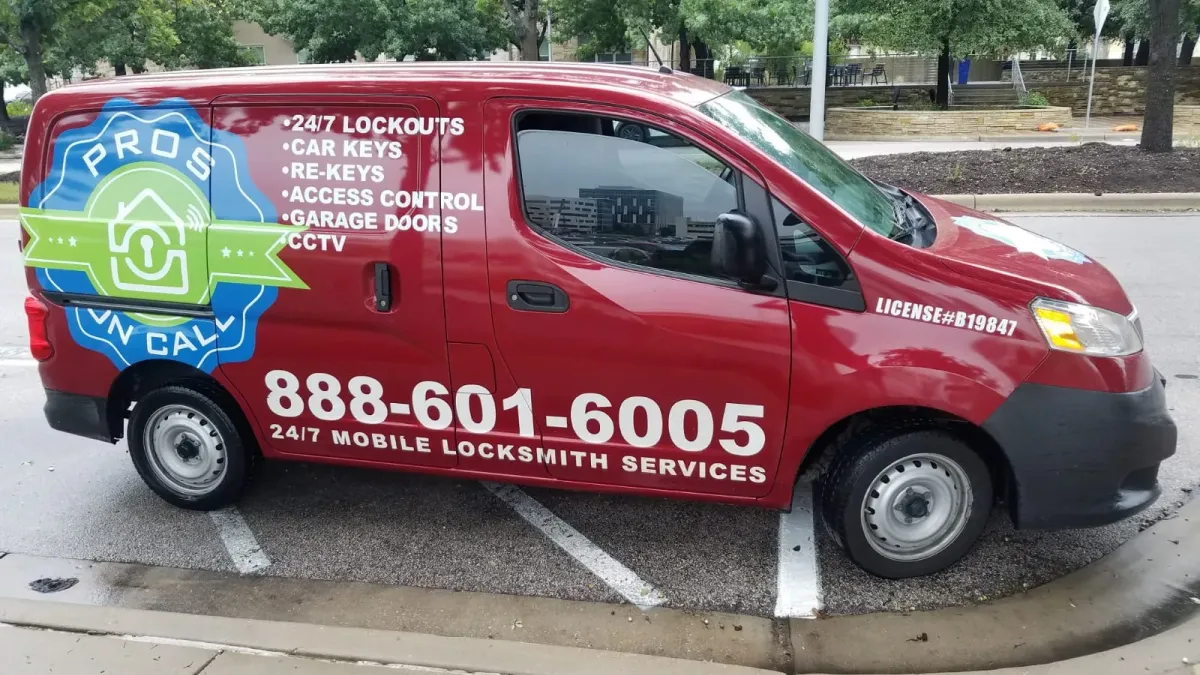
When you search for Pros On Call, the credentials are there to find. Texas License #B19847 is verified at the Texas DPS licensing portal. The company has been operating since 2010, is fully insured and bonded, and holds an A+ BBB Rating. These are not claims on a web page. They are public records you can confirm in a few minutes, and every item below maps to one of the vetting steps in this guide.
- Texas License #B19847 - Verify at the Texas DPS licensing portal
- Established 2010 - 14+ years serving Texas customers
- A+ BBB Rating - Fully insured and bonded
- Verified Google Business Profile - Hundreds of reviews across platforms
- Physical locations across Texas - Not a virtual call center
- Upfront quotes before service begins - No hidden fees or surprise charges
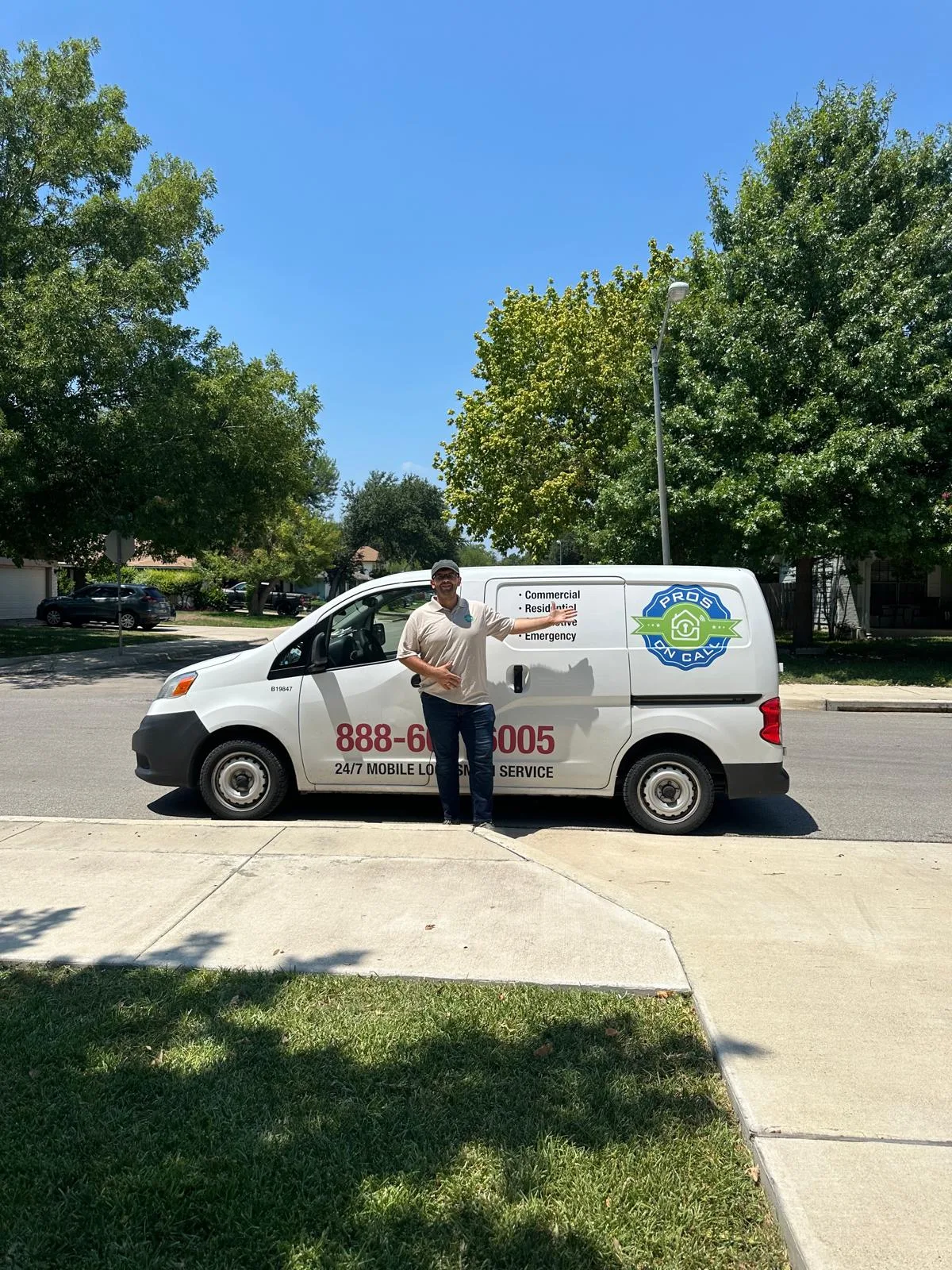
- Marked company vehicles - Uniformed, background-checked technicians
- 30-minute average response time - 30-day workmanship guarantee
- Family owned and operated - Active social media showing real team members
Quick Checklist: Hiring a Locksmith Online
This checklist covers the essentials. Run through it before you commit to any locksmith, whether you found them in a Google search at midnight or a Nextdoor recommendation on a Tuesday afternoon. Ten or more checks means you are dealing with a company that has earned your call.
- Business has a physical address in your area
- License number displayed and verified at the Texas DPS Private Security Bureau or state board
- Insurance and bonding confirmed
- 4+ star rating with 20+ reviews
- Reviews span several months or years
- Professional website with detailed service information
- Upfront pricing provided before technician is dispatched
- Realistic arrival time based on actual location
- Multiple payment options available
- Positive BBB rating (if listed)
- Responded professionally to your questions on the phone
- No pressure tactics or unexplained urgency
If 10 or more boxes checked: Safe to hire. If 5 to 9 boxes checked: Proceed with caution and ask more questions. If <5 boxes checked: Keep searching.
Common Mistakes When Searching Online
Mistake 1: Choosing the First Result
The first result in a Google search is often a paid ad. That placement is purchased, not earned, and scammers buy ads because it converts well. The organic results and map pack below the ads are where you are more likely to find companies with verified locations and real review histories. Scroll past the ads, check the map section, and compare the top three to five businesses before making any call.
Mistake 2: Trusting Star Ratings Alone
A five-star average with 12 reviews posted in the past two weeks tells you almost nothing. Review manipulation is real, and new scam operations often seed their listings with fake reviews before they start taking calls. What matters is the content of reviews, the spread of ratings over time, and whether the reviews include specific details that only a real customer would know. A company with a 4.7 average built over four years is worth more than a 5.0 built last month.
Mistake 3: Choosing the Cheapest Price
A "$15 lockout" ad is always a scam. Full stop. The model is bait-and-switch: quote an impossibly low price to get you to commit, then add fees once the technician is standing at your door. Legitimate lockout pricing in Texas runs higher than $15. Getting two or three real quotes from licensed companies gives you a genuine baseline for what the work should cost. Choose based on the combination of price, credentials, and reputation, not the lowest number you see.
A five-star average with 12 reviews posted in the past two weeks tells you almost nothing.
Mistake 4: Skipping Credential Verification
Asking a locksmith for their license number takes 30 seconds. Verifying it at the Texas DPS licensing portal takes another 60 seconds. Most people skip this step because it feels formal or awkward. But in Texas, an unlicensed locksmith operating commercially is breaking the law, and if something goes wrong with your property, you have no recourse. Make the verification part of your routine, the same way you would check that a contractor is bonded before they start work on your house.
Mistake 5: Hiring Without Reading Reviews
Reviews are your access to what other customers experienced before you did. Skipping them means ignoring information that is sitting right there. Ten minutes reading reviews across two or three platforms will surface patterns that a quick Google search would not. You will catch companies with a history of bait-and-switch pricing, companies known for property damage, and companies with a consistent record of showing up late and charging more than quoted. That information is worth your time.
Need a Trustworthy Locksmith in Texas?
Do not risk hiring the wrong locksmith online. Pros On Call is fully licensed, verified, and has been trusted by Texas customers since 2010. Call us at (888) 601-6005 and we will give you upfront pricing and an honest arrival estimate before you commit to anything.
Find Us Online - Verified and Trusted:
Call: (888) 601-6005
Search: "Pros On Call locksmith Texas"
Google Maps: Search "locksmith near me" and we will be in the top results
Licensed - Texas License #B19847 Verified - Google Guaranteed Business Insured and Bonded - Full liability coverage Transparent Pricing - Upfront quotes, no hidden fees Proven Track Record - 14+ years, hundreds of 5-star reviews Available 24/7 - Emergency service when you need it
Serving Austin, Houston, Dallas, San Antonio, McAllen, and all major Texas cities.
Do your research, then call the pros you can trust.
Pros On Call (24 Service LLC DBA Pros On Call) - Licensed, verified, and trusted since 2010.