
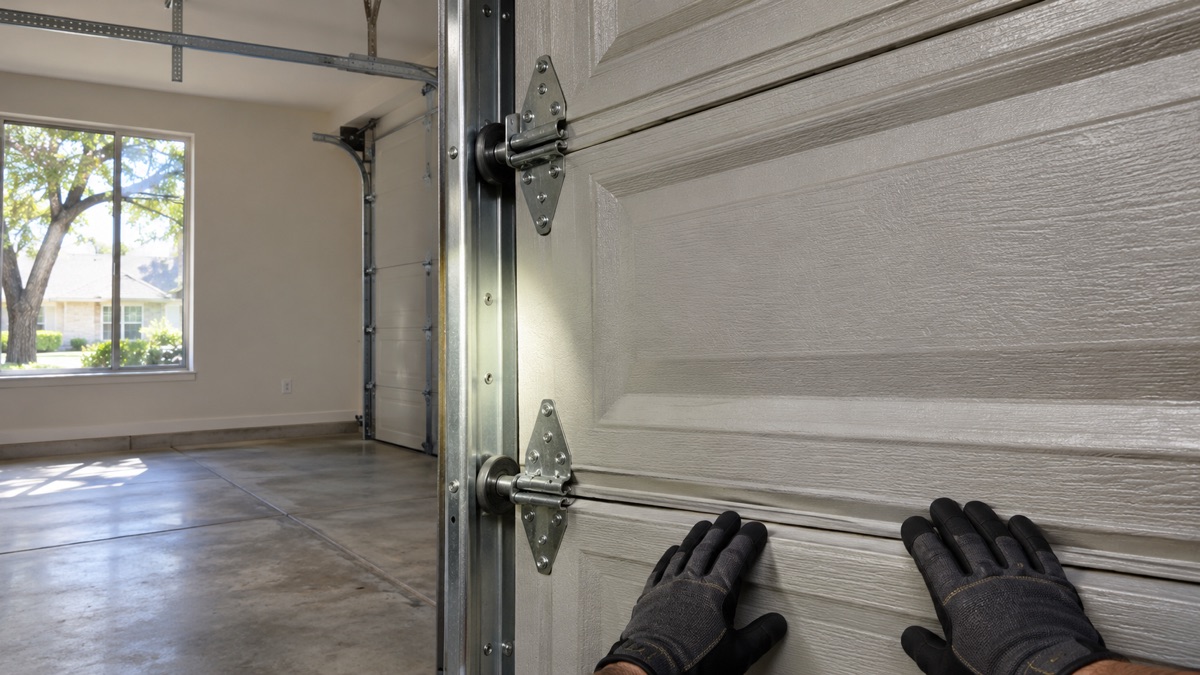
A professional garage door safety inspection is a technician's hands-on check of the springs, cables, brackets, balance, track, rollers, photo eyes and auto-reverse. It goes deeper than the monthly checks you can do yourself, because the parts that matter most are under tension and need a trained eye and the right tools. DASMA, the garage door industry's trade group, recommends an annual visit from a trained door systems technician.
I'm AK, a garage door partner and manager with Pros On Call. Here is the catch with this topic: no standards body publishes a technician's checklist, so every company decides its own scope. This guide walks through what our technicians check and why, with a source for each safety point. To book, our garage door safety inspection page is where to go. This guide shows what the visit covers first.
What a Garage Door Safety Inspection Is, and What It Is Not
A safety inspection is a visit where a trained technician examines the moving and under-tension parts of the door and the opener's safety functions, then reports what passes and what needs work. It is not a tune-up, which is lubrication and adjustment, and it is not a repair quote. No standards body publishes a technician checklist, so scope varies by company.
That variation is the reason this guide sticks to Pros On Call's scope and names the source for each safety point. Where a trade group or a federal agency says something, we say who said it. Where something is simply how our technicians work, we say that instead and do not dress it up as an industry rule.
One boundary note. This guide is about residential sectional doors. Commercial and overhead doors differ in hardware and in what fails first, and our overhead door repair signs guide covers that side.
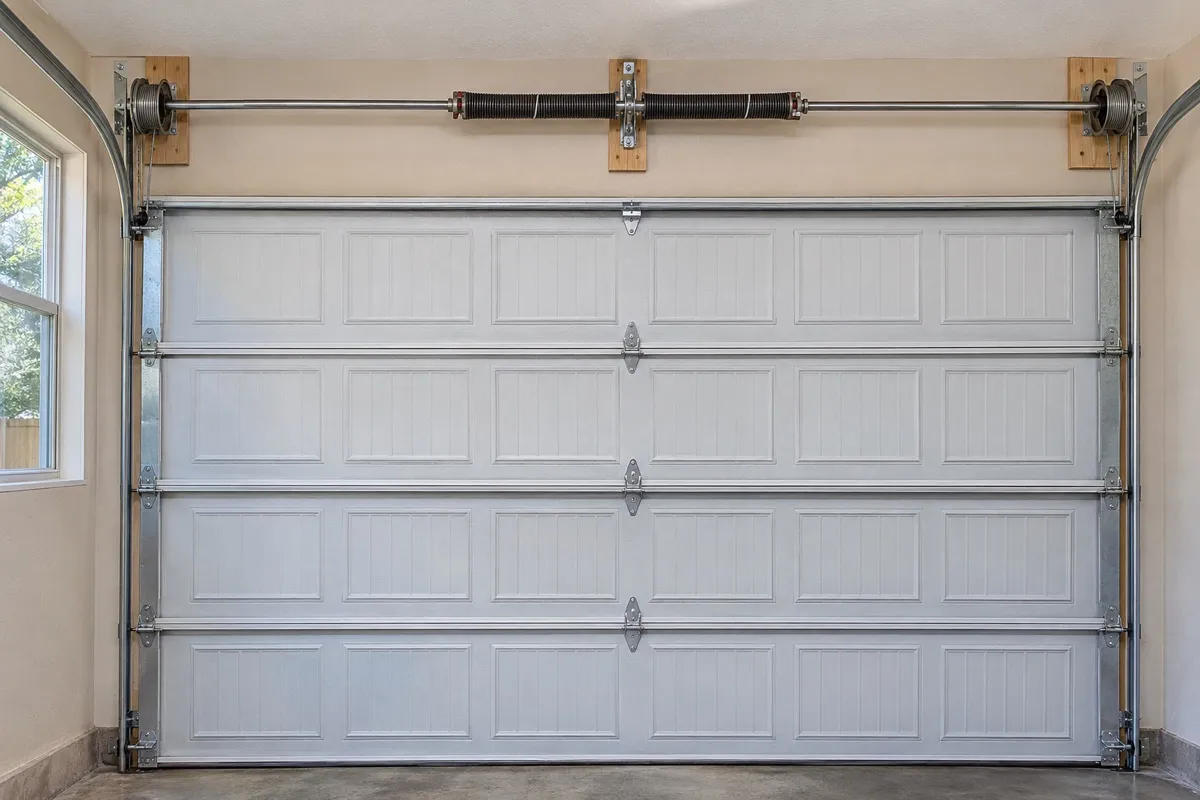
The diagram below maps the parts a technician looks at, numbered so you can follow along in your own garage.
Monthly Checks for You, a Yearly Visit for a Technician
DASMA recommends monthly safety checks you do yourself and an annual visit from a trained door systems technician. DASMA also says its own list is not complete and tells owners to use the manufacturer's manual. CPSC's safety sheet says to inspect the door and opener every 30 days and test the reverse. Pros On Call recommends one yearly visit for most doors.
Read that DASMA wording carefully. It is a recommendation, not a rule, and we do not call a yearly visit required. What the source says is that an annual visit from a trained door systems technician can keep a door operating safely and smoothly for a long time.
The split makes sense once you see who does what. One visual check DASMA names for owners is to look at the cables that attach the spring system to the bottom brackets on both sides of the door. The other monthly job is the reversal test, and the opener maker explains that in Chamberlain's article on testing the safety reversal system. In short, a 2x4 laid flat in the door's path should make the door reverse, and you should follow your opener manual for the details.
Our monthly garage door maintenance checklist has the full homeowner list, including lubrication. A garage door tune-up is the separate visit where a technician lubricates and adjusts. An inspection is the look that tells you whether you need one.
The yearly visit is where the technician handles what needs training: springs, drum wrap, brackets, balance, sensor height and the reversal itself.
Springs, Cables and Bottom Brackets: The Parts Under Tension
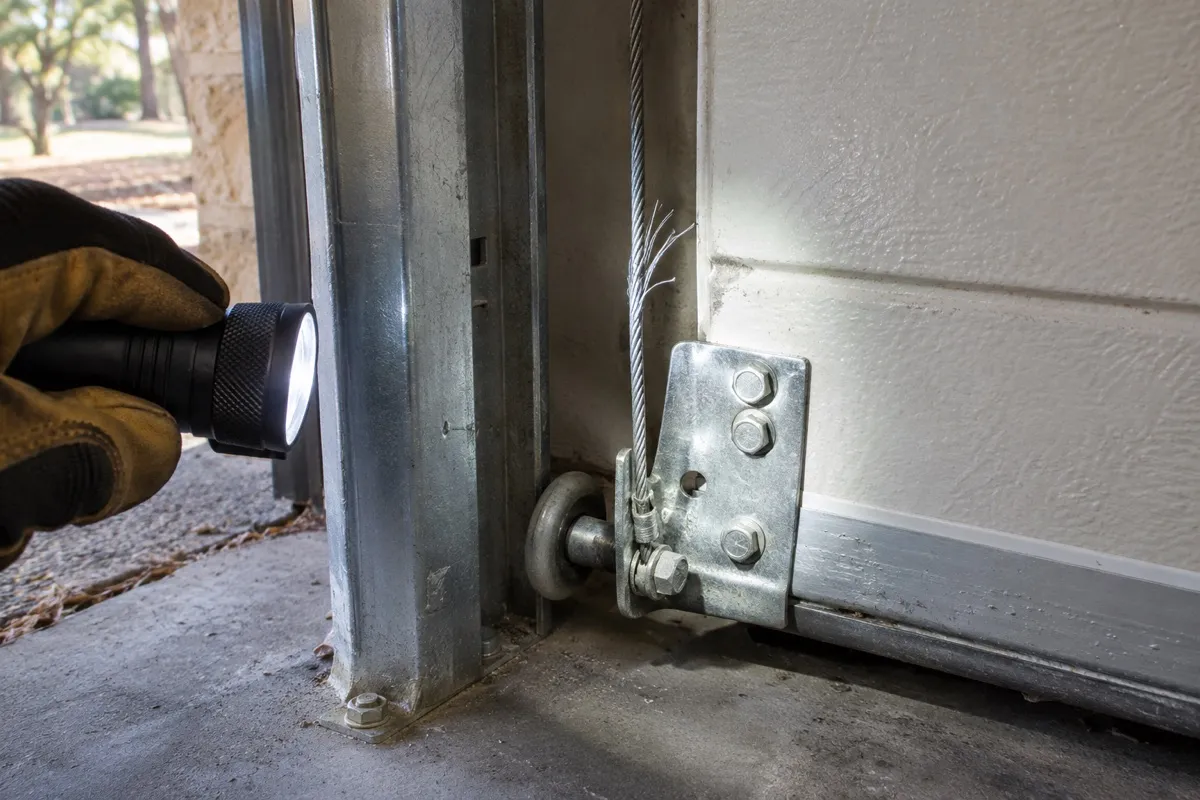
Springs, cables and bottom brackets hold the door's weight, and all three are under tension. DASMA says springs wear out and a break can cause injury, frayed or worn cables can break, and bottom brackets are under extreme tension and should be adjusted or loosened only by a trained door systems technician. Springs, cables and bottom brackets are for a trained door systems technician.
On a visit, our technicians look at spring condition, rust, and whether the springs have been lubricated as the manufacturer directs. DASMA's technical data sheet on spring cycle life notes that rust reduces the effective area of spring wire and that regular lubrication, as the manufacturer's instructions require, helps maximize spring cycle life. We also look at cable condition and how the cable wraps on the drum.
Homeowners have one safe job here. From the floor, look at the cables on both sides of the door. If you see fraying or wear, stop and call. Do not touch the brackets, the drums or the spring.
Why the caution? Our guide on how torsion springs store tension explains the energy in that one component. And if you are wondering whether your spring is already on its way out, the signs a spring is wearing out are in their own guide. Bottom brackets are under extreme tension, so leave them to a trained door systems technician.
How a Technician Judges Door Balance and Manual Release
Balance means the door stays in place when stopped partway up, which shows the springs are carrying the weight. CPSC says a balanced door stays put in any partially open position, a severely unbalanced door could crash to the floor, and unbalanced, binding or sticking doors should be serviced by a professional. This is a technician step.
Our technicians test balance with the opener disconnected, then check that the manual release works. CPSC's safety sheet describes the same idea for owners: pull the quick release and move the door up and down to feel the springs, hardware and fittings.
Here is my caution. Do not run that test by hand on an old or noisy door. If the springs are worn, the door you release can drop. The CPSC safety sheet is clear that an unbalanced door should go to a professional, and that is the standard we hold ourselves to.
Tracks, Rollers, Hinges and Fasteners
The hardware that guides the door is checked for alignment and wear: track alignment, roller and hinge wear, and loose fasteners. Worn rollers and a misaligned track add friction that the opener and springs have to overcome. Our technicians flag what needs adjustment or replacement.
This part of the scope is field experience rather than a published standard. Small problems here tend to show up as noise, jerky travel or a door that rubs, and the technician's job is to separate a loose bolt from a bent track section.
When a track is the problem, our garage door track repair page covers what that work involves.
Photo Eyes, Auto-Reverse and Force Limits
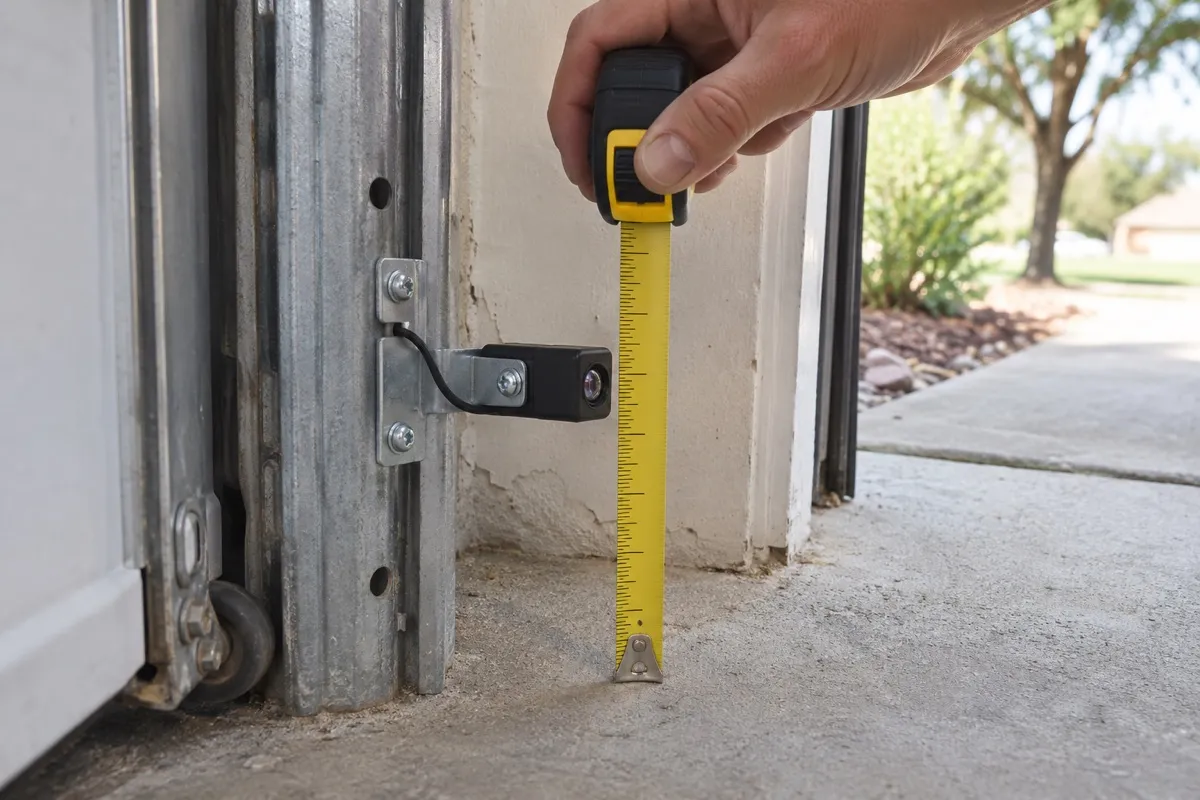
The entrapment protection system is the safety layer a technician verifies for function, not just presence. The federal rule (CPSC 16 CFR part 1211, which adopts UL 325) requires an inherent reversing mechanism that can reverse a moving door within 2 seconds, and a means to connect an external entrapment-sensing device. A technician checks photo eye alignment and height, the contact reversal and the opener's force limit.
Force settings stay with trained technicians. DASMA's opener safety tips place sensitivity adjustments with a trained door systems technician, so we do not coach owners through them.
A little history explains why older openers can fall short. CPSC's safety sheet says openers made after January 1, 1991 must have reversing systems, and that external entrapment protection was added in 1993. DASMA's opener tips say the same about 1993: since then, every opener made for the U.S. must include a second safety reversing feature such as photoelectric eyes. An older opener may lack that second feature.
On sensor height, CPSC says an electric eye should be installed at 4 to 6 inches above the floor, and DASMA's "six-inch rule" says photo eyes should not sit higher than six inches. The Federal Register rule is where the current requirement is written out.
Our garage door safety features guide covers the UL 325 features and the home tests. We keep those there so this guide can stay on what the technician does. A sensor that is present is not the same as a sensor that works.
A sensor that is present is not the same as a sensor that works.
Opener Drive, Weatherstripping and Door Panels
The rest of the visit looks at the opener's motor and drive system, the condition of the weatherstripping, and panel integrity, including whether a cracked or dented panel puts stress on the door. Our technicians note what is cosmetic and what affects operation. Weatherstripping and panel notes are part of our scope, not an industry requirement.
The opener side is a listen-and-watch job. A motor that strains, a chain or belt with slack, or a carriage that catches all get written down. If the opener is the weak link, our garage door opener repair page explains what that service covers.
Panels matter more than people expect. A crushed or cracked section can bind in the track or flex under load, and a technician reads that differently from a surface dent that never touches the track. A good inspection separates what is cosmetic from what affects how the door moves.
A good inspection separates what is cosmetic from what affects how the door moves.
What the Written Report Should Tell You
Ask for a written report that shows pass or fail for each checkpoint, photos of any issue, an urgency rating and the recommended repairs. Pros On Call's report also carries the technician's name, the date, door details and a UL 325 compliance statement. A full inspection typically takes 45 to 60 minutes on site.
That timing is a typical figure, not a promise, and doors with more problems take longer. What matters more is what you walk away with. Ask for a written report with pass or fail results, photos and urgency ratings. A verbal "looks fine" is hard to act on later and impossible to compare from one year to the next.
Before you book with any company, here are four questions we think are worth asking:
- What exactly is checked, and can I see the list?
- Are adjustments part of the visit, or only a look?
- How are repairs quoted, and when do I see the price?
- How is the report delivered?
That is our view of a good visit, and it is not a claim about any other company. If you want the same thing every year, our annual inspection plan is the recurring version. Ask for the written report before the technician leaves, with photos of any issue and an urgency rating.
Which Findings Mean Stop Using the Door
Some findings mean stop using the opener or the door until a technician repairs it: an auto-reverse that fails the test, a door that will not stay partway up, frayed cables and a broken spring. CPSC says to disengage the opener until a failed reversal is adjusted, repaired or replaced. DASMA says frayed cables are in danger of breaking. Never lift a door by hand after a spring breaks.
Each row below comes straight from a source named in this guide, so it is a short list and not a ranking.
| Finding | Why it matters | What to do |
|---|---|---|
| Auto-reverse fails | CPSC says to disengage the opener until it is adjusted, repaired or replaced | Stop using the opener and call a trained technician |
| Door will not stay partway up | An unbalanced door could crash to the floor, and CPSC says it should be serviced by a professional | Stop using the door and call |
| Frayed or worn cables | DASMA says they are in danger of breaking | Do not use the door, call a technician |
| Broken spring | The springs no longer carry the door's weight | Do not lift the door by hand, call a technician |
If a spring has broken, our garage door spring replacement page explains what the repair visit looks like. If the auto-reverse fails, disengage the opener until a trained technician has adjusted or repaired it.
What an Inspection Costs and What Repairs Cost Separately
Inspection pricing is shown on the service page, and our pricing page lists repair estimates, not an inspection fee. Those estimates are $200 to $400 for spring replacement and $150 to $250 for cable replacement, with the final cost confirmed on site. Findings are quoted separately from the visit. We do not print an inspection price in this guide, because the figure lives on the service page.
That split is deliberate. The visit finds things. The repair is a separate decision with its own quote, so a finding does not turn into work until you say yes.
You can check both numbers yourself. Current inspection pricing is on our inspection service page, and the repair estimates are on our pricing page. There is also an inspection with a tune-up option if you want the adjustments done during the same visit.
Timing the Visit Before the Holidays
Mid November is a practical time for the annual visit. Daylight saving time ended on November 1, so the door gets used in the dark earlier, and holiday guests, deliveries and travel put more people through the garage entry. No source ties holidays to door failures, so we do not claim that.
Pros On Call recommends twice a year for doors over 10 years old, doors in coastal areas with salt air exposure, and doors that run 4 or more cycles a day. That twice-a-year advice is our recommendation. It is not DASMA guidance, and no outside source sets that interval.
What the sources do support is that use and environment affect springs. DASMA's technical data sheet lists extreme heat or cold, frequent precipitation and a saline coastal location as factors in spring cycle life. A cycle is one open and one close, and our guide to how cycle ratings work puts the ANSI/DASMA 102 baseline in plain terms. Count how many times your own door runs on a normal day, and you will know which side of our recommendation you fall on.
Getting Your Garage Ready for the Technician
Clear the space around the door and opener, park cars out of the way, note anything you have heard or seen, and keep the opener manual handy. These are habits from our own visits, not a standard, and they help the technician spend the time on the door instead of on the clutter.
- Clear the area around the door and the opener.
- Park vehicles outside and keep pets away from the door.
- Write down noises, delays or sticking.
- Find the opener's make or manual.
- Ask for the written report.
The note about noises matters most. "It groaned on Tuesday morning" tells a technician more than a clean door does.
A note about what you heard is worth more to a technician than a clean-looking door.
Questions Homeowners Ask About Garage Door Safety Inspections
What does a garage door safety inspection include?
A garage door safety inspection covers the springs and cables, bottom brackets, balance, track, rollers and hinges, photo eyes and auto-reverse, the opener's force limit, the manual release, weatherstripping and panels. That is Pros On Call's scope. No standards body publishes a technician checklist, so ask any company what its visit covers before you book.
How often should a garage door be inspected?
DASMA recommends an annual visit from a trained door systems technician, plus monthly safety checks you do yourself. Pros On Call suggests a visit once a year for most doors and twice a year for doors over 10 years old, coastal doors, or doors that cycle 4 or more times a day. The twice-a-year part is our advice, not a standard.
How much does a garage door safety inspection cost?
The inspection service page shows current inspection pricing. Our pricing page lists repair estimates instead: $200 to $400 for spring replacement and $150 to $250 for cable replacement, with the final cost confirmed on site. Repairs are quoted separately from the visit, so a finding does not turn into work until you approve it.
Can I inspect my own garage door instead of hiring a technician?
You can do the monthly checks, such as looking at the cables from the floor and testing the auto-reverse as your opener manual directs. Springs, cables and bottom brackets are different. DASMA says to leave those to a trained door systems technician, because they hold the door's weight under high tension.
What should I do if my garage door fails the auto-reverse test?
Stop using the opener. CPSC's safety sheet says to disengage the opener until the reversing system is adjusted per the manual, repaired or replaced. Chamberlain says to call a trained door systems technician if the test keeps failing. Keep the door closed and operate it by hand only if the door is balanced and safe to move.
Should I book a garage door safety inspection before the holidays?
It is a practical time to fit in the annual visit. Daylight saving time ended on November 1, so the door is used in the dark earlier, and guests, deliveries and travel send more people through the garage entry. Booking early in the month also leaves room on the calendar for any repair the technician finds.
Book a Technician Visit
If you want a technician to go through the springs, cables, balance, sensors and reversal, start with our garage door safety inspection page, or call (888) 601-6005 and ask what the visit covers.